



Satisfied with Covid-19 measures, doctor recommends ministry to plan ahead
INTERVIEW | A former top official has commended the Health Ministry for its handling of Covid-19 but recommended it plan ahead to mitigate unexpected circumstances.
He also hoped that the government would reveal more detailed information about those who test positive for the disease.
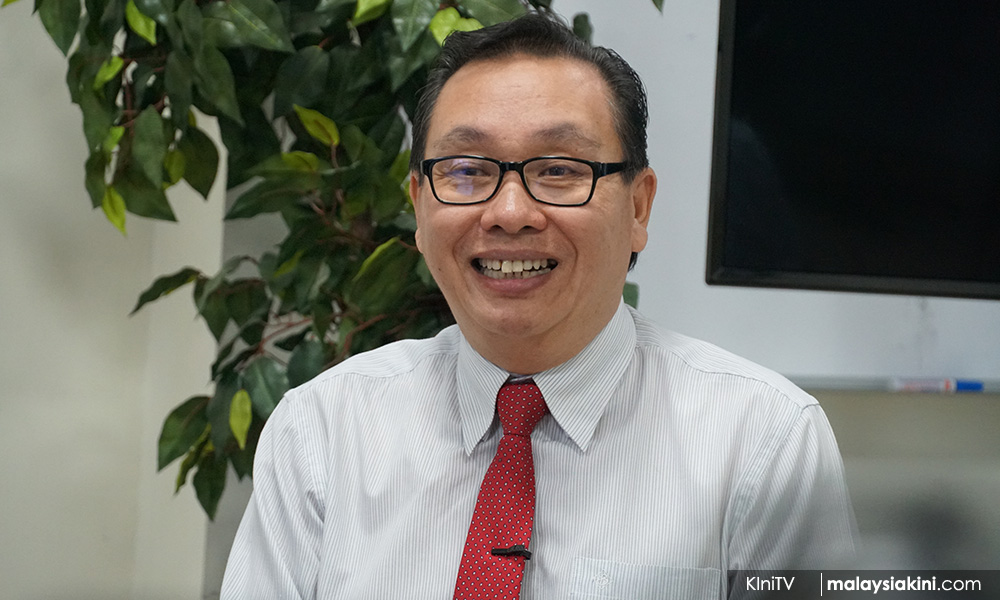
Now retired, Dr Christopher Lee previously served as the ministry’s deputy director-general and national advisor for infectious diseases.
In an interview with Malaysiakini and Kini News Bulletin yesterday, he was glad that the government was taking measures appropriate with the status of the disease in the country...
INTERVIEW | A former top official has commended the Health Ministry for its handling of Covid-19 but recommended that the ministry should plan to mitigate unexpected circumstances.
He also hoped that the government would reveal more detailed information about those who tested positive for the disease.
Now retired, Dr Christopher Lee previously served as the ministry’s deputy director-general and national advisor for infectious diseases.
In an interview with Malaysiakini and Kini News Bulletin yesterday, he was glad that the government was taking measures appropriate with the status of the disease in the country.
“They are doing a lot, they are doing press conferences regularly.
“(I) have faith in what they do, they have done this before and this is not their first rodeo,” he commented.
Lee shared that past outbreaks like the Nipah virus, Severe Acute Respiratory Syndrome (Sars) and Middle East Respiratory Syndrome (Mers) have prepared the public healthcare system to deal with Covid-19.
As of today, 22 have tested positive for the disease in Malaysia comprising six Malaysians, 15 China nationals and one US citizen. Nine of these, including one Malaysian, have recovered.
Earlier this month, the government began temporarily restricting travellers from areas in China that are under lockdown by Beijing. It also stopped renewing visas for Chinese tourists who were already in the country.
Malaysia and Singapore have formed a joint task force to combat contagion and thermal scanners have been installed at entry points.
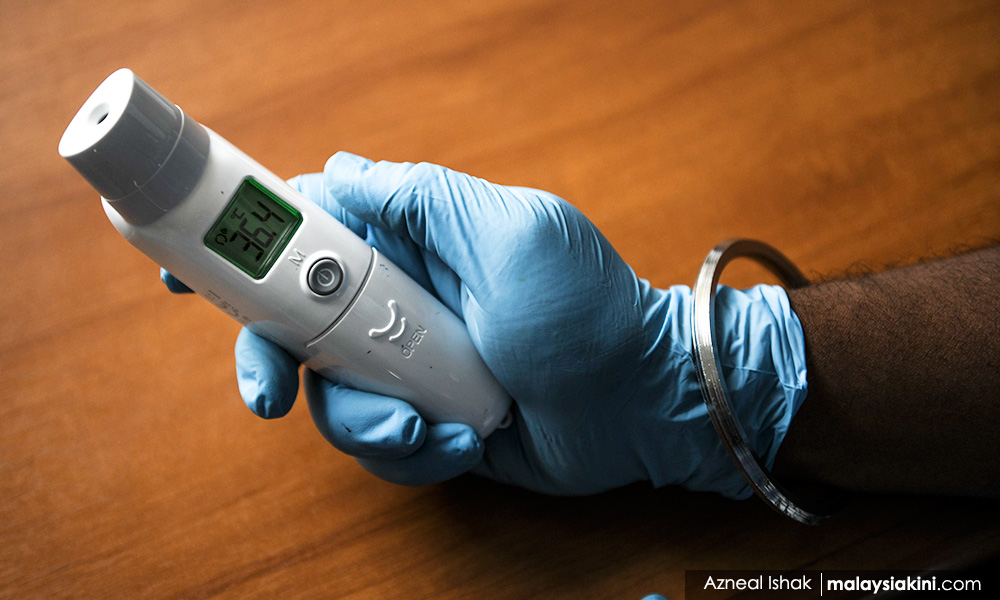
Malaysians living in Wuhan, the disease epicentre, have been brought home and quarantined. Those returning from China are given home assessment tools and advised to contact public healthcare officials if they exhibit any Covid-19 symptoms within 14 days.
Aside from these measures, the Health Ministry has been regularly updating the public on the status of the disease through press conferences and social media.
Plan a step ahead
Lee was satisfied with these measures and opined that more drastic steps like blanket travel bans and 14-day home quarantine orders - which Singapore has implemented - were unnecessary at the moment.
The Covid-19 situation in the city-state is far more serious with 77 confirmed cases, of which 50 are Singaporeans and 53 were locally transmitted. Twenty-four have recovered.
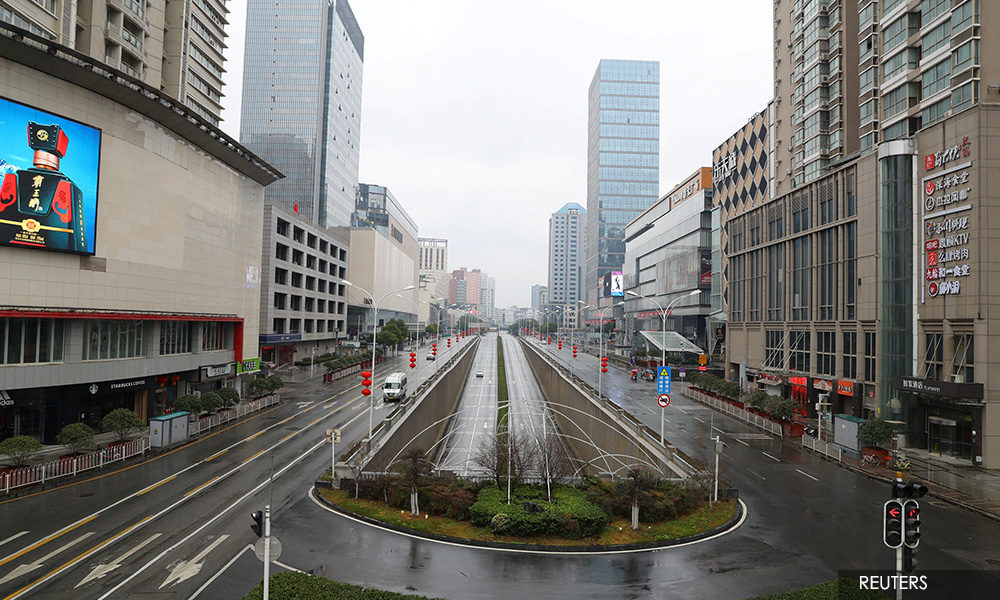
“Even in Beijing and Shanghai - the bigger Chinese cities - they have travel restrictions for only certain groups of people, not completely [...] so even in China, they are doing different things.
“So, therefore, it's the same thing in Singapore and Malaysia now. We all hope we don't have to escalate (our measures) any further, let’s hope things settle,” he said.
However, Lee cautioned that any worsening of the outbreak in Singapore would inevitably impact Malaysia due to the large volume of travel between the two countries.
He, therefore, stressed that Malaysia needed to stay “one step ahead” of the disease.
“I think we know what needs to be done, that’s clear. We just need to plan one step ahead of the outbreak.
“At the moment, things look under control [...] if we can plan ahead, we can implement things faster.
“As we scale up, each level of the implementation gets more complicated because it involves other agencies, other people, and other non-health sectors,” he analysed.
The infectious diseases specialist, who spent 34 years at the ministry, shared that Malaysia already had a National Influenza Pandemic Preparedness Plan to follow.
Should the Covid-19 outbreak worsen in the Klang Valley, Lee shared that the Sungai Buloh Hospital would be designated as the hospital to treat the disease and all cases will be directed to it.
Other non-Covid-19 cases at the hospital would then be diverted to nearby public hospitals like Serdang Hospital and Shah Alam Hospital.
More details to ease anxiety
Asked if the ministry should reveal more specific information about each positive Covid-19 case, Lee agreed.
While the ministry has been efficient in updating the public about new cases, it has stopped short of releasing details like what places the patients have visited, which clinics they sought treatment at and where exactly they live.
Singapore, in contrast, has done so.
“I guess they (the ministry) balance between the stigma and discrimination that the public may apply to those places and it is probably real. Singapore deals with it by saying they are sending a team to have a deep cleansing. That is their way of trying to balance any negative things that continue to fall on that facility [...]
“People might feel uncomfortable that they don’t know, (in case) maybe they went to the same place around the same time [...]
“My personal view is yes, it would be good for them to know but we must also do our part to make sure we protect the facility or place involved,” he said.
PART 1: Expert: Pay attention to S'pore, new Covid-19 epicentres possible
PART 3: Doctor’s advice: Wash hands, disinfect surfaces to protect against Covid-19
This interview was conducted by Prasadh Michael, Tham Seen Hau, Vivian Yap & Annabelle Lee.



Are you sure you want to delete this comment?
This action cannot be undone.