


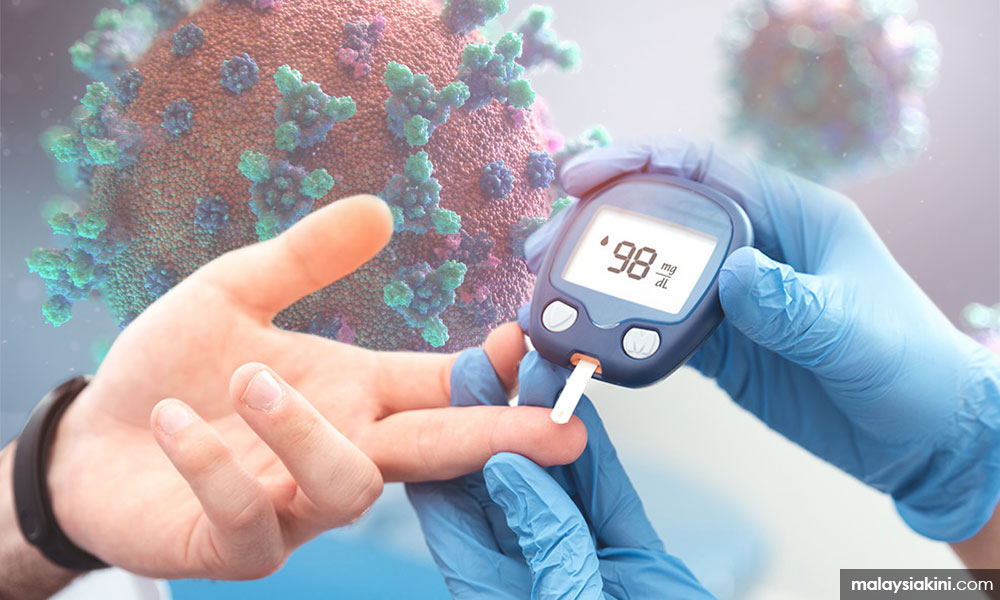

Suspicion grows that Covid-19 can cause diabetes – report
CORONAVIRUS | While conclusive evidence is still being sought, suspicion is growing amongst researchers that the virus which causes Covid-19 could also trigger a disease akin to Type 1 diabetes in some patients.
This comes as an increasing number of cases are being reported where otherwise healthy individuals spontaneously developed diabetes following a SARS-CoV-2 infection, according to a news report by the scientific journal Nature.
CORONAVIRUS | While conclusive evidence is still being sought, suspicion is growing amongst researchers that the virus which causes Covid-19 could also trigger a disease akin to Type 1 diabetes in some patients.
This comes as an increasing number of cases are being reported where otherwise healthy individuals spontaneously developed diabetes following a SARS-CoV-2 infection, according to a news report by the scientific journal Nature.
In one case, Nature reported that 18-year old student Finn Gnadt from Kiel, Germany, had contracted Covid-19 along with his family in mid-April.
While he initially showed no symptoms, he started feeling worn out and extremely thirsty days later, and in early May, he was diagnosed with Type 1 diabetes.
For most people, Type 1 diabetes is caused by an autoimmune response that killed the insulin-producing cells in the pancreas.
However, Gnadt’s physician Dr Tim Hollstein at the University Hospital Schleswig-Holstein reportedly suspected the virus itself might have killed the cells in Gnadt’s case because his blood did not contain the types of immune cells typically associated with such a response.
Some researchers have also reported dozens more cases where Covid-19 patients were found to have extremely high levels of blood sugar and ketones – a sign that the body is not producing enough of the sugar-regulating hormone insulin.
In addition, Nature reported that a study using a lab-grown miniature pancreas published last week suggested that the virus might trigger diabetes by damaging the cells that control blood sugar levels – either by killing them directly or by triggering an overreaction of the immune system that kills them.
Type 1 diabetes is a form of diabetes where the patient is unable to produce enough insulin because the insulin-producing cells were lost.
This is in contrast to Type 2 diabetes where the body fails to respond properly to insulin produced by cells and is primarily caused by obesity and lack of exercise.
Diabetes is already a known risk factor for Covid-19-related deaths, where patients with diabetes are nearly three times more likely to die than those who do not; even when other risk factors such as age are accounted for.
However, some researchers are urging for caution before concluding that Covid-19 might cause diabetes.
“We need to keep an eye on diabetes rates in those with prior Covid-19 and determine if rates go up over and above expected levels,” Nature quoted University of Glasgow, UK, metabolic disease researcher Naveed Sattar as saying.
University of Birmingham, UK, clinician-scientist Abd Tahrani reportedly concurred that more robust evidence is needed to establish a link.
“Well-constructed epidemiological cohort studies and mechanistic and experimental studies are needed,” he reportedly told Nature.
To do this, a group of scientists have already established a global database to collect information on people with Covid-19 and high blood-sugar levels but without a history of diabetes or problems controlled blood sugar.
The goal is to find out whether the SARS-CoV-2 virus could induce Type 1 diabetes or some new form of the disease and whether the sudden onset of diabetes is permanent.
They are also seeking data on whether the virus could cause people who are already on the way to developing Type 2 diabetes to get the disease, Nature reported.
If those concerns come true, it would add to a growing list of medical problems linked to what was initially thought as a respiratory disease.
While the virus is believed to be spread primarily through respiratory droplets reaching the lungs through the eyes, nose, and mouth, there is mounting evidence that the virus or the consequent immune response could cause damage to other parts of the body once the infection takes hold.
Most patients seem to recover with little to no signs of illness, but the prognosis is much direr for a minority of patients even if they survive the infection.
In the lungs, the disease could cause permanent scarring, while the use of ventilators may cause additional injury even though it is needed to preserve the life of some patients with severe manifestations of Covid-19.
Some patients have required supplemental oxygen or a lung transplant after recovering from Covid-19.
Covid-19 has been linked to neurological problems including a loss of sense of smell, stroke, seizures, confusion, and brain inflammation.
The virus attacks the lining of blood vessels, increasing the risk of blood clots, cardiac inflammation, and heart attacks.
Biopsies have shown that the intestines are also susceptible, and some Covid-19 patients have reported experiencing diarrhoea.
Kidney damage has also been reported for those with severe Covid-19 infection, whether caused by the virus directly, or as part of whole-body events such as low blood pressure. Some patients have required dialysis.
Health Ministry director-general Dr Noor Hisham Abdullah said yesterday that the ministry is monitoring survivors of severe Covid-19 cases for its long-term effects.


Report this comment
Are you sure you want to delete this comment?
This action cannot be undone.