


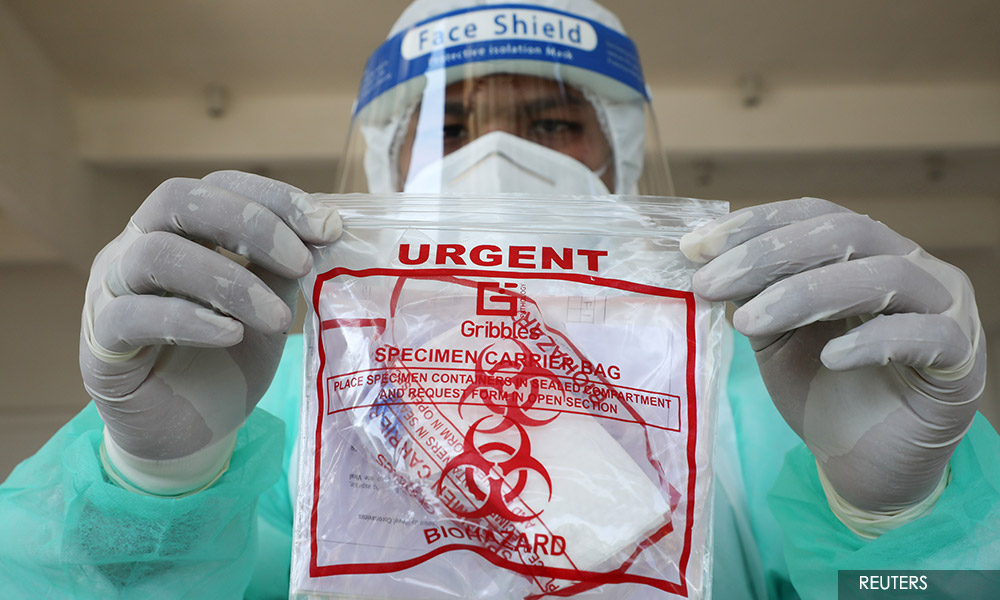

Covid-19 recovery: Ministry continues to test target groups, hospital patients
As Malaysia recovers from the Covid-19 pandemic, the Health Ministry has vowed to continue testing target groups to pre-empt outbreaks before they happen.
As of 12pm today, the country recorded five new infections and nine recoveries, bringing the total number of active cases to just 81...
As Malaysia recovers from the Covid-19 pandemic, the Health Ministry has vowed to continue testing target groups to pre-empt outbreaks before they happen.
As of 12pm today, the country recorded five new infections and nine recoveries, bringing the total number of active cases to just 81.
Only two active cases remain from the Seri Petaling cluster - the country’s largest cluster.
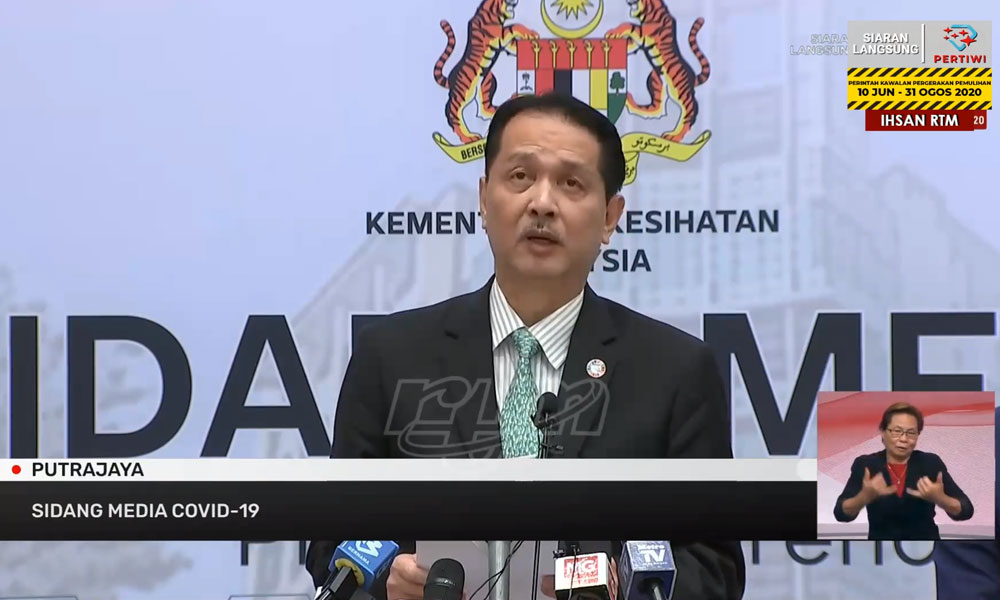
During his Covid-19 briefing today, director-general Dr Noor Hisham Abdullah stressed that the ministry will continue keeping tabs on nine high-risk groups, i.e. those from:
1) The Seri Petaling cluster
2) Tahfiz, madrasah and sekolah pondok
3) All active clusters
4) Malaysians and permanent residents who return from abroad
5) Healthcare workers
6) Market vendors and workers
7) Migrant workers at construction sites in red zones
8) Old folks’ homes
9) Immigration detainees
Hospitals will also continue testing patients before they undergo an operation as well as those with influenza-like illnesses (ILI) and severe acute respiratory infections (Sari) as part of their clinical surveillance approach.
Elaborating, Noor Hisham said ministry officials will next expand their surveillance programme to communities they suspect of having asymptomatic cases - Covid-19 patients who do not exhibit symptoms.
“If we suspect there is an asymptomatic patient in a community, we will do the screening,” he said.
“Our next task is to identify the community. So once we identify the community, we will continue to swab (them).
“Now we are doing the swab when there is a positive case or cluster [...] but if it is a community that we have identified and we suspect there is a high incidence of positive cases who are asymptomatic, we will do the screening and community surveillance,” he explained.
As for testing capabilities, the top official shared that both government and private laboratories were conducting “approximately 10,000” tests per day despite a maximum daily testing capacity of 37,004.
As of noon today, he said 8,983 tests were conducted.
Noor Hisham said the ministry has continued to face a delay in obtaining negative test results from private laboratories, which account for some 20,000 - or 54 percent - of the maximum daily testing capacity.
“They are doing (the tests) but they are not giving us the information about the negative cases. We are not getting the denominator,” he said.
“We need to look into a system that can (allow) the data to flow so that it is not being done manually. We are trying to address the issue, (and) hopefully by doing so we can pick up (the pace),” he added.



Are you sure you want to delete this comment?
This action cannot be undone.