



UN body sounds alarm over human rights violation in West Papua
The United Nation's Human Rights Office has expressed its alarm over escalating violence in the Indonesian provinces of Papua and West Papua and the increased risk of renewed tension.
UN Human Rights Office spokesperson Ravina Shamdasani, in a statement today, said the human rights experts have also repeatedly expressed serious concerns regarding the intimidation, harassment, surveillance and criminalisation of human rights defenders for the exercise of their fundamental freedoms in the region.
"In one incident on Nov 22, a 17-year-old was shot dead and another 17-year-old injured in an alleged police shootout, with the bodies found at the...
The United Nation's Human Rights Office has expressed its alarm over escalating violence in the Indonesian provinces of Papua and West Papua and the increased risk of renewed tension.
UN Human Rights Office spokesperson Ravina Shamdasani, in a statement today, said the human rights experts have also repeatedly expressed serious concerns regarding the intimidation, harassment, surveillance and criminalisation of human rights defenders for the exercise of their fundamental freedoms in the region.
"In one incident on Nov 22, a 17-year-old was shot dead and another 17-year-old injured in an alleged police shootout, with the bodies found at the Limbaga Mountain, Gome District in West Papua.
"Earlier, in September and October 2020, there was a disturbing series of killings of at least six individuals, including activists and church workers, as well as non-indigenous residents. At least two members of the security forces were also killed in clashes," she added.
Ravina said an investigation by the National Human Rights Commission (Komnas HAM) found one church worker, Rev Yerimia Zanambani, a pastor of the Protestant Evangelical Church, may have been killed by members of the security forces, and that his killing was just one “of a series of violence occurring across the regency throughout this year.”
"We have also received numerous reports of arrests. At least 84 people, including Wensislaus Fatuban, a well-known human rights defender and human rights advisor to the Papuan People’s Council (Majelis Rakyat Papua or the MRP) and seven MRP staff members, were arrested and detained on Nov 17 by security forces in Merauke Regency in Papua Province.
"Their arrests came ahead of a public consultation organised by the MRP on the implementation of the Special Autonomy Law in Papua and West Papua provinces," she said while noting that Fatuban and the others were released the next day.
Ravina added that the recent violence and arrests are part of a trend they have observed since December 2018, following the killing of 19 individuals working on the Trans-Papua Highway in Nduga regency by armed Papuan elements.
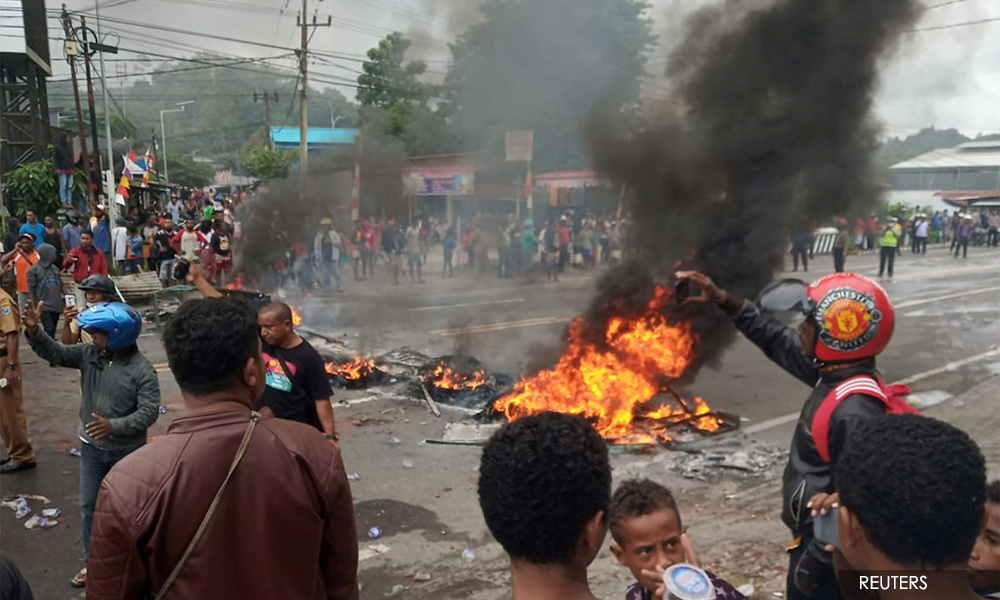
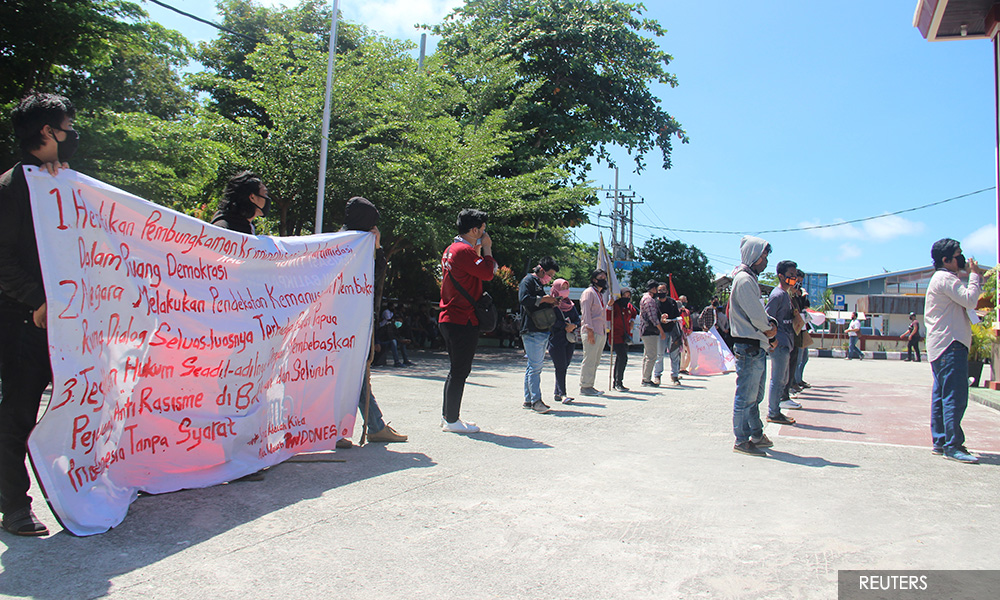
"There was a further escalation in August 2019, when anti-racism protests and widespread violence erupted in Papua and elsewhere following the detention and discriminatory treatment of Papuan students in Java.
"Military and security forces have been reinforced in the region and there have been repeated reports of extra-judicial killings, excessive use of force, arrest and continuous harassment and intimidation of protesters and human rights defenders," she said.
The UN's Human Rights Office urged the Indonesian government to uphold people’s rights to freedom of expression, peaceful assembly and association in line with its international obligations, particularly ahead of Dec 1 when there are often protests, tensions and arrests.
Special ceremonies take place on Dec 1 of each year to commemorate the first flag raising in 1961 of the Morning Star which is flown by Papua independence movements and supporters across the world.
Papua and West Papua provinces, the resource-rich western part of the island of New Guinea, were formerly a Dutch colony that was incorporated into Indonesia after a widely criticised 1969 referendum backed by the United Nations.
Opponents of Indonesia's rule over West Papua claim that the referendum was conducted in an atmosphere of intimidation with just over 1,000 tribal chiefs selected and instructed to vote for West Papua to join Indonesia.
Last year, on the 50th anniversary of the referendum, protests erupted in the provinces over the mass detention of Papuan students in Surabaya, East Java, for bending a flagpole bearing the Indonesian flag in front of a dormitory on Indonesia’s national day, which was celebrated on Aug 17.
A year later, human rights NGO Tapol reported that after the West Papua Uprising swept across 22 towns in the Indonesian province of West Papua and 17 cities in other parts of Indonesia from Aug 19 to Sept 30, 2019, a total of 61 people lost their lives but that the province is no closer to self-government.
"We also call on the authorities to pursue thorough, independent and impartial investigations into all acts of violence, in particular killings, and for all perpetrators – regardless of their affiliations – to be held accountable.
"At a time of ongoing discussions related to the Special Autonomy Law, we urge all sides to work to prevent further violence.
"There is an urgent need for a platform for meaningful and inclusive dialogue with the people of Papua and West Papua, to address longstanding economic, social and political grievances.
"There is also a clear need to ensure accountability for past and recent human rights violations and abuses," said Ravina.


Report this comment
Are you sure you want to delete this comment?
This action cannot be undone.