



OKU delivery rider proves disability no barrier
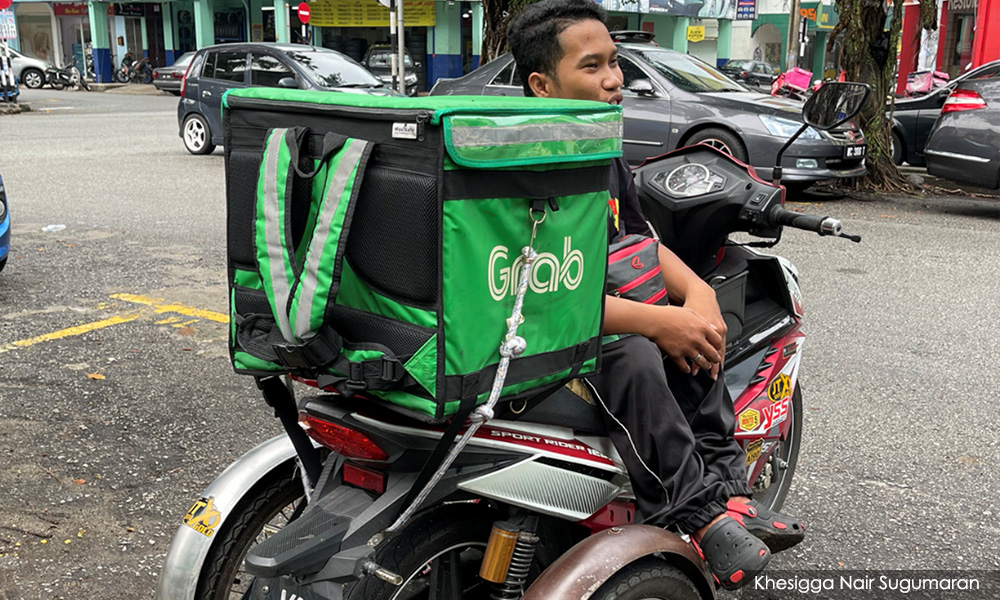
Disability is not a barrier for one delivery rider who uses the Grab food delivery platform to earn extra money on a part-time basis.
Muhammad Sidek Osman, 22, first got public attention when a photo of his three-wheel motorcycle towed by another Grab rider after it broke down, was circulated on social media last month.
Disability is not a barrier for one delivery rider who uses the Grab food delivery platform to earn extra money on a part-time basis.
Muhammad Sidek Osman, 22, first got public attention when a photo of his three-wheel motorcycle towed by another Grab rider after it broke down, was circulated on social media last month.
Met by Malaysiakini recently, the Kuala Lumpur native said it was just part of a day’s work.
A full-time employee at a service centre in Setapak, Sidek said he started working part-time as a food delivery rider about three years ago.
“I love roaming around, so I thought of how this could benefit me financially. That was when my friend suggested we do a delivery service,” he said.
Sidek, who is only 108cm tall and has trouble walking, has a condition akin to someone born with dwarfism - a disorder that impacts stature, height and proportionality.
He told Malaysiakini his condition was a result of health complications related to diabetes when his mother was pregnant with him.
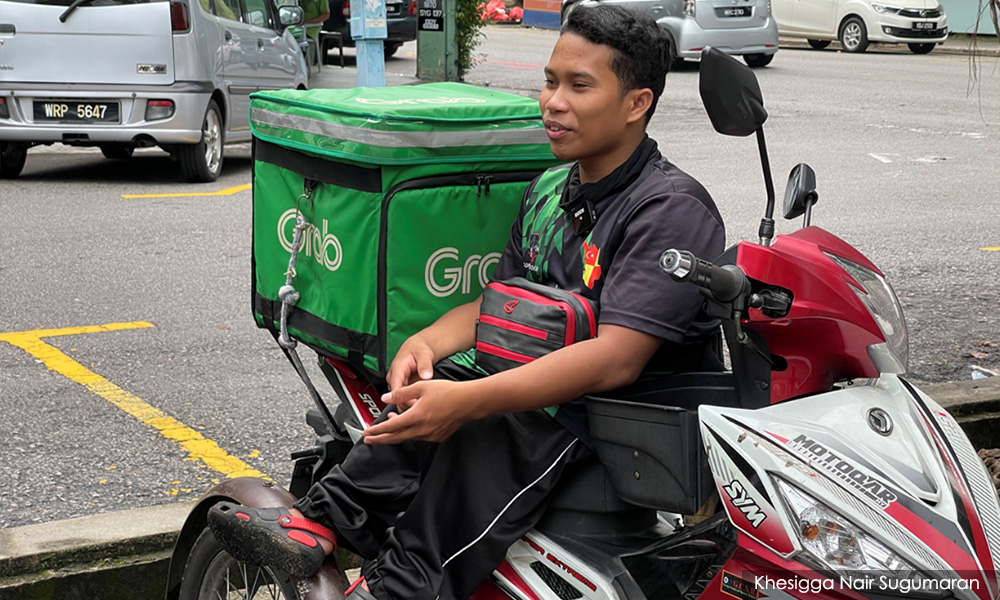
Because of his physical condition, Sidek said he had to modify a standard motorcycle to enable him to work as a delivery rider.
“I bought the hardware in Klang because it was affordable - the price (there) isn't the same as it was in the market. Then I sent the hardware and built (the support structure) in a workshop at Kampung Pandan.
“He (mechanic) built every part (of the structure) to support my motorcycle,” Sidek added.
Challenges and perks on the job
While he is able to do the job without any issue, there have been instances where his disability can be a challenge.
He said some customers in walk-up apartments would insist that he deliver the goods to their front door instead of collecting them from the apartment foyer.
This is a problem for Sidek who takes much longer to use stairs compared to an able-bodied person.
Some customers still insist he delivers to their front door even after he notified them of his condition and that it would take time for him to do so.
He recalled how one customer insisted that he deliver to her front door, claiming that she was caring for young children and cannot leave them unattended.
When he reached the apartment, he found there were no babies and the customer's children were all grown up.
At the same time, he said, many customers are kind-hearted and buy food for him and his friends.
“Once, there was an accident. The Grab rider called the customer to let him know the order will be sent a bit late. The customer came to the scene to help them,” Sidek said.
'I don’t want to be pitied'
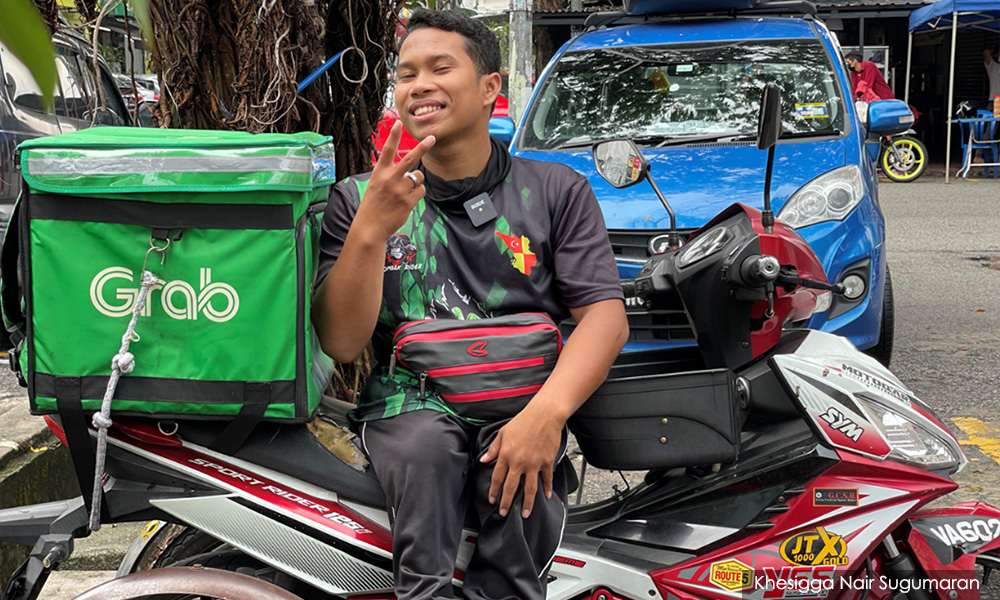
Sidek shared that he earns a side income of RM90 to RM100 per day.
“I will complete this part-time work in two hours, from 10pm to 12am after I’m off from my full-time job on weekdays,” he said.
On weekends, he works around the clock - starting as early as 8 in the morning and returns home at 1am.
He hopes to save the extra income to set up a business and provide job opportunities for others.
During the interview, Sidek was reluctant to talk about his disability and the challenges he faces.
Self-reliant from a young age, he said he resists talking about his difficulties because he feels uncomfortable when people feel sorry for him.
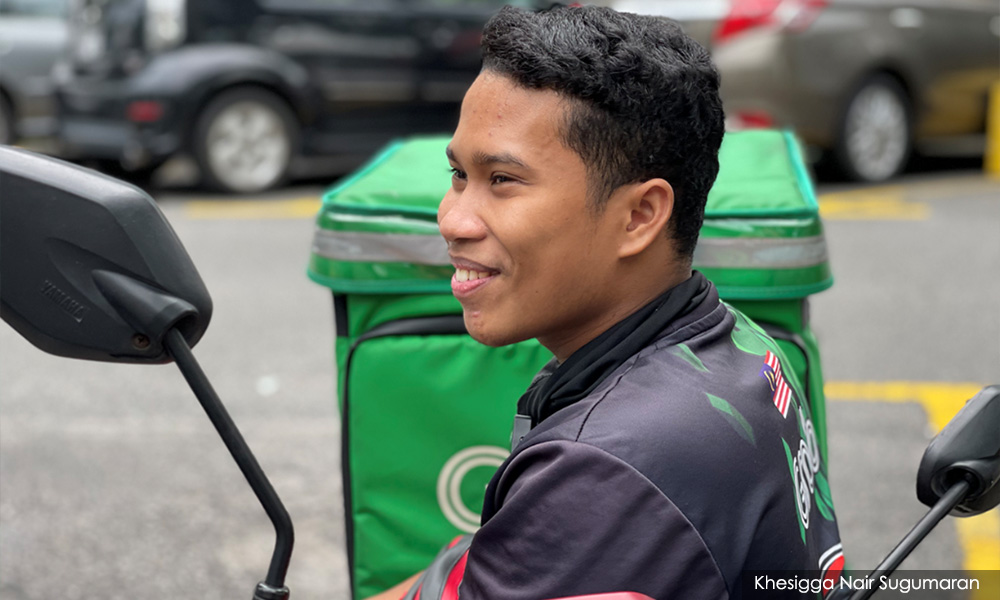
“I prefer to do everything by myself. I don’t want to trouble others,” he said, adding that he does not take government aid for disabled persons.
The youth said his family’s support and the encouragement from his boss at the service centre is a source of motivation. In fact, he views his boss like a father.
Even so, like anyone else, he admits there are days when he feels demotivated or exhausted.
On those days, he would take a break and try to remain positive in pursuing his goals.
He said he accepts his physical condition and is grateful for what he has achieved so far.
“You have to be positive. Other people may have more than what I have but I can’t dwell on that and spend my time thinking about it.
“No, instead, I think of what I need to do to become like them. And then I do what I can,” he added.



Are you sure you want to delete this comment?
This action cannot be undone.