




Sporadic Covid-19 cases still widespread in Klang Valley
Health Ministry director-general Dr Noor Hisham Abdullah has expressed concern over sporadic Covid-19 cases, particularly in the Klang Valley, and urged people to be consistent in taking precautions against the disease and following the government’s standard operating procedures.
He said after the third movement control order was implemented on May 12 and the total lockdown beginning June 1, the rising number of cases in Covid-19 clusters have been contained since last week.
However...
Health Ministry director-general Dr Noor Hisham Abdullah has expressed concern over sporadic Covid-19 cases, particularly in the Klang Valley, and urged people to be consistent in taking precautions against the disease and following the government’s standard operating procedures.
He said after the third movement control order was implemented on May 12 and the total lockdown beginning June 1, the rising number of cases in Covid-19 clusters have been contained since last week.
However, the same cannot be said about sporadic cases, for which there is still no clear sign of abating.
“Sporadic cases refer to cases detected in the community that cannot be linked to any existing cluster. Such cases are detected through screening at workplaces, community screening, or screening of people with symptoms.
“What’s more worrying is that most sporadic cases don’t have symptoms, but could still infect anyone around them who does not follow SOPs correctly,” he said in a statement today.

Of the 578,105 Covid-19 cases recorded in Malaysia from Jan 1 to June 19, 398,846 cases (69 percent) are classified as sporadic cases.
States and territories with highest levels of sporadic cases are Selangor (151,725 cases; 38 percent), Kuala Lumpur (44,517; 11.2 percent), and Sarawak (40,889 cases; 10.3 percent).
Highlighting cases in the Klang Valley, Noor Hisham said the most affected districts from June 13 to June 19 are Petaling (3,905 cases) Hulu Langat (2,783 cases), and Klang (2,482 cases).
He also showed four maps of the Klang Valley region showing where Covid-19 cluster cases and sporadic cases have been detected from March 28 to April 3, from April 11 to April 17, from May 9 to May 15, and from June 13 to June 19.
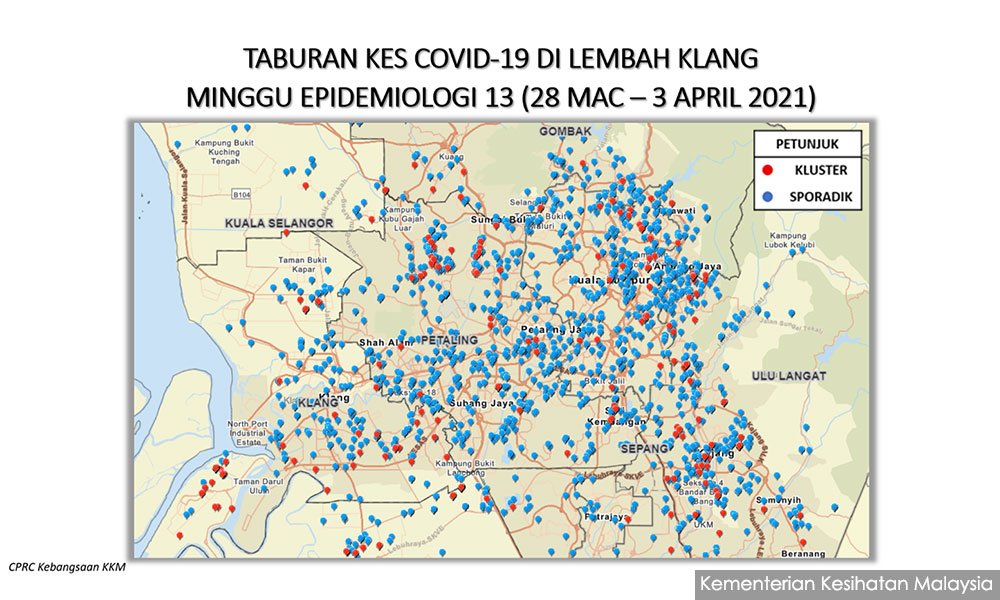
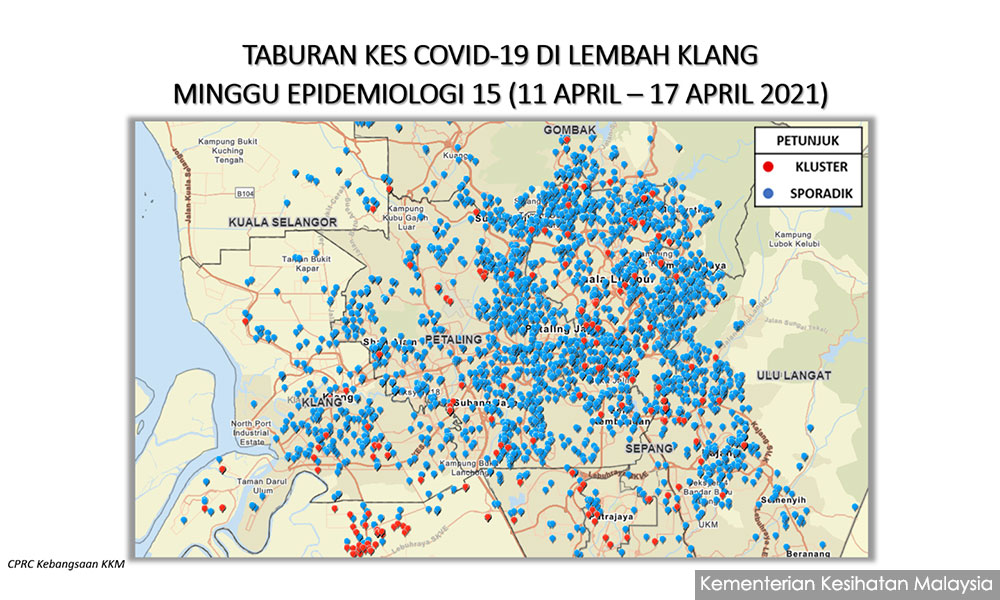
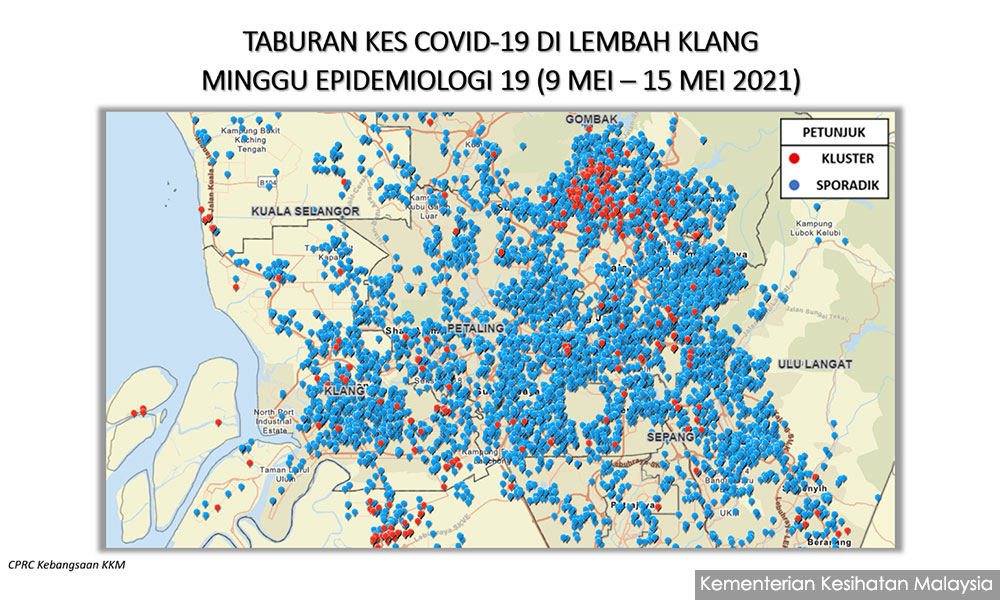

“The charts above show the mapping of sporadic and cluster cases in the Klang Valley from the 13th to the 24th epidemiological weeks. It can be seen there has been a clear increase in sporadic cases and is spreading more widely than before.
“Although the third MCO announced on May 12 has contained the clusters by the 24th week (June 13 to June 19), sporadic cases haven't shown any clear decrease.
“The implication is that the Klang Valley area has high population density and are not only exposed to many sporadic cases in the community but also don’t show any symptoms.
“In other words, it is difficult to know who has Covid-19 among us. It is important for all parties to be aware of this and protect ourselves and our families from Covid-19’s dangers,” he said.
For context, Covid-19 testing in Malaysia has fallen last week, leading to a slight increase in test positivity rate to 6.93 percent.
Test positivity rate in Selangor is 10.17 percent, while the figure in Kuala Lumpur is 7.41 percent.
Meanwhile, Noor Hisham reminded people to take precautions, such as by remaining home unless there are pressing matters to attend to, and following the government’s SOPs if there is a need to go outside.
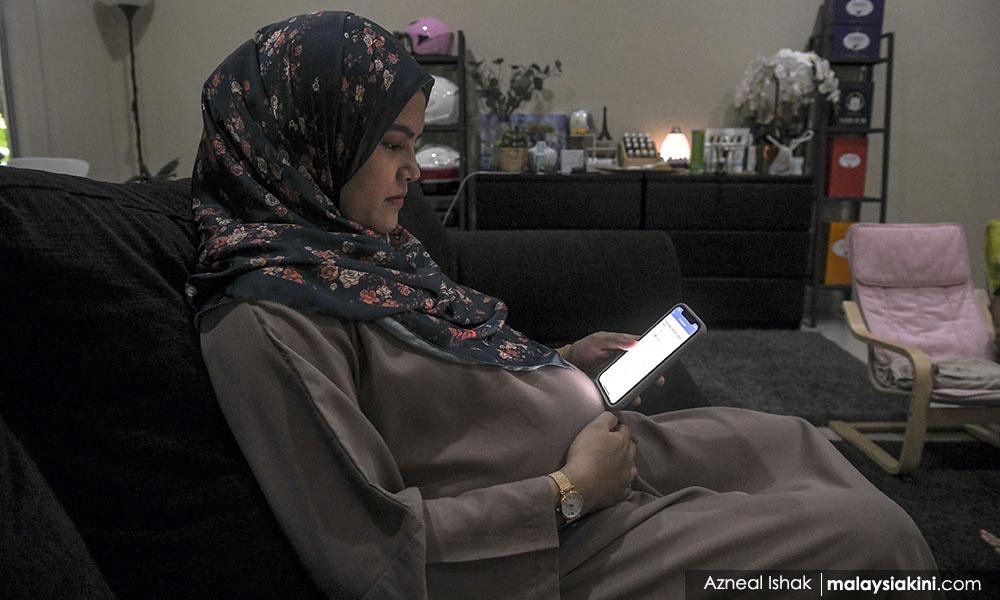
People who have symptoms or had contact with a Covid-19 case should not delay in seeking testing. If they test positive themselves, they can self-notify the Health Ministry via the MySejahtera app or bring their test results to a Covid-19 Assessment Centre in their district.
If allowed to quarantine at home, they should follow all the rules of the quarantine.
“Do not mingle with family members or leave home during this period. You are at risk of infecting others. If your condition worsens, contact emergency services immediately,” he said.


Report this comment
Are you sure you want to delete this comment?
This action cannot be undone.