


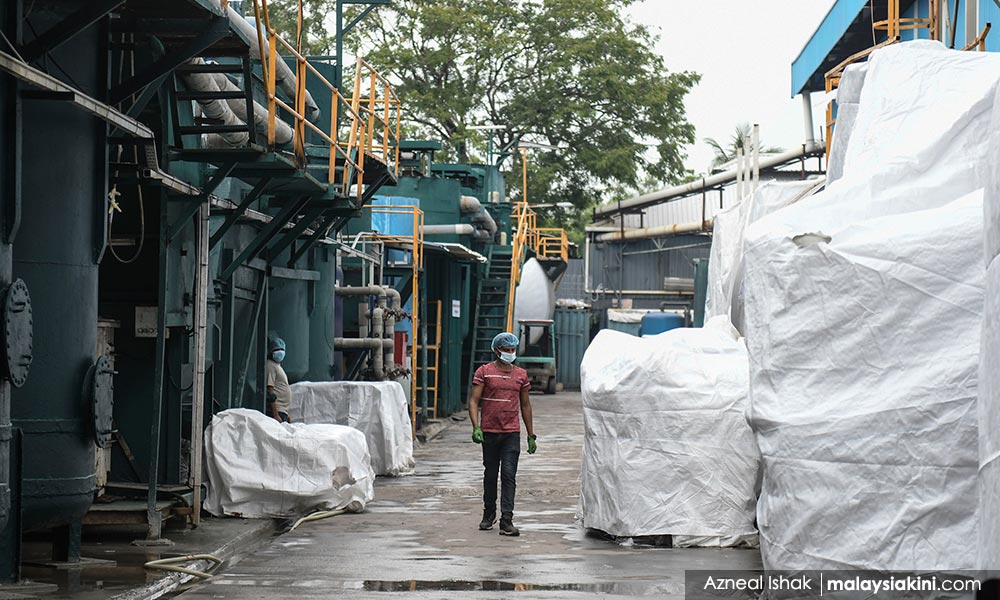

60pct of Covid-19 cases in workplace clusters from factories
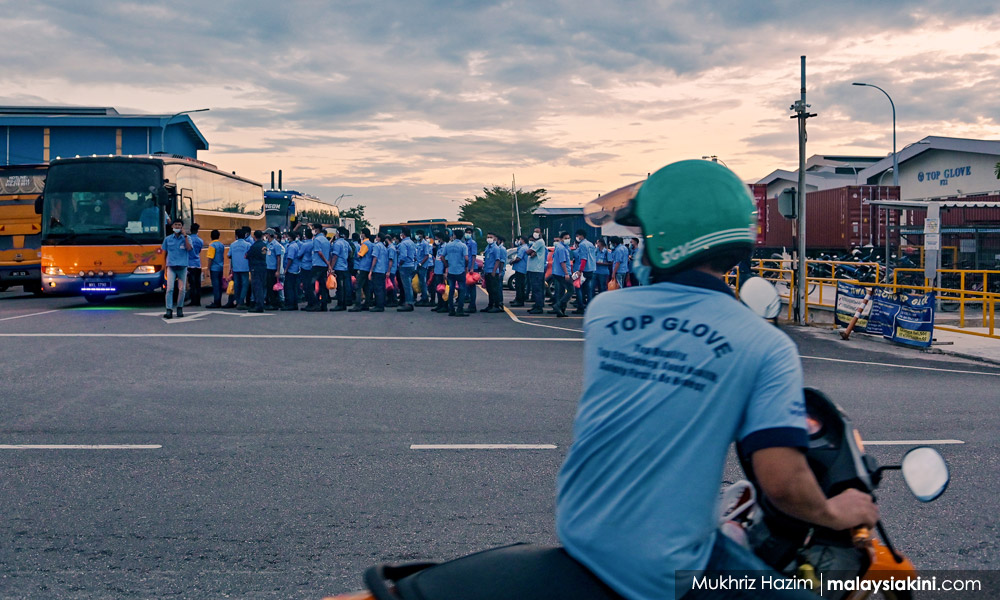
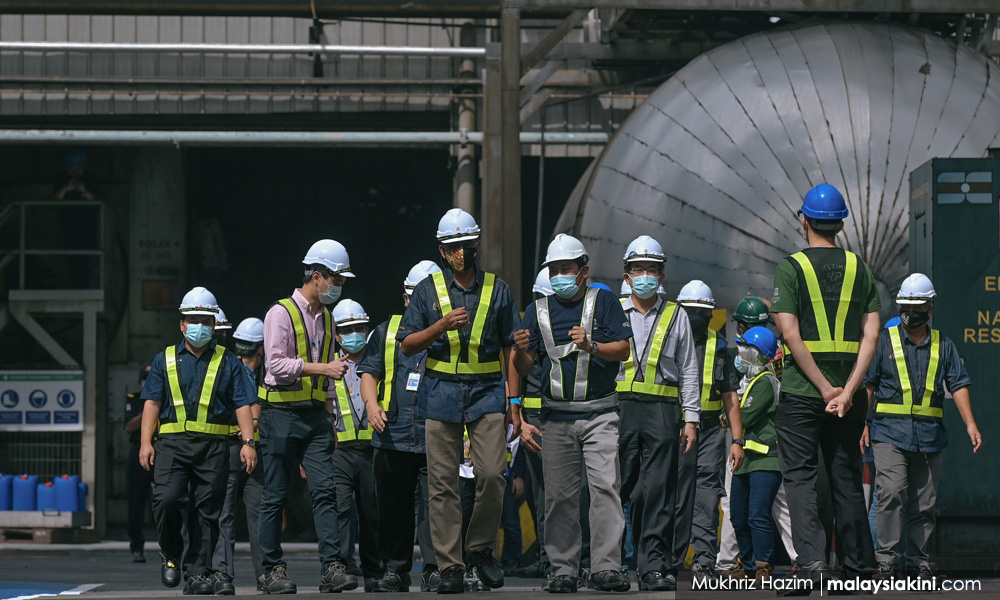
A total of 60 percent of Covid-19 cases from workplace clusters in the first month of the nationwide "total lockdown" were from factories.
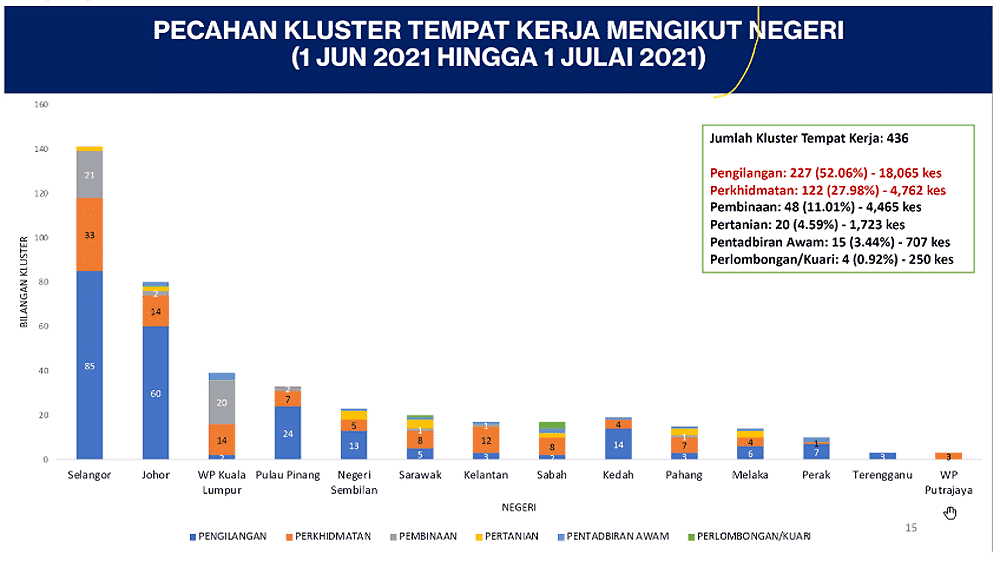
This is 18,065 cases from June 1 to July 1, according to data presented by Health director-general Dr Noor Hisham Abdullah in a briefing to chambers of commerce last weekend.
A total of 60 percent of Covid-19 cases from workplace clusters in the first month of the nationwide "total lockdown" were from factories.
This made up 18,065 cases from June 1 to July 1, according to data presented by Health director-general Dr Noor Hisham Abdullah in a briefing to chambers of commerce last weekend.
He presented that in this period, 436 of all clusters were detected in workplaces while 227 cases were from the manufacturing sector.
A total of 85 of these manufacturing sector clusters were located in Selangor, 60 in Johor, 24 in Penang, 14 in Kedah and 13 in Negeri Sembilan while the rest were distributed across the other states.
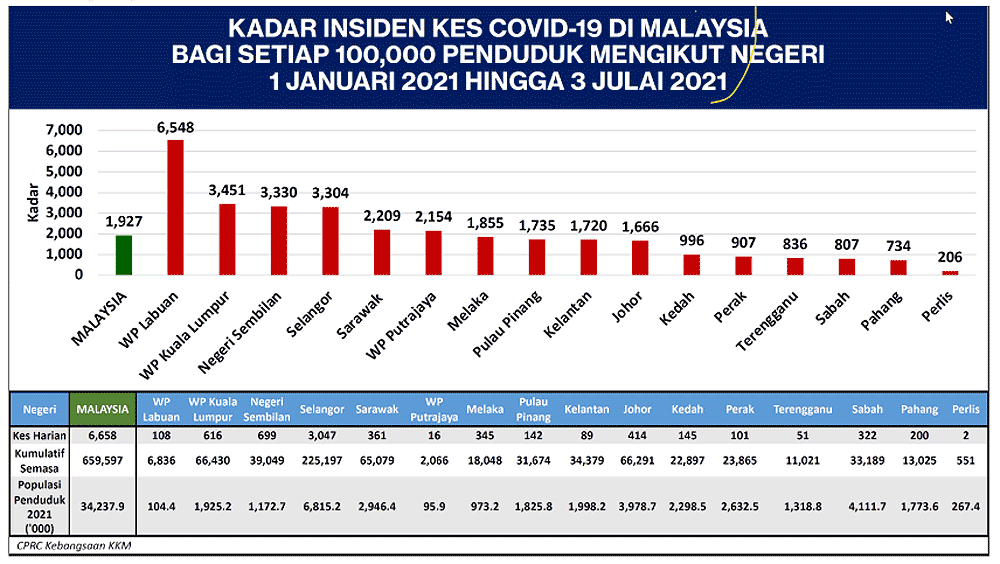
The country recorded 186,610 cases from June 1 to July 1, making manufacturing cases 10 percent of all cases recorded in this period, while all workplace cases made up 16 percent.
Besides factory clusters, the top three sectors contributing to the Covid-19 tally were the services sector with 122 clusters and 4,762 cases and the construction sector with 48 clusters and 4,465 cases.
The information was shared by the Malaysian Associated Indian Chambers of Commerce and Industry (Maicci) with its members yesterday, as part of notes of Noor Hisham's virtual briefing on Saturday.
Maicci confirmed with Malaysiakini that it had issued the notes, while the news portal has contacted Noor Hisham for further information.
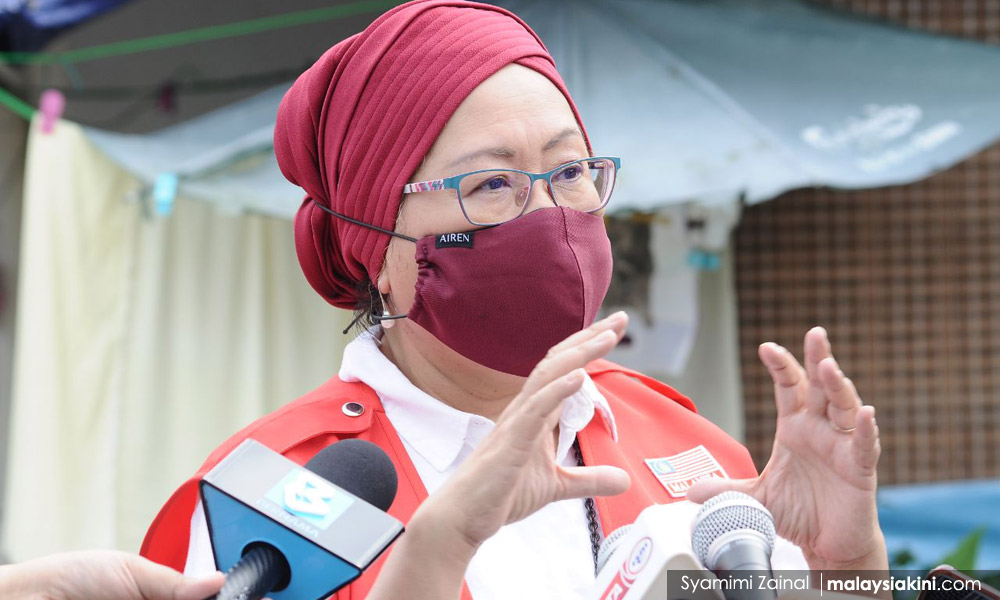
International Trade and Industry Minister Azmin Ali last week said it is unfair to blame the manufacturing sector for the persistently high number of Covid-19 cases.
He said while workplace clusters made up a large proportion of all clusters, in terms of the number of cases, manufacturing sector cases made up a minority of all cases reported.
Under the enhanced movement control order (MCO) period in Selangor and parts of Kuala Lumpur starting July 3, only factories producing rice, bread, sugar, cooking oil, wheat, fresh milk, baby formula, medicine and face masks are allowed to operate.
'Klang Valley ICU operating at 120pct capacity'
Meanwhile, the briefing notes stated that the intensive care units (ICU) are now operating at 120 percent capacity in the Klang Valley and 97 percent capacity nationwide.

"He (Noor Hisham) said if we ever hit 13,000 cases a day, which we would have without the MCO 3.0, the healthcare system will collapse.
"Even with this enhanced MCO in the Klang Valley, the ICU beds utilisation is at 120 percent now, and healthcare facilities are stretched to the brim," it read.
In the private sector, half of the 129 ICU beds are occupied while 51 percent of all 1,267 beds allocated to Covid-19 patients in the private sector are in use.
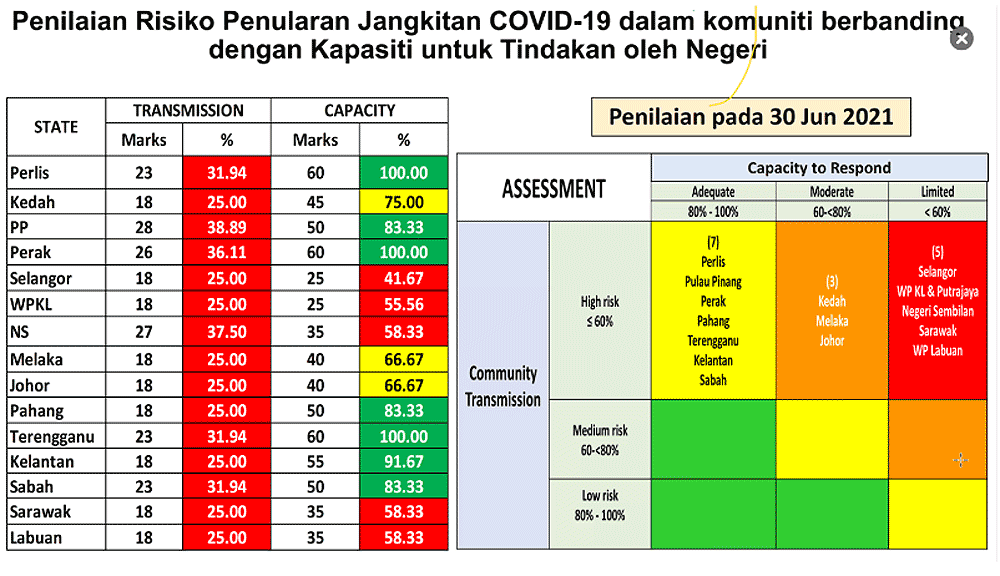
However, some states have met the requirements of moving to Phase 2 of the National Recovery Plan by having less than 12.2 cases per 100,000 population and using less than 75 percent of the ICU beds.
Perlis, Perak, Kelantan, Terengganu and Pahang moved on to Phase 2 yesterday while Penang is set to do so tomorrow.
Sabah is also on the brink of moving ahead to Phase 2, the briefing notes read.
Phase 2 allows more businesses to operate but other restrictions mostly remain.


Report this comment
Are you sure you want to delete this comment?
This action cannot be undone.