


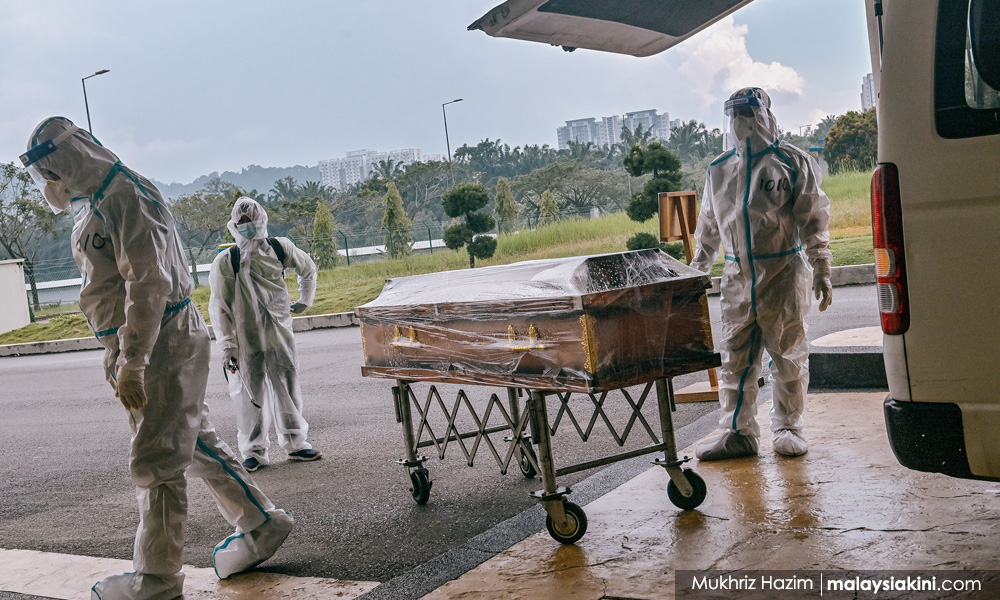

Digitally identifying Covid deceased helps families cope
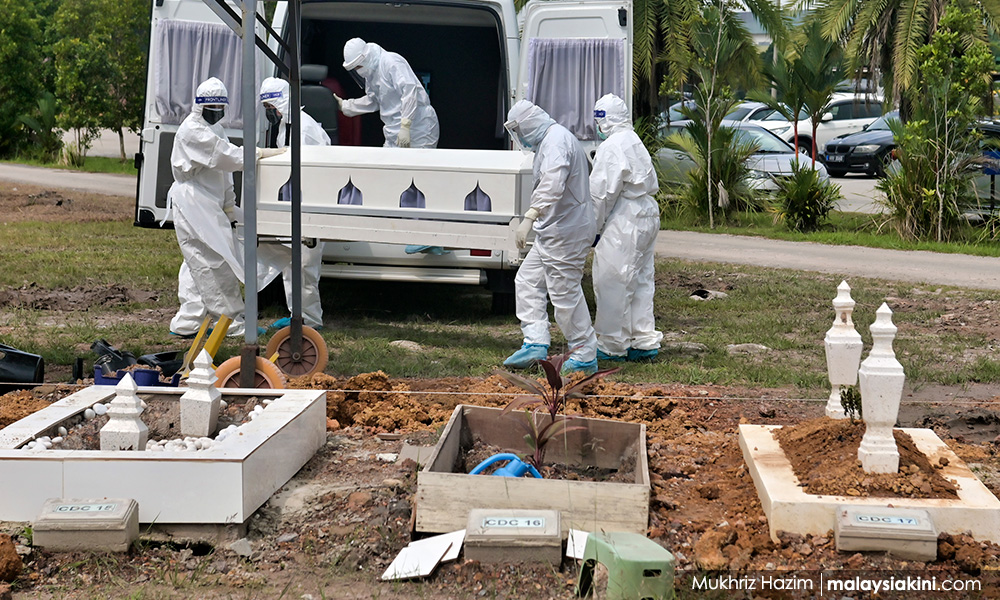
To soothe the grief experienced by families of those who died from Covid, an initiative has been introduced to allow digital identification of the remains.
The initiative is by the Federal Territory of Kuala Lumpur temporary one-stop centre (Pusara WPKL) and the National Sports Institute along Jalan Raja Muda, Kampung Baru, Kuala Lumpur.
Director of operations, Dr Ahmad Hafizam Hasmi, said...
To soothe the grief experienced by families of those who died from Covid, an initiative has been introduced to allow digital identification of the remains.
The initiative is by the Federal Territory of Kuala Lumpur temporary one-stop centre (Pusara WPKL) and the National Sports Institute along Jalan Raja Muda, Kampung Baru, Kuala Lumpur.
Director of operations, Dr Ahmad Hafizam Hasmi, said his team understood the painful situation families of Covid-19 patients had to deal with as they are not allowed to visit their loved ones in the hospital, and even after death, were also unable to bid them a final goodbye.
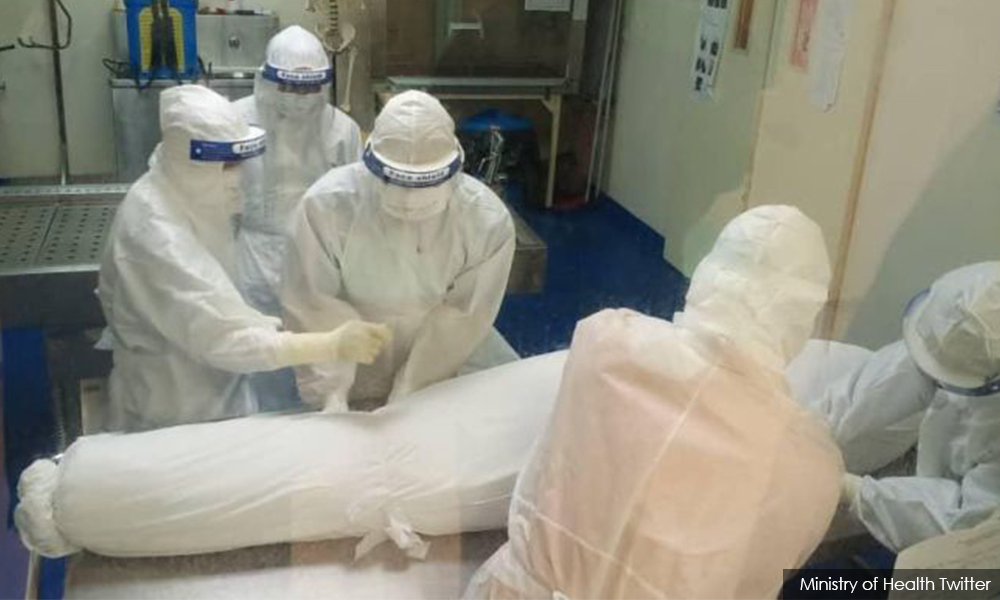
"Realising this, Pusara WPKL provides a body identification facility where one family member, who is fully clothed in PPE (personal protective equipment), will be allowed to perform the physical identification in an identification tent.
"Two others would be allowed to view the face of the deceased through a television screen provided in a special area," he told Bernama.
He said the special area will be equipped with a TV screen connected to a high-definition CCTV camera, allowing family members to record or make live video calls to share with others who are not present.
Ahmad, a forensic doctor from the National Institute of Forensic Medicine Department, Kuala Lumpur Hospital (HKL), who has 14 years of experience, said Pusara WPKL started operations on July 20 and has managed a total of 1,058 remains of Covid-19 patients so far.
“The 24-hour centre receives the remains of the deceased from HKL and is capable of managing the delivery of a maximum of 30 bodies of Covid-19 Muslim patients and 20 non-Muslims at a time.
“We are equipped with five cold storage containers that can accommodate 225 corpses with the current utilisation rate of almost 70 percent. The handing over of Covid-19 remains to the next of kin is usually done from 7am to 6pm,” he added.
Meanwhile, volunteer Aliimran Nordin, 34, who was assigned to care for the family members of deceased Covid-19 patients, said he could feel the grief borne by the next-of-kin while performing the identification process through the facility provided.
"There are also some being quarantined because of having close contact with the deceased, but could make the identification through video calls," he said, adding that each family was only given five minutes to make the identification.
For Mudzakkir Mohd Zahidi, 30, who lost his 54-year-old father, Mohd Zahidi Mohd Zain to Covid-19, said he used the Google Meet application on his handphone during the digital identification process to enable more relatives, especially those far away, to see the face of his deceased father.
"We are aware that the handling of the remains of Covid-19 patients is different and we cannot see them face-to-face due to travel restrictions but at least with this method we can have a last look before the final rites," said Mudzakkir, who lives in Shah Alam, Selangor.
- Bernama


Are you sure you want to delete this comment?
This action cannot be undone.