



Contract doctors dispute govt offer for permanent positions in East M'sia
• UPDATED 9.55PM | Added comments from the Malaysian Medical Association.
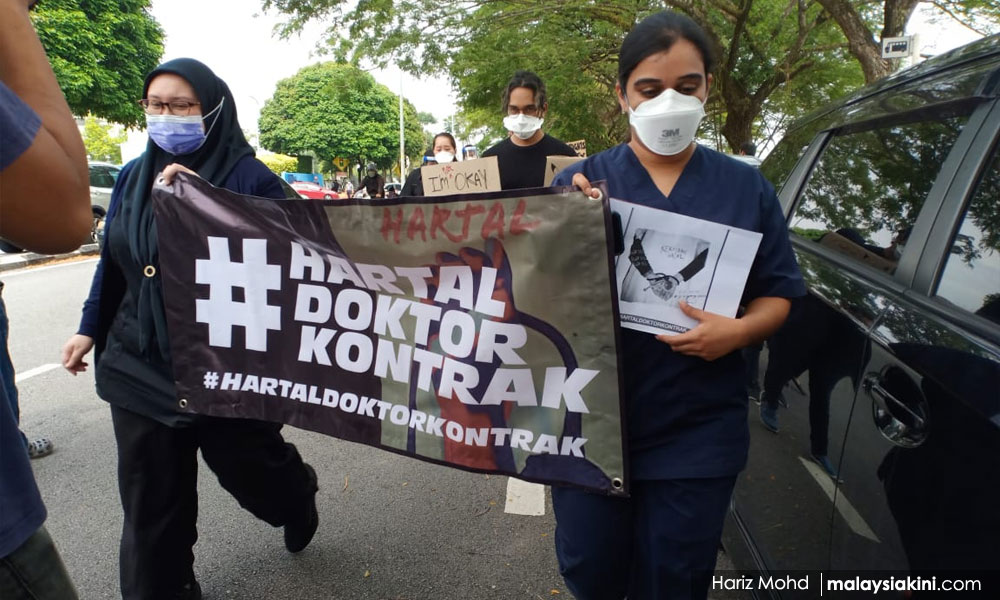
The movement of contract doctors behind last month's nationwide strike has questioned the Health Ministry's move to offer 300 contract doctors from the peninsula permanent positions in East Malaysia.
Hartal Doktor Kontrak said in a statement the Health Ministry's offer for permanent positions only in Sabah and Sarawak appeared to ignore the bigger picture - the problem of a nationwide shortage of doctors.
"The issue being played up is as if the contract doctors were turning down...
- UPDATED 9.55PM | Added comments from the Malaysian Medical Association.
The movement of contract doctors behind last month's nationwide strike has questioned the Health Ministry's offer to 300 contract doctors from the peninsula for permanent positions in East Malaysia.
Hartal Doktor Kontrak (HDK) said the Health Ministry's offer for permanent positions only in Sabah and Sarawak appeared to ignore the bigger picture - the problem of a nationwide shortage of doctors.
"The issue being played up is as if the contract doctors were turning down the offers because they must transfer to Sabah and Sarawak.
"We stress that it is not the issue of deployment. The issue is that every state is faced with a shortage of doctors, so why are only these two states given priority?" it said in a statement today.
The group was responding to the Health Ministry's latest statement that revealed a third of the 300 permanent offers made this month were rejected or vacated.
Health Ministry secretary-general Mohd Shafiq Abdullah yesterday said of the 300 doctors who were offered, 150 had been offered permanent appointments in Sabah while the other 150 were given placements in Sarawak.
From the figure, 85 of those offered permanent positions rejected them while another 15 resigned after accepting employment elsewhere.
HDK questioned the Health Ministry's sincerity to fulfil its demands for permanent positions, with only 300 offers made to more than 23,000 contract doctors, and that too for transfers from the peninsula to East Malaysia.
"We view the reports that stated 100 contract doctors had rejected permanent positions as having an agenda to create the wrong public perception.
"Among those who rejected the offer, some had left the Health Ministry, or even stopped practising as health practitioners but they were still included in the records," HDK added.
The group also said among those offered, some had no time to decide, with only 48 hours given for a big life-changing decision.
"This (short time) made us question the government's sincerity in giving us the offer."
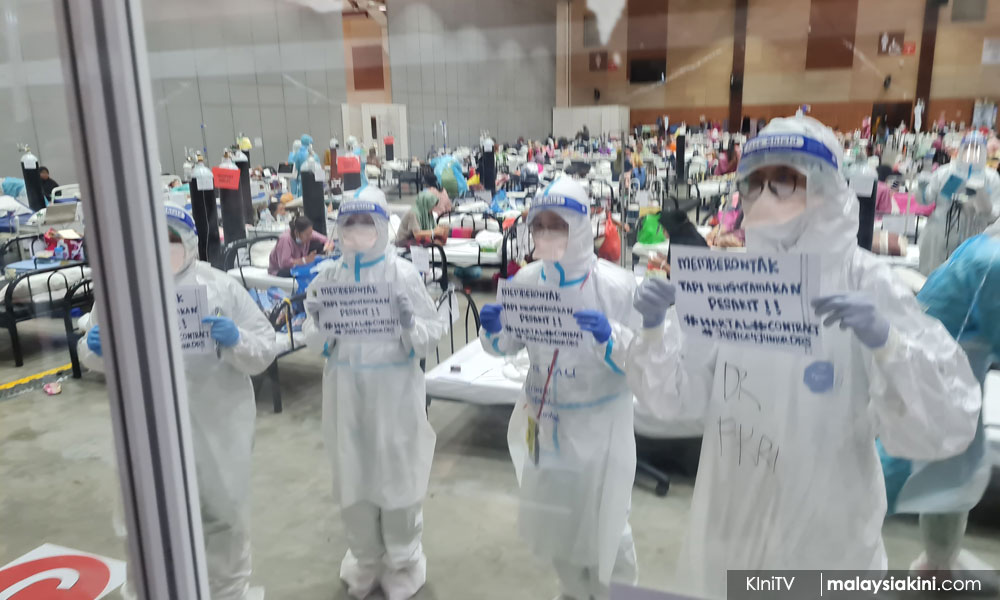
At a personal level, HDK said contract doctors serving in times of the Covid-19 pandemic are already under immense pressure, with a greater need to protect their mental health through familiar surroundings and family support.
HDK also claimed the government had made unfulfilled promises to earlier batches of contract doctors that they would be offered permanent positions as part of perks for a transfer to East Malaysia.
"In the end, it was proven the promises were false.
"Our friends who have been transferred to Sabah and Sarawak in the past were not offered the permanent positions as promised," it said.
"Why were these positions in Sabah and Sarawak not offered to contract doctors already there?
"Instead, the vacancies were offered to those in the peninsula, and those who rejected were questioned," it added.
The HDK movement had been gaining momentum since last month, with contract healthcare workers organising a nationwide strike on July 26 where they staged a walkout from their duties.
The contract healthcare workers had demanded solutions to the shortcomings of the contract system that had been in force since 2016, such as poor job security and uncertain future career prospects.
Posts first, placements later
Meanwhile, the Malaysian Medical Association (MMA) said the doctors should have accepted the offers of permanent positions but be allowed to apply for placement elsewhere later.
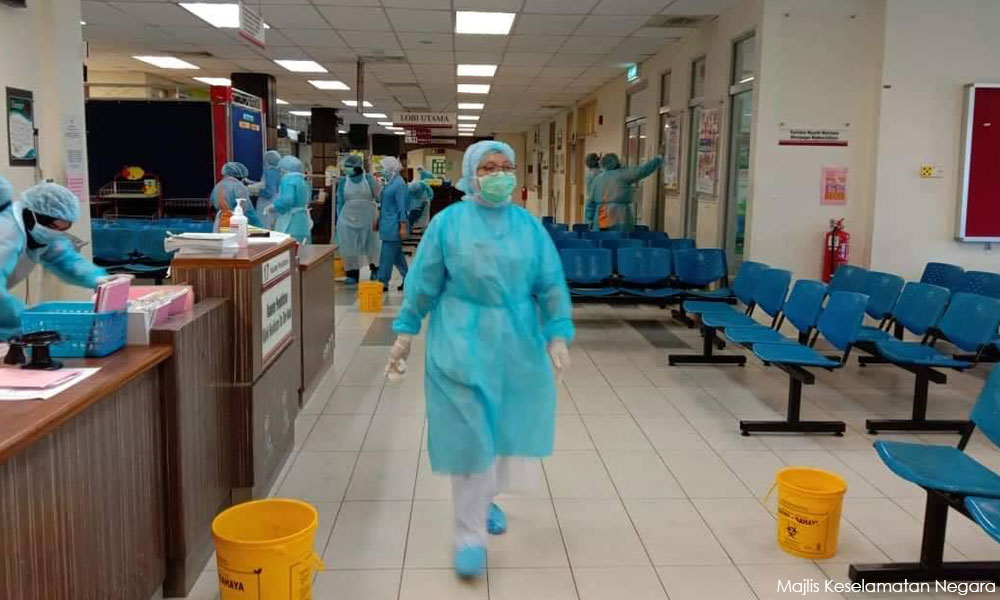
“While we are not aware of why these doctors did not accept the offer and instead decided to reject it, MMA is of the opinion that if permanent posts were a priority, then placement offered should not matter. These doctors should consider this as a national service and agree to be placed where there's a need.
“Once the pandemic is under control, they should then be allowed to apply for placements of their choice based on positions available.
“As more manpower is needed to man the frontlines and reduce the burnout amongst these doctors, MMA is of the opinion that the 100 rejections should not affect the pandemic human resource management as there are many more among the 23,000 junior doctors who are still awaiting an offer for a permanent post,” MMA president Dr Subramaniam Muniandy said in a statement.
However, Subramaniam urged the Health Ministry to clarify several issues.
Among others, he reiterated the MMA’s call for the ministry to provide clear and transparent criteria for how the ministry decides who is eligible for permanent placement.
He also questioned why 15 out of the 300 doctors had left government service, having studied five or six years to become a doctor only to leave after a short period.
“What are we lacking in the system?” he asked.
Subramaniam claimed that some doctors had already quit prior to the recent offers being made, but still received offers, which he said made no sense.
“The MMA on Aug 3 had formally written to the Health Ministry to request for some figures including the attrition rate, the total number of permanent positions offered from each cohort, the cost difference between hiring doctors on a permanent and contractual position and some other information, but have not received a reply to date.
“These figures will help us to assist the government to come up with a framework or policy for the junior doctors.
“We hope the government will soon call MMA for discussions on resolving the contract doctors’ issues,” he added.



Report this comment
Are you sure you want to delete this comment?
This action cannot be undone.