



Govt studying Sinovac shots, assures all Covid-19 vaccines effective
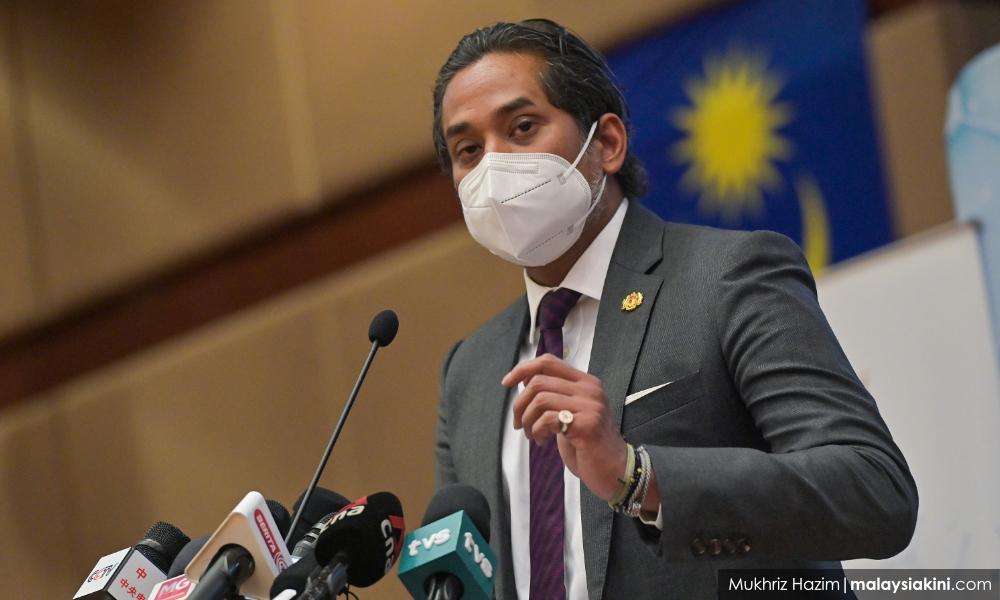
Health Minister Khairy Jamaluddin has assured that all Covid-19 vaccines under the National Covid-19 Immunisation Program are highly effective in preventing death and severe illness due to the disease.
However, he said the ministry is conducting a further study on the Sinovac vaccine, including the possibility of providing booster shots for its recipients.
This came after the ministry announced...
Health Minister Khairy Jamaluddin has assured that all Covid-19 vaccines under the National Covid-19 Immunisation Program are highly effective in preventing death and severe illness due to the disease.
However, he said the ministry is conducting a further study on the Sinovac vaccine, including the possibility of providing booster shots for its recipients.
This came after the ministry announced findings from its study yesterday, which found that full vaccination reduced the risk of infection by 88 percent. Among infected people, it reduced the risk of ICU admission by 83 percent and death by 88 percent, compared to unvaccinated people.
However, the performance of the Sinovac vaccine - although high - appeared to lag behind its counterparts Pfizer and AstraZeneca.
At a press conference in Putrajaya today, Khairy said the matter needs to be studied further to determine whether the difference was due to the vaccine itself or some other factor.
“We’d have to do a more in-depth study to determine whether it is due to the type of vaccine, or some factor due to the patient, or the time they were infected and whether it involved a variant of concern, and so on.
“So, this greater analysis is being conducted, and if it is found that the type of vaccine is one of the factors, then we will take the matter into consideration in administering booster shots.
“But for now, I think the key takeaway is that all the vaccines in Malaysia’s portfolio is effective and has cut deaths and ICU admissions. That is the most important thing,” he said.
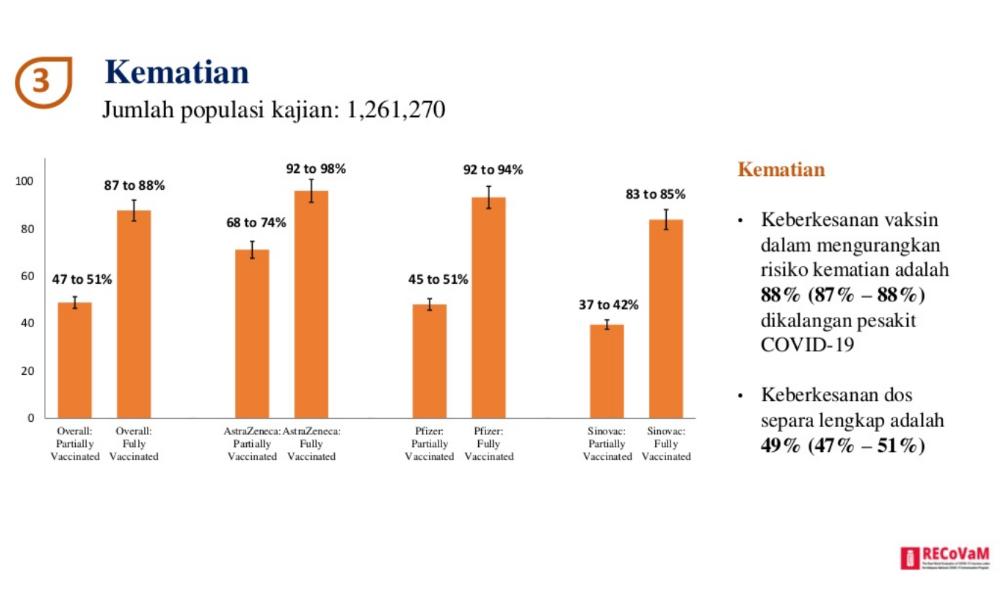
He pointed out that based on findings of the same study, only 0.0066 percent of fully vaccinated people had been admitted to ICU, and only 0.010 percent had died.
Difference between vaccines
Yesterday, the Health Ministry’s Institute for Clinical Research director Dr Kalaiarasu Peariasamy told a media briefing that the AstraZeneca vaccine reduced the risk of ICU admission by 96 percent, Pfizer 92 percent, and Sinovac 77 percent.
Against deaths due to Covid-19, full vaccination with the AstraZeneca vaccine reduced the risk by 96 percent, Pfizer by 93 percent, and Sinovac by 84 percent.
The effectiveness for AstraZeneca and Pfizer vaccines have overlapping confidence intervals, meaning the difference between the two vaccines may not be statistically meaningful.
In addition, Kalaiarasu had pointed out that the AstraZeneca vaccine was primarily given to people in mid-adulthood, whereas Pfizer and Sinovac vaccines went to a more vulnerable population.
The Real-world Evaluation of Covid-19 Vaccines under the Malaysian National Covid-19 Immunisation Programme (Recovam) study was conducted on cases recorded from April 1 to Sept 12.
This coincides with a period where the highly vaccine-resistant Beta variant was initially prevalent in Malaysia but was overtaken by the highly transmissible Delta variant by July, although it is less resistant to vaccine-induced immunity.
This means most of the cases in the study would have been Delta variant cases, given the surge in the number of cases following the arrival of the Delta variant.
‘Third doses’ vs ‘booster shots’
Meanwhile, Khairy told the press conference that the clinical guidelines for booster shots and third doses are still being drafted, but this is on track for implementation in October.
He also drew a distinction between “third doses” and “booster shots”.
The minister explained that a “third dose” refers to additional vaccine doses administered to people for whom two doses are not enough to elicit a sufficient immune response to protect against Covid-19.
A “booster shot” meanwhile, refers to additional vaccine doses administered to people who already had a sufficient immune response after their primary vaccination but the immunity has since waned over the months and needed the booster the stimulate the immune system and ensure continued protection against the disease.
He said Pfizer has already submitted its dossier to the National Pharmaceutical Regulatory Agency (NPRA) making the case for third doses and booster shots, and it will be approved as soon as possible.
“Now, we are developing guidelines for implementing third doses and booster shots that will be tabled in the upcoming Special Committee on Ensuring Access to Covid-19 Vaccine Supply (JKJAV) meeting.
“I am confident that we will administer the third doses first then the booster doses beginning next month, once we have obtained the views and clinical guidelines from experts, and registration with the NPRA,” he said.
He added that the ministry is still studying the possibility of giving booster shots of a vaccine brand that is different from the one used for the primary vaccination (ie heterologous prime-boost vaccination).
Additional shots ‘fair and targeted’
To a question, Khairy defended Malaysia’s move to introduce additional Covid-19 shots at a time of global vaccine scarcity and inequitable distribution.
He said Malaysia is contributing to global vaccine equity by being a full paying member of the Covax Facility co-led by the World Health Organization and has also donated vaccines to countries like Bosnia during the height of its Covid-19 outbreak.
Malaysia had previously signed a deal to procure enough vaccines for 10 percent of its population through the Covax Facility, which is the minimum order size for self-financing countries.
Khairy added that Malaysia is using every dose vaccine dose it receives, ensuring there is no wastage or hoarding.
This is in contrast to certain countries where vaccines doses had to be discarded after being opened but unused or kept beyond their expiry date without being administered.
“I think that is a crucial difference. Malaysia is using whatever stock we have.
“But, in case we do not require the supplies to be delivered, we have made a decision that we can defer our delivery so that vaccine manufacturers that are contracted to us can send to other countries first. That is the decision that we have made.
“On the booster doses, that's why we haven't announced boosters for everyone. I think it will not be fair if we announce boosters for everyone when there are countries that have not given their first dose.
“Our booster and third dose programme now is very targeted to those whose immune system may not have gotten enough of a response from two doses.
“So, I think our targeted booster and third dose programme is fair. The issue is those countries that have vaccines that have gone past the expiry date. I think that is very, very wrong,” he said.
On previous occasions, Khairy had criticised wealthy nations such as the European Union for hoarding vaccines at the expense of poorer countries.
The United Nations and the WHO have also spoken out against the rollout of booster shots on several occasions, saying the vaccines can be better used in countries that don’t even have enough vaccines for their healthcare workers.




Report this comment
Are you sure you want to delete this comment?
This action cannot be undone.