


Reform deal to be brought to Parliament by March, says DAP leader
Institutional reforms that were agreed to by the federal government and Pakatan Harapan earlier this month are to be taken to Parliament by March 2022, according to DAP's Nga Kor Ming.
Speaking live in an online interview last night, Nga expressed hope to see the end of party-hopping by the next general election.
An anti-hopping law is a part of...
Institutional reforms that were agreed to by the federal government and Pakatan Harapan earlier this month are to be taken to Parliament by March 2022, according to DAP's Nga Kor Ming.
Speaking live in an online interview last night, Nga expressed hope to see the end of party-hopping by the next general election.
An anti-hopping law is a part of the reform deal, which aims at preventing elected representatives from abusing the mandate given to them by voters.
"The MOU which was signed recently is supposed to be taken (into the Parliament) by March next year.
"Thus, I have high hopes that by the next general election, there won't be 'political frogs' anymore.
"This is so that the people's mandate is respected and those who commit party hopping would have to abandon their seats and by-elections called," the Perak DAP chairperson said.
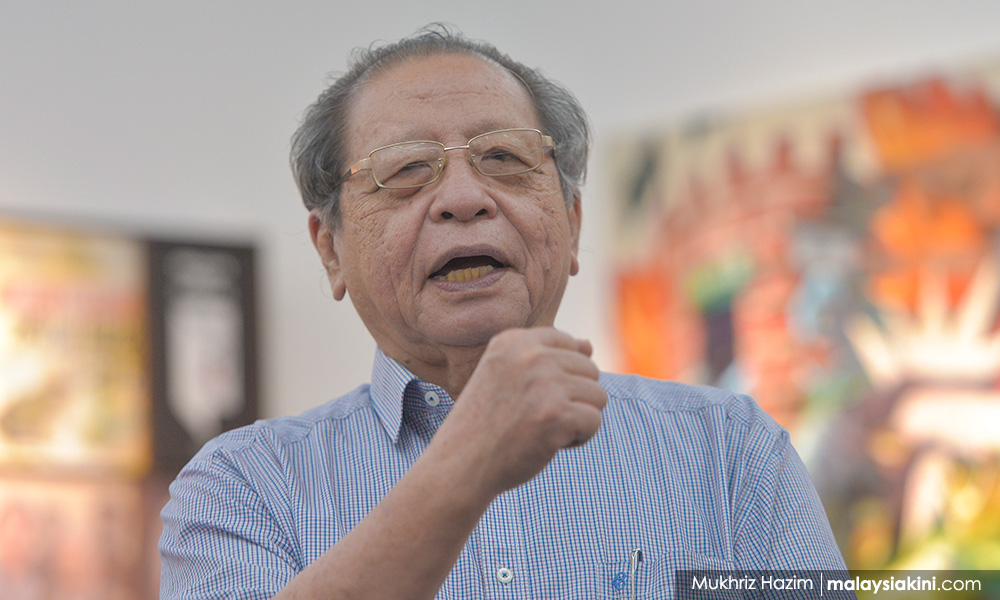
Nga (above) was speaking in an interview session aired live on NR Channel hosted by pro-Umno writer Zaharin Mohd Yasin, who is also known by his pen name Sang Kelembai. The interview focused on the topic of parliamentary reforms.
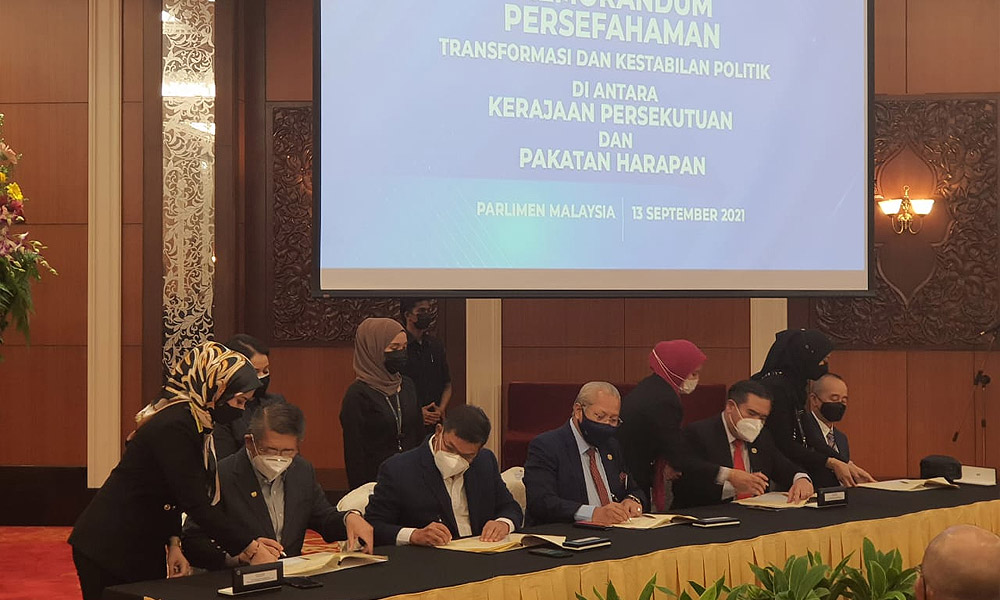
On Sept 13, Prime Minister Ismail Sabri Yaakob signed a memorandum of understanding with top Harapan figures in Parliament.
Ismail Sabri said his administration would bring "transformations" that will result in the country being better managed which, in turn, will help the country's fight against Covid-19 and economic recovery.
Other reforms agreed to by both parties include limiting the term of a prime minister to 10 years, a list of parliamentary reforms, ensuring judicial independence and strengthening the country's Covid-19 plan.

Ismail Sabri was sworn in as the country's ninth prime minister on Aug 22, after he managed to get a slim majority of support from 114 MPs following the fall of his predecessor Muhyiddin Yassin.
The Umno vice-president is widely speculated to have sought a confidence and supply agreement with Harapan in order to protect himself from internal pressure.
Vote of confidence
On the newly minted prime minister, Nga said he believes Ismail Sabri should prove his majority through a vote of confidence in the Dewan Rakyat.
He said this should be the case for every prime minister who gets the post outside a general election, as has been practised in the past.
Coining several examples, Nga pointed out that Malaysia's third prime minister, Hussein Onn, tabled a vote of confidence 11 days after he was sworn in, following the death of Abdul Razak Hussein in 1976.
He added that the fifth prime minister, Abdullah Ahmad Badawi, proved his majority in the Dewan Rakyat four days after he took over from Dr Mahathir Mohamad in 2003.
"That is why the legitimacies of the third and fifth prime ministers were never questioned because their majorities had been tested and approved in the Dewan Rakyat.

"But the ninth prime minister has not been tested until today.
"I believe it is best for Ismail Sabri, if he is confident of his majority, that he should do it as soon as possible. It would give a good signal that our country is stable," he said.
During the interview, Nga, who is a former Dewan Rakyat deputy speaker, also stressed the importance of having key civil service positions reporting directly to the Parliament instead of the executive branch.
He said the recent theft of RM25 million from MACC was an example of betrayal by those in power to enforce the law.
"To prevent such an incident, we have proposed that there must be a special select committee, and the MACC must be responsible to the Parliament.
"Whoever is appointed by the government to lead MACC must go through a test by the committee. And the chief as well as his spouse must be required to declare their wealth to the Parliament every year.
"So we would know that the top officials at our law enforcement agencies... they must be cleaner than everybody else.
"(This is) because they are responsible to uphold the law, and to ensure that no abuse of power and ensure that no innocent people would be mistreated."
According to Nga, the same should apply to other positions such as the Inspector-General of Police, the chief of the Armed Forces, Chief Secretary to the Government and also in the appointments of ambassadors.




Report this comment
Are you sure you want to delete this comment?
This action cannot be undone.