



Minister visits college after new 'period spot check' allegation
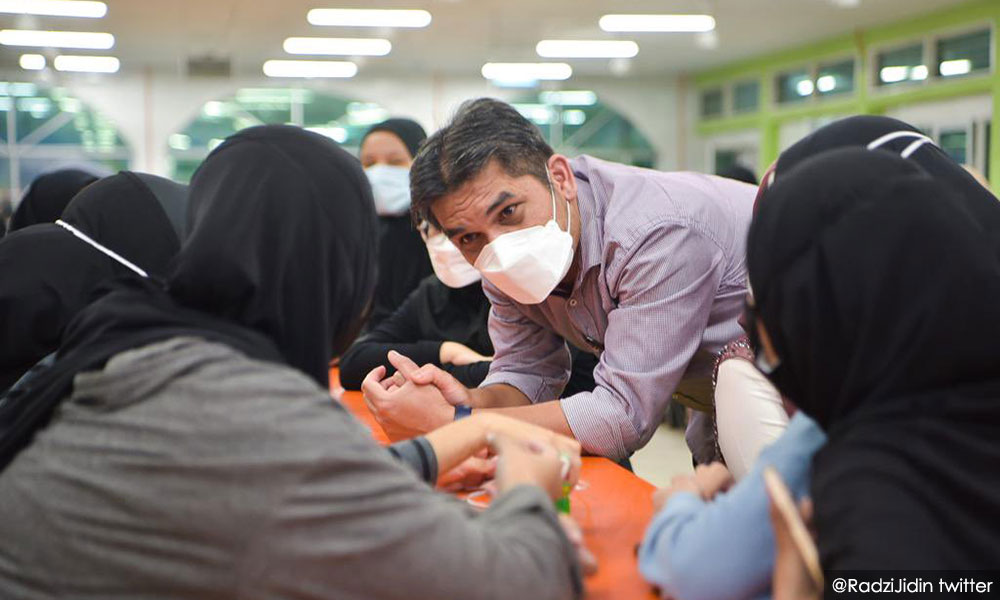
Education Minister Radzi Jidin visited a vocational college in Kuala Lumpur last night following allegations that “period spot checks” had been conducted at the institution last week.
According to former journalist Tashny Sukumaran on Twitter, a source studying at the ERT Vocational College in Setapak, Kuala Lumpur, told her that she and about 30 other girls aged 18 or 19 were rounded up at around 7.50pm on Oct 18.
They were then given cotton buds and were told to ‘prove’ they were on their period...
Education Minister Radzi Jidin visited a vocational college in Kuala Lumpur last night following allegations that “period spot checks” had been conducted at the institution last week.
According to former journalist Tashny Sukumaran on Twitter, a source studying at the ERT Vocational College in Setapak, Kuala Lumpur, told her that she and about 30 other girls aged 18 or 19 were rounded up at around 7.50pm on Oct 18.
They were then given cotton buds and were told to ‘prove’ they were on their period.
“According to her, these 'period checks' had stopped for a while after the furore earlier this year, but began again just because someone performed their prayers alone instead of with others at the hostel surau,” Tashny said, adding that the college had conducted such checks for some time.
When students protested that they were uncomfortable with the instruction, they were allegedly told “If you feel uncomfortable about it, then perform your prayers”.
In Islam, girls and women who are menstruating do not perform ritual prayers. Such congregational prayers are commonly performed daily in residential or religious-based schools.
READ MORE: Schoolgirls 'shamed, groped and violated' in period spot checks
According to Tashny, who is now a senior analyst at a think tank, she had attempted to contact Radzi and Education Ministry officials on several occasions to explain that she has received a complaint, and asked for information on how to contact an Education Ministry committee that was being set up in June to investigate allegations of period spot checks in schools.
According to her, she had sent text messages to the minister regarding the allegation on Oct 19.
However, she said, the only information received was from a ministry official who supposedly told her that they have “no information” about the committee.
Tashny then took to Twitter to pressure Radzi and the ministry to act.
“Bear in mind that this committee was being set up in June. It is now nearing the end of October. I would like to ask Twitterjaya to urge Radzi and the Education Ministry to look into this matter seriously.
“If the committee has been set up, please share the details with the public so we can report these violations on girls,” she said.
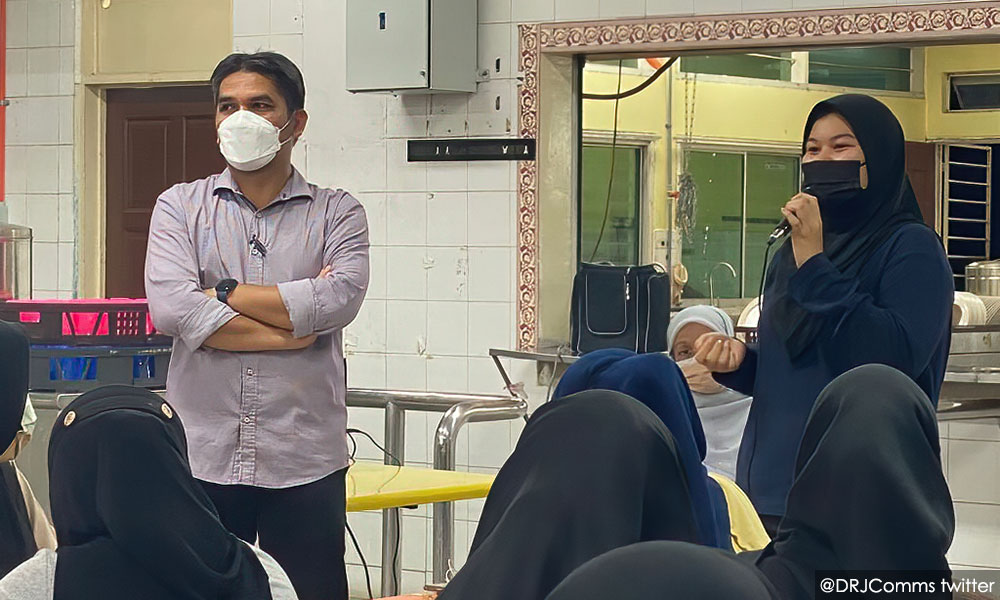
After the allegations were made public, Radzi’s communications team responded on Twitter last night that the minister had just finished visiting schools in Sarawak, and upon reading her tweets, was already making his way to the school and has asked for a full report from the ministry.
About one-and-half hours later, at about 11pm, the communications team announced that the minister had arrived at the school and was personally questioning the students in absence of their wardens and teachers.
In a statement later, the minister said he had come personally to the school to get feedback directly from students, teachers and the school principal.
He said he was accompanied by Education Ministry secretary-general Yusran Shah Mohd Yusof and director-general Nor Zamani Abdol Hamid during the visit.
“We will study the matters raised during the meeting. The Education Ministry is always committed to ensuring safe and comfortable schools and hostels. This is to provide a harmonious school for all,” Radzi said.
He also reiterated his commitment to ensuring that period spot checks would no longer be practised at any institution under his ministry.
Meanwhile, Tashny tweeted to confirm the meeting with the students had taken place in their teachers’ absence.
“He also took notes, and his wife and several female officers were there. My sources say they felt more comfortable because of this,” she said.
Slow response to issue
Various groups and public figures - including the All Women’s Action Society (Awam), Azalina Othman Said, Rafidah Aziz, Anwar Ibrahim, Hannah Yeoh, Teo Nie Ching and Maszlee Malik - have also called for the ministry’s action on the matter since the incidents were first reported in April.
Similarly, members of the cabinet - such as Women, Family, and Community Development Minister Rina Harun - have expressed their dismay at the occurrence of such incidents.
At the time, the Titiwangsa MP vowed to engage with the relevant authorities to ensure that the practice was stopped.
In June, Radzi said that the Education Ministry was in the final stages of forming an independent committee to look into existing procedures that addressed complaints on the practice of period spot checks in schools, as well as other related matters.
Key details on the probe’s committee have yet to be disclosed to the public.
The ministry’s initial investigation - which was carried out in response to public outcry and reported complaints - purportedly did not indicate that such practices and other disturbing incidents had occurred.
These incidents - some of which date back to 20 years ago - allegedly include showing blood-soaked sanitary pads, performing vaginal swabs with either cotton buds, tissues, or fingers, or having a teacher, warden or school prefect pat the students down at the groin to feel if they were wearing a sanitary pad.
In response to the inconclusive investigation, Malaysiakini submitted a list to Radzi, which named 15 schools where female students were allegedly subjected to period spot checks to prove that they are menstruating.
A copy of the list was also sent to Radzi’s deputies, Muslimin Yahaya and Dr Mah Hang Soon, as well as the ministry’s secretary-general and Corporate Communications Department.
The list was sent along with other details, such as the dates of alleged offences (most of which dated from 2011 to 2018) and the wardens or teachers who were named by the students.
The names of the alleged victims were not included in the list.
Separately, Majlis Amanah Rakyat (Mara) had also conducted its own investigation on the practice of period spot checks in schools administered by the agency.
However, it has yet to release a statement on the findings of its investigation, contrary to what was initially promised by Beaufort MP and Mara chairperson Azizah Mohd Dun on May 6.




It's high time that we get rid of all these useless and Arrogant Politicians and their crony Little Napoleons. I bet more Indonesians are laughing at us now. They have been belittling our Bumiputras cast system for some time already. Why must Malaysia be famous for the wrong reasons?
Report this comment
Are you sure you want to delete this comment?
This action cannot be undone.