



Covid-19 prison clusters should spark move to reduce overcrowding - Azalina
Covid-19 outbreaks in prisons infecting 51,123 inmates, staff and their families should be a trigger for inter-agency action on prison reforms, according to Special Advisor to the Prime Minister on Law and Human Rights Azalina Othman Said.
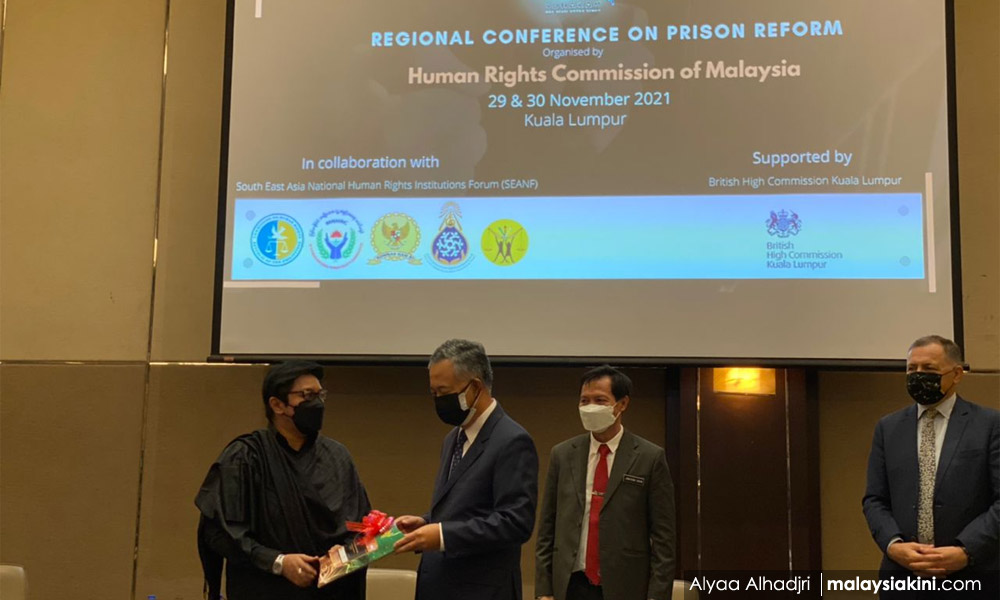
Specifically, Azalina, in her speech at a regional conference on prison reforms hosted by Suhakam, pointed towards efforts to reduce overcrowding, citing an inmate population of between 120 percent and 200 percent more than the limit in certain facilities.
It was previously revealed in Parliament that there are...
Covid-19 outbreaks in prisons infecting 51,123 inmates, staff and their families should be a trigger for inter-agency action on prison reforms, according to Special Advisor to the Prime Minister on Law and Human Rights Azalina Othman Said.
Specifically, Azalina, in her speech at a regional conference on prison reforms hosted by Suhakam, pointed towards efforts to reduce overcrowding, citing an inmate population of between 120 percent and 200 percent more than the limit in certain facilities.
It was previously revealed in Parliament that there are 69,507 inmates detained in 39 prison institutions as of Aug 25 and Azalina said the government must consider a shift from custodial sentences to alternative non-custodial sanctions in certain cases.
She said this includes individuals on trial who were detained only because they could not afford bail.
"We should consider a moratorium on new admissions, early or conditional release, especially during this critical time while we recover from the massive socio-economic impact of Covid-19.
"These options should be made available for non-violent offences and people with chronic illnesses," she added.
Health news portal CodeBlue previously reported that detention centres contributed about 5.62 percent, or 523 cases out of the 9,316 Covid-19 cases that were reported from Feb 22 to April 2.
'Evidence-based approach'
Azalina said the government should take an evidence-based approach to plan programmes, training, policy improvements and development of prison management strategies.
Azalina, who is chairperson of the All-Party Parliamentary Group Malaysia (APPGM) on Prison and Detention Centre Reforms, said among others, reforms would require an upgraded prison data management system, coupled with institutional strengthening and capacity building for prison managers and staff that comply with international standards and guidelines.

In September, Deputy Home Minister Ismail Mohamed Said confirmed that several steps have been taken to reduce overcrowding, including relocating the inmates to less crowded prisons, converting former national service training camps into "satellite" prisons and setting up transit centres in the prisons for low-risk convicts and detainees.
This was on top of reported plans to allow about two-thirds of inmates deemed suitable to undergo corrective programmes outside the prison to do so under various community programmes.
Malaysiakini, in a special report in June, had highlighted the grave conditions in prisons, largely attributed to problems surrounding overcrowding of the facilities.






Report this comment
Are you sure you want to delete this comment?
This action cannot be undone.