



Orang Asli group narrowly escapes flood, still living in tents days later
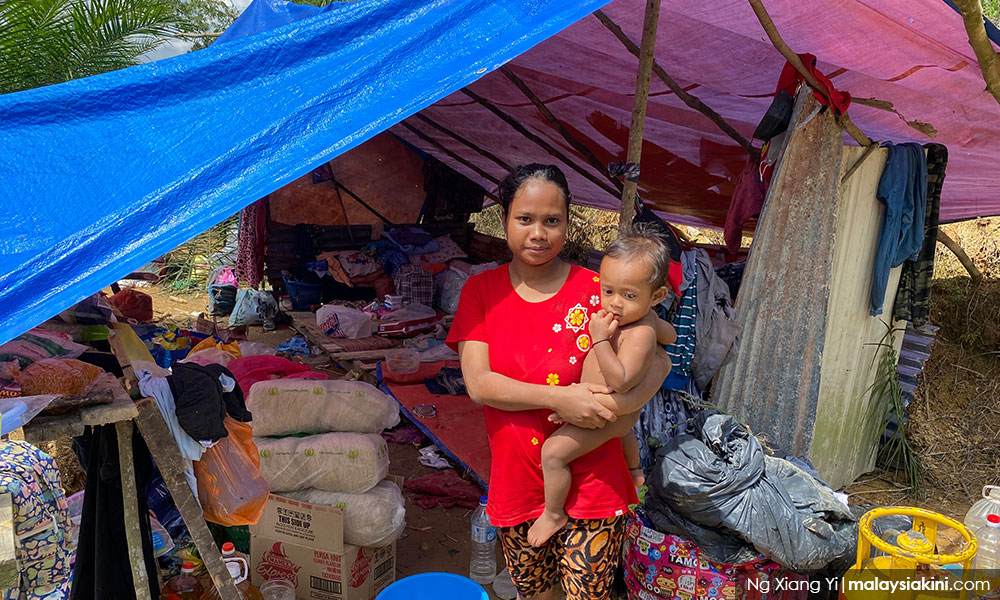
Due to the slow relief efforts after the floods last week, a group of Orang Asli villagers near Karak, Pahang are still living in tents at an oil palm plantation even though the water has subsided five days earlier.
To make matters worse, among the group of more than 10 displaced people, two are elderly folk with mobility problems and two are toddlers. Another round of storms or flooding could catch them in a precarious situation.
The Temuan folks’ village, located next to a durian orchard at Batu 19, Karak, was devastated in the flood. When Malaysiakini visited yesterday, all eight houses in the village were found to be damaged and unsuitable for occupation. In some cases, only the house’s four support pillars remained.
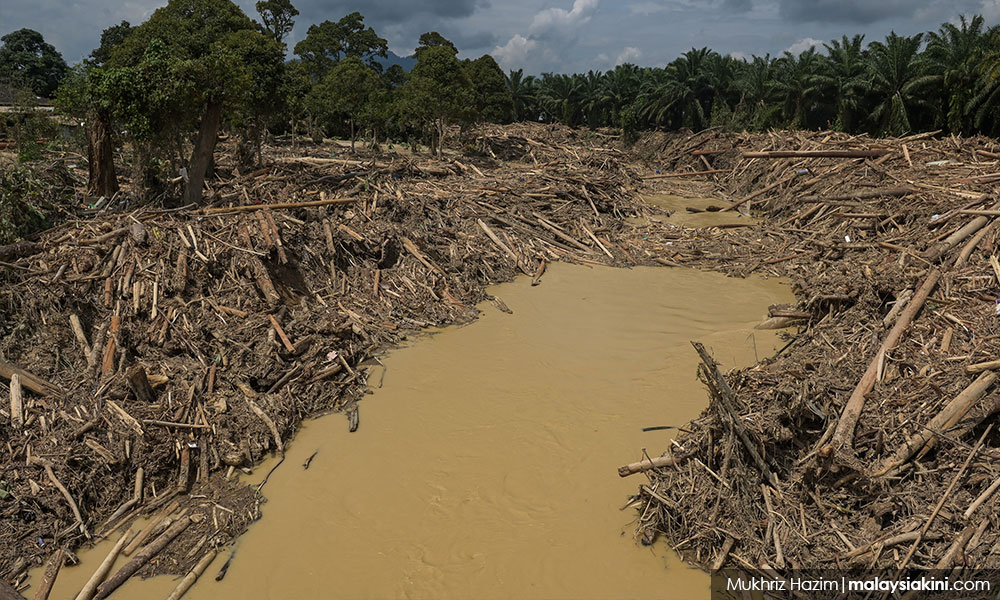
The orchard is located at the confluence Sungai Krau and Sungai Telemung and is also heavily damaged. Both sides of the riverbanks were covered with debris.
According to Alam Awai, 56, who works at the orchard, more than 50 villagers fled to high ground to escape rising waters on Saturday night.
“In more than 50 years, this is the worst flood I have ever seen. The water flowed like a rising tide; our house on the riverbank was completely surrounded by the flood and was spun around in the water like a ball.
“I initially wanted to walk upstream to take refuge in my sister's house. But the water level rose to her house within five minutes, so we can only keep running and seek refuge in an oil palm plantation.”
Alam Awai seeks refuge in an oil palm plantation
He likened the flood to a tsunami – even though the riverbed was deep, places as far as 100m away from the river were inundated.
“I think the water level is at least 70 feet (21 metres). I kept 100 chickens and the water swept them away without leaving a single feather... It was a terrible sight...
Due to the slow relief efforts after the floods last week, a group of Orang Asli villagers near Karak, Pahang are still living in tents at an oil palm plantation even though the water has subsided five days earlier.
To make matters worse, among the group of more than 10 displaced people, two are elderly folk with mobility problems and two are toddlers. Another round of storms or flooding could catch them in a precarious situation.
The Temuan folks’ village, located next to a durian orchard at Batu 19, Karak, was devastated in the flood. When Malaysiakini visited yesterday, all eight houses in the village were found to be damaged and unsuitable for occupation. In some cases, only the house’s four support pillars remained.
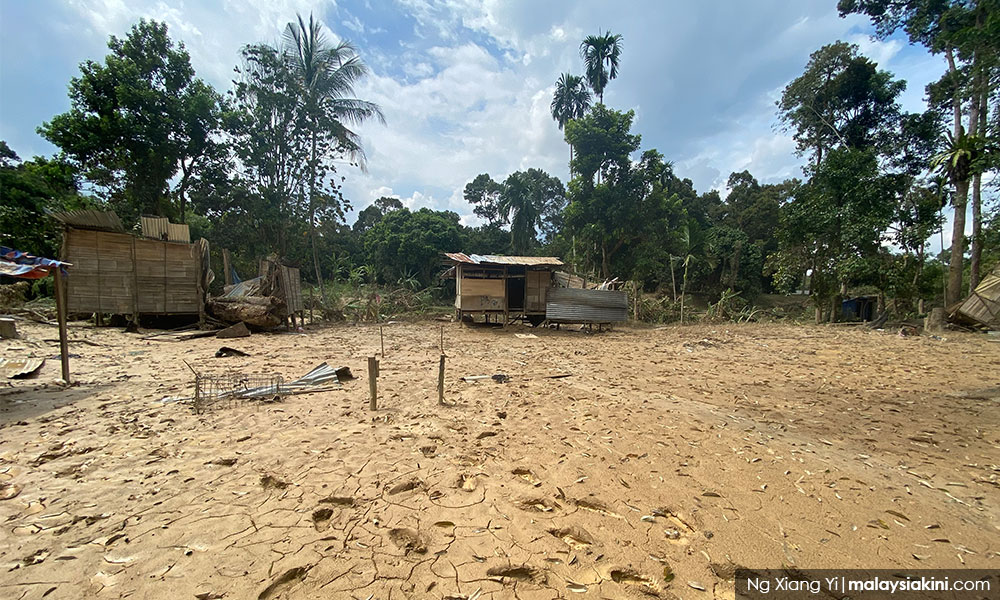
The orchard is located at the confluence Sungai Krau and Sungai Telemung and is also heavily damaged. Both sides of the riverbanks were covered with debris.
According to Alam Awai, 56, who works at the orchard, more than 50 villagers fled to high ground to escape rising waters on Saturday night.
“In more than 50 years, this is the worst flood I have ever seen. The water flowed like a rising tide; our house on the riverbank was completely surrounded by the flood and was spun around in the water like a ball.
“I initially wanted to walk upstream to take refuge in my sister's house. But the water level rose to her house within five minutes, so we can only keep running and seek refuge in an oil palm plantation.”
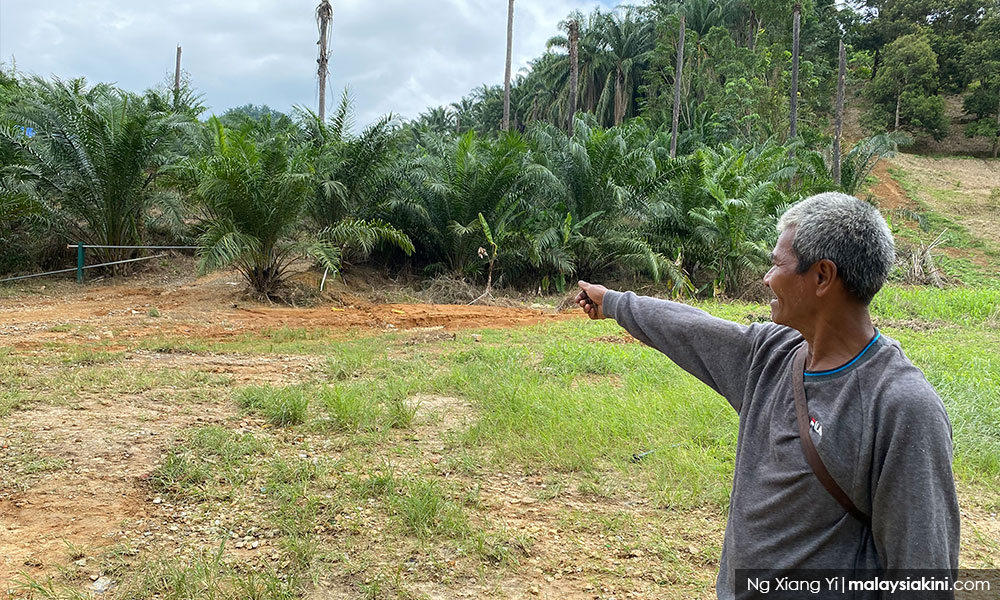
He likened the flood to a tsunami – even though the riverbed was deep, places as far as 100m away from the river were inundated.
“I think the water level is at least 70 feet (21 metres). I kept 100 chickens and the water swept them away without leaving a single feather... It was a terrible sight,” he lamented.
Temporary refuge
After reaching high ground, he said he could hear others crying for help but was powerless to do anything.
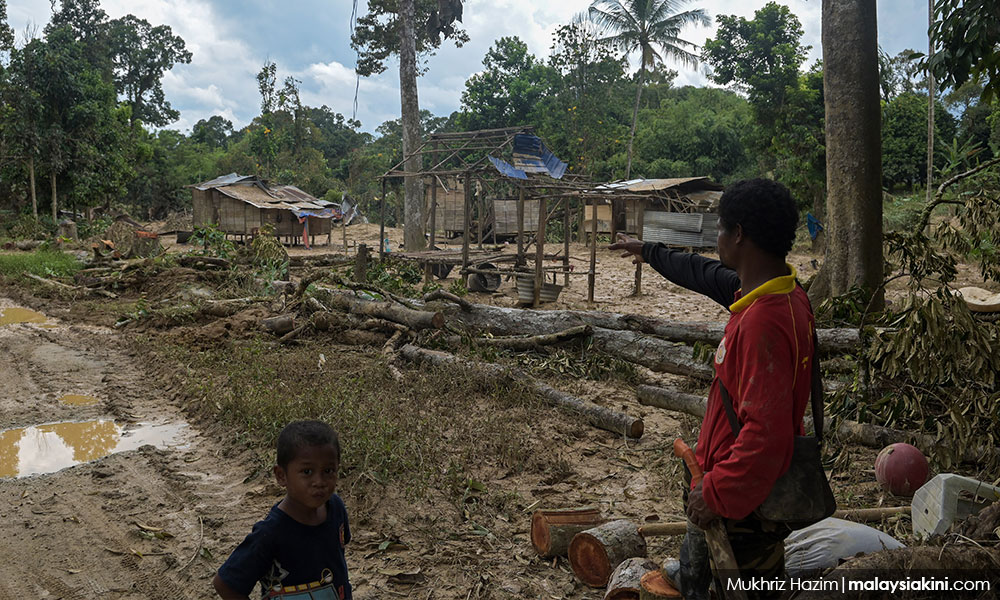
Once the flood subsided, his employer went into the durian orchard looking for him and shouted his nickname “Aki”.
“My tauke said he kept looking for me and worried that the water had swept me away. So, he was relieved to see me,” he told Malaysiakini.
He added although his employer suffered great losses as well, he was still able to able to offer accommodation to him and his family, which he is grateful for.
However, he lamented there are still two elderly people who have nowhere to go and are now temporary sheltered in shabby tents.
“They could not escape at all when the flood came, but luckily some young villagers managed to carry them on their backs to safety,” he said.
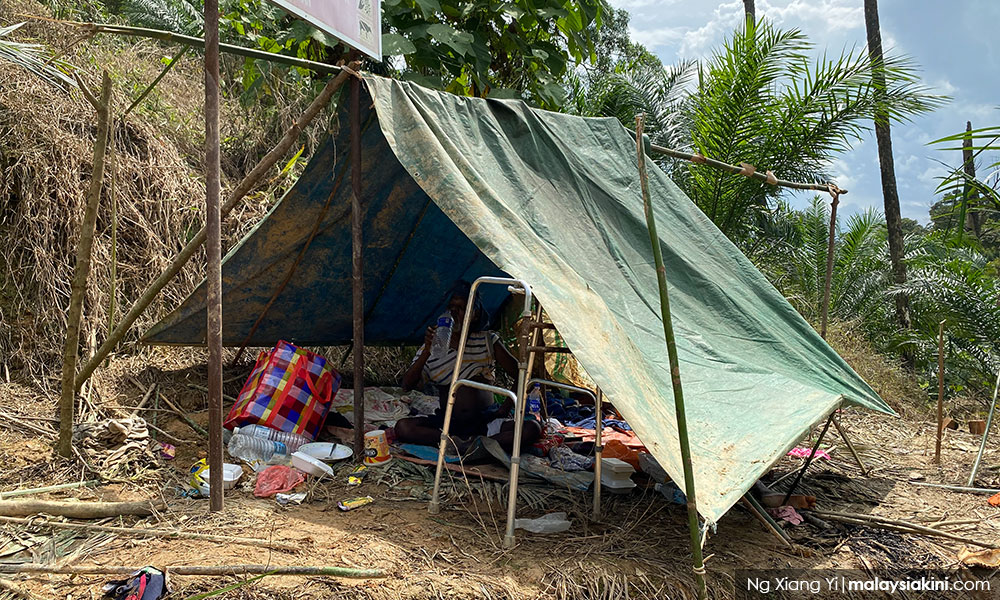
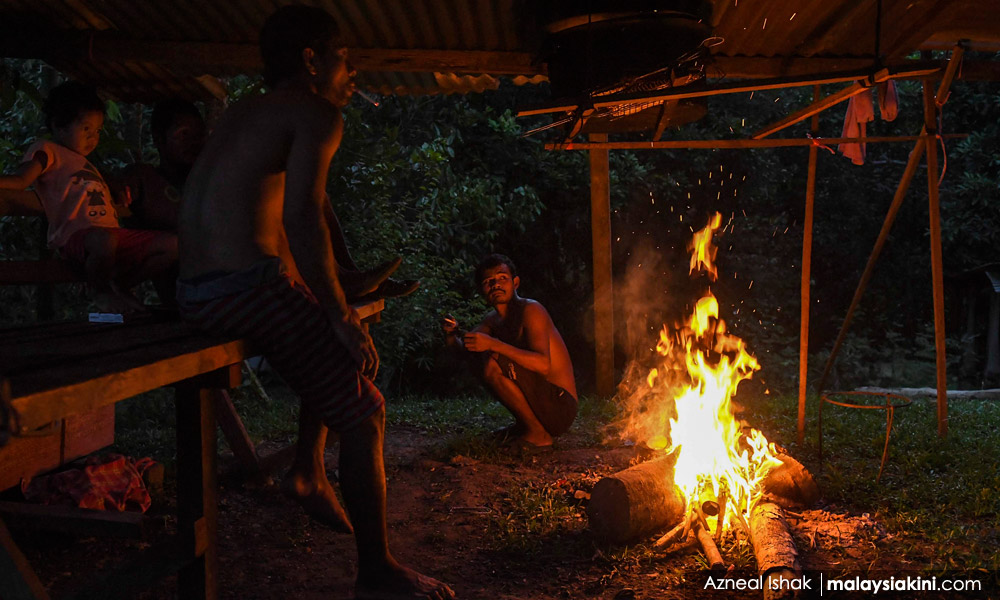
Malaysiakini followed Alam into the palm oil plantation and found the two elderly villagers were sitting under the tent with only a thin sheet of canvas sheltering them from the elements.
Since they have difficulty getting about, the hygiene condition in the tent is extremely poor.
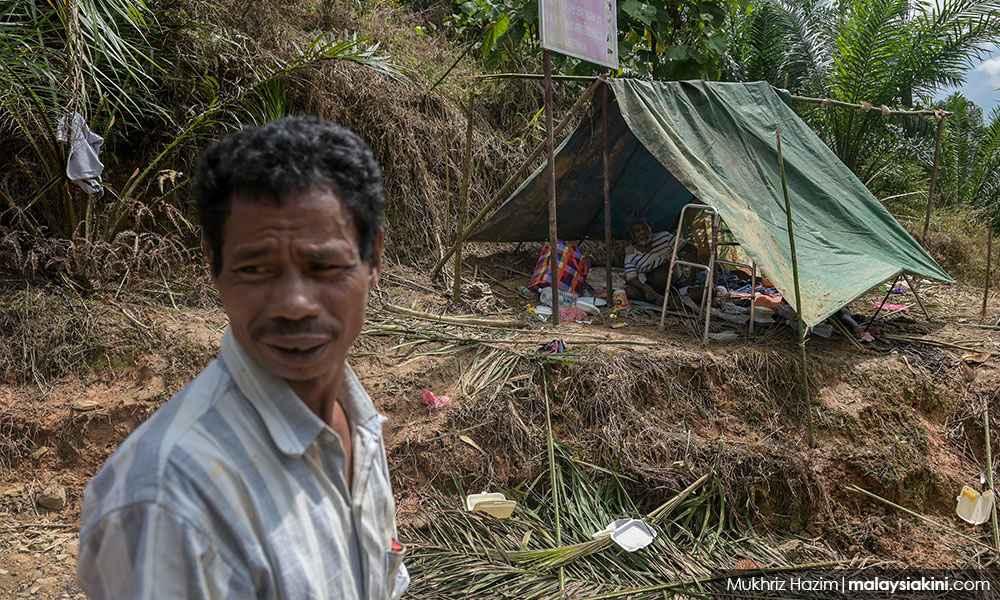
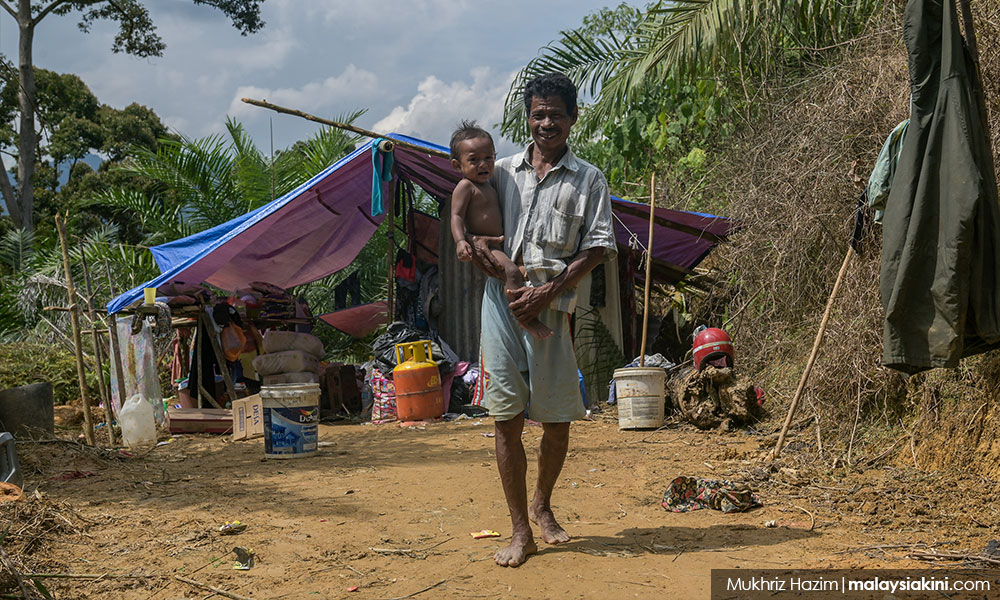
In the next tent lived Jelina, 19, and her two toddlers aged one and two years old. She smiled when approached and said that they have some food and water.
Meanwhile, Asman Ula, 54, told Malaysiakini that they have nowhere to go after the flood as their houses were destroyed.
Volunteers provide food
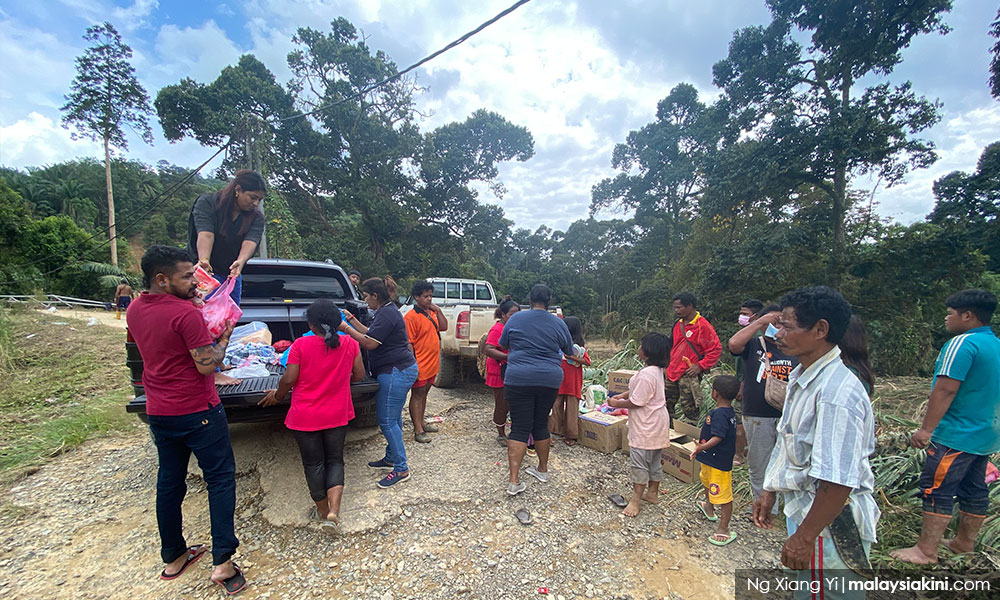
During Malaysiakini’s visit, there were at least two group of volunteers who helped send food, drinking water and toiletries to the indigenous communities.
Those who stayed in surrounding areas also came to pick up some goods and supplies from the volunteers.
According to Alam, the Orang Asli Development Department (Jakoa) came several days earlier after the flood receded to inspect the area and provided some basic necessities, but nothing more than that.
He also expressed concern that the villagers risk overstaying their welcome at the oil palm plantation.
“They cannot stay there in the long run. I’m afraid having the villagers here would make him (plantation owner) unhappy. Normally, we can’t even come through here to fetch water.
“The villagers are temporarily borrowing his place, but we hope to leave before we annoy him,” he said.
When told about the villagers’ plight, Pahang Jakoa chief Johari Alwi said he has already briefed his superiors about the situation and pledged to assist them the best he can while looking for ways for them to rebuild their lives.
“If they agree, we can arrange for them to move into the nearby village […] As far as I know, they have refused to go the public evacuation centre,” he told Malaysiakini.
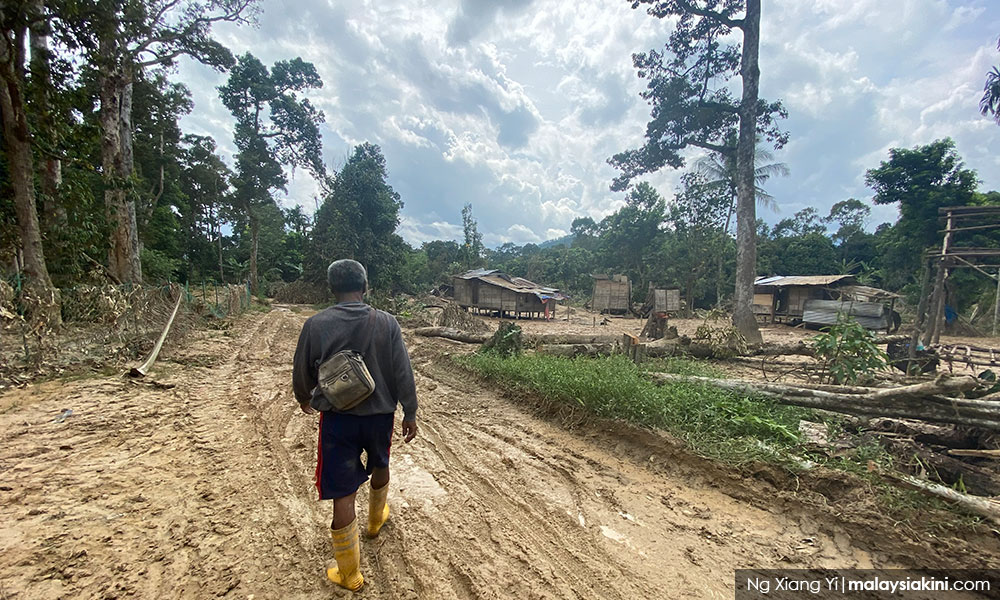
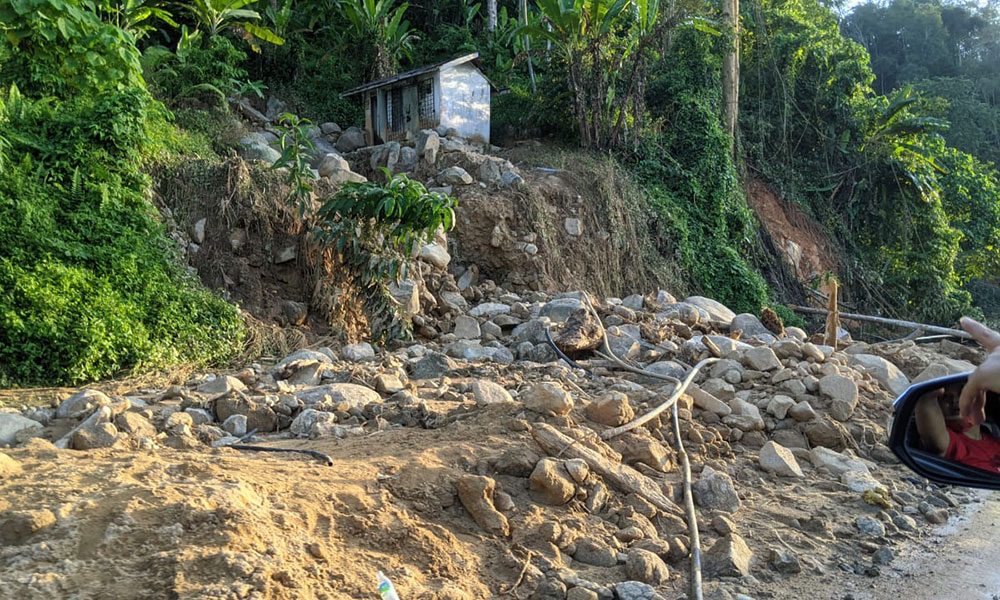
Mud flood
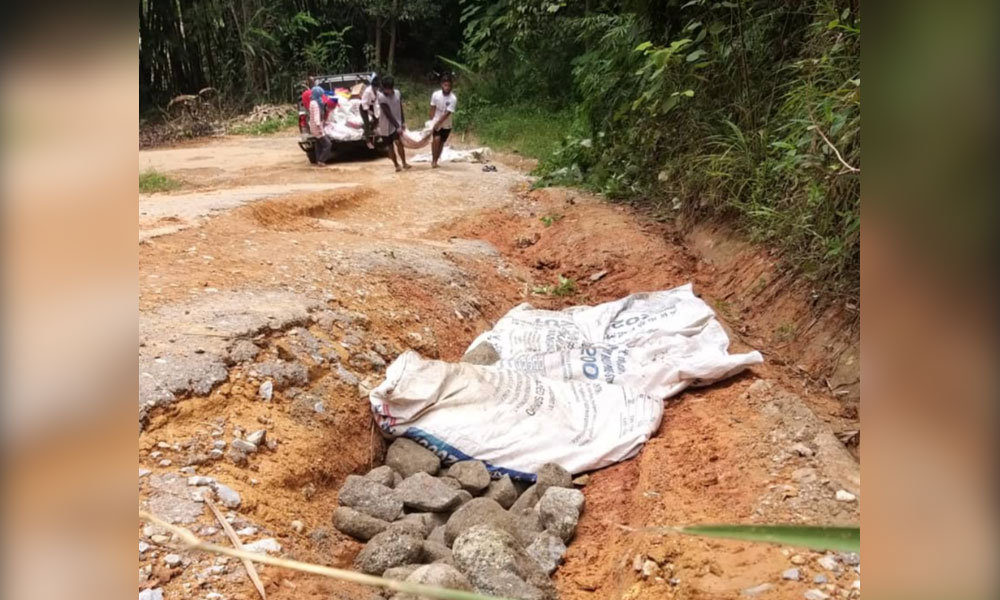
Nevertheless, Johari revealed that he already instructed NGOs to provide more canvas sheets to help improve their living condition.
“But if they refuse to move out, I will be caught in a difficult conundrum.”
He said authorities will continue to persuade villagers to move to a more secure location, and officers were visiting them daily to ensure their safety.
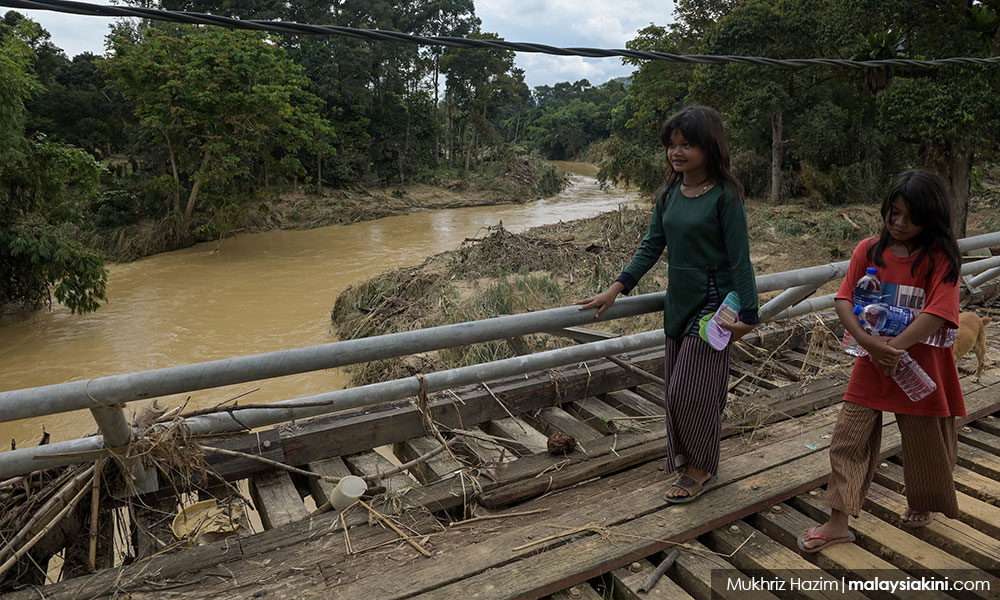
Based on drone imagery, the area upstream of Sungai Krau was filled with broken branches and tree trunks covering an area of at least two hectares.
It was previously reported that a mud flood at occurred at Sri Telemung, near the bridge at Batu 19. Four people were killed in the mud flood and another two are still missing.




Are you sure you want to delete this comment?
This action cannot be undone.