


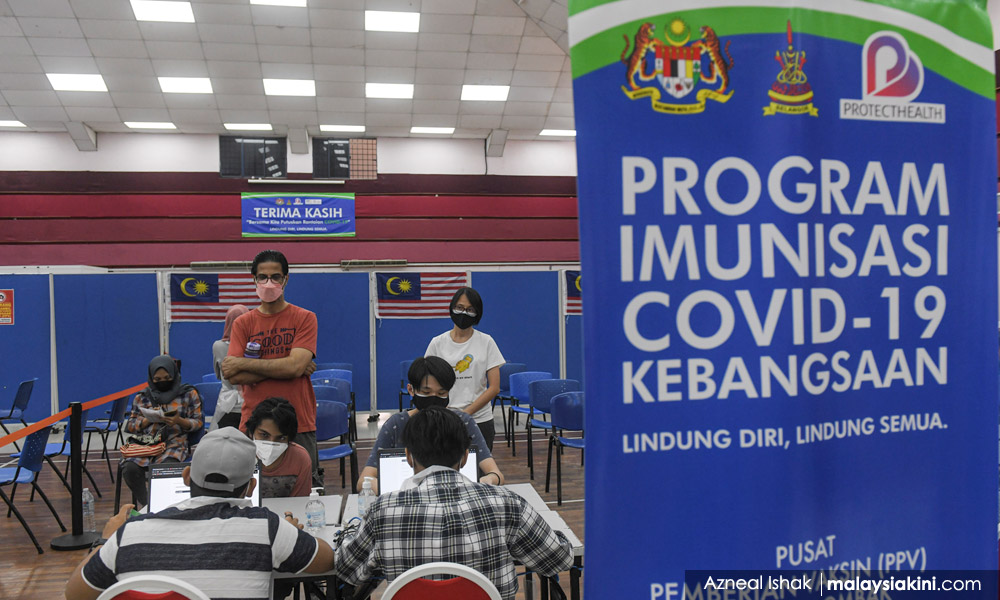

Health Ministry refutes claim placebos used in Covid-19 vaccination
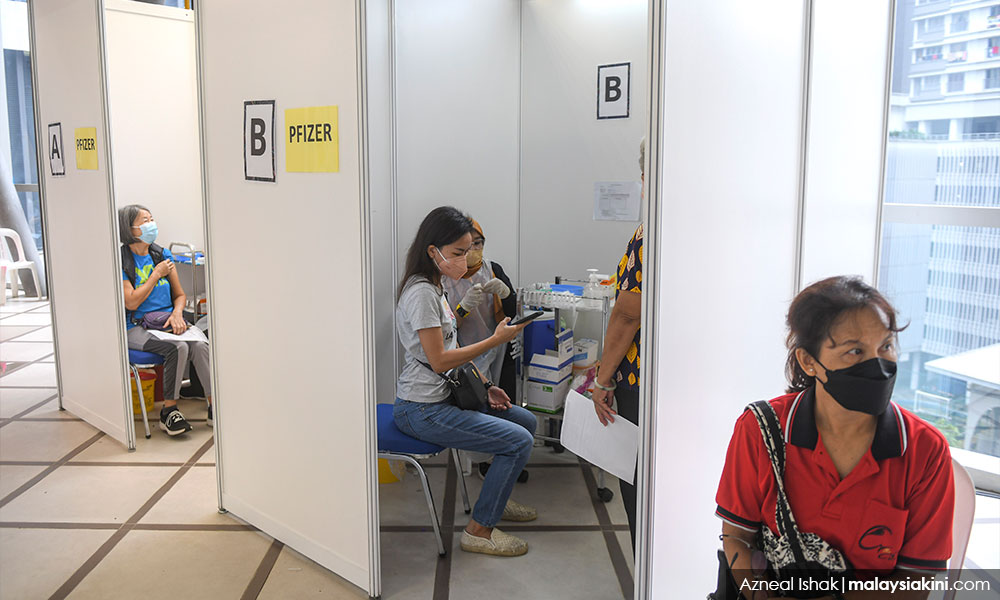
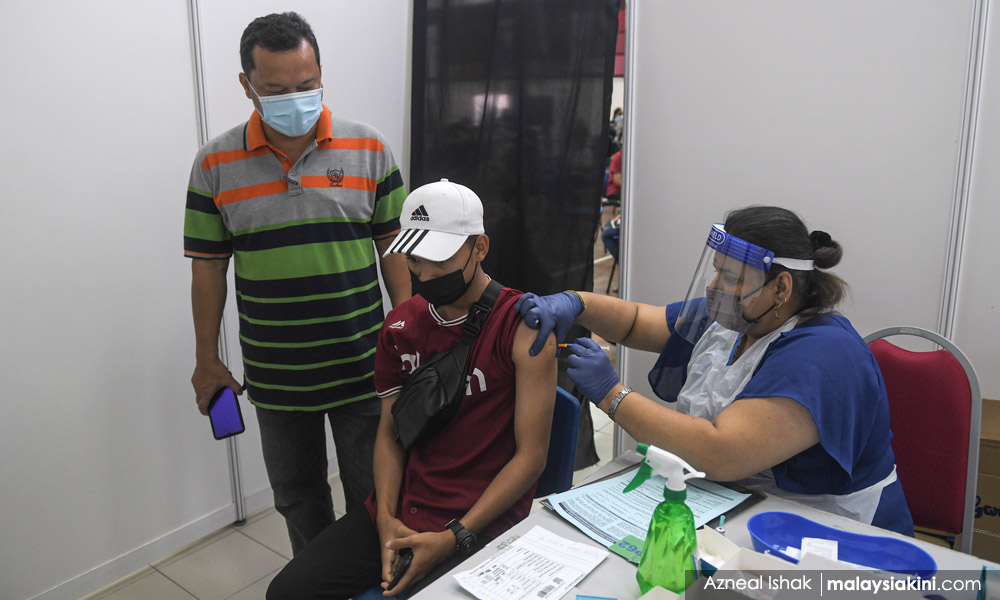
The Health Ministry has refuted claims circulating on social media that it used placebos in its Covid-19 vaccination programme.
It said placebos are only used in clinical trials, not in registered products used under the National Covid-19 Immunisation Programme.
“All pharmaceutical products, including vaccines approved by the Drug Control Authority (DCA), are...
The Health Ministry has refuted claims circulating on social media that it used placebos in its Covid-19 vaccination programme.
It said placebos are only used in clinical trials, not in registered products used under the National Covid-19 Immunisation Programme.
“All pharmaceutical products, including vaccines approved by the Drug Control Authority (DCA), are produced by manufacturers who follow international standards, including the Good Manufacturing Practice (GMP), Pharmaceutical Inspection Co-operation Scheme (PIC/S), and the World Health Organization.
“Quality control is conducted throughout the manufacturing process, where quality control tests are conducted on every batch before reaching the market. For registered products, it only contains active ingredients and excipients approved by the DCA and not a placebo.
“The National Pharmaceutical Regulatory Agency (NPRA) also evaluates manufacturing documents and conducts cold chain inspections for every batch of Covid-19 vaccine through its stringent lot release process,” the ministry said in a statement yesterday.
The ministry was responding to a video of a talk show organised by a group that is critical of the use of Covid-19 vaccines.
In the video, a panellist claimed a portion of Covid-19 vaccines is actually “placebos” comprising vaccines for other diseases such as influenza or hepatitis, which would have milder adverse effects than Covid-19 vaccines.
He also claimed that an increasing portion of the actual Covid-19 vaccine is being used as the vaccination campaign progresses, which leads to severe adverse events becoming more frequent.
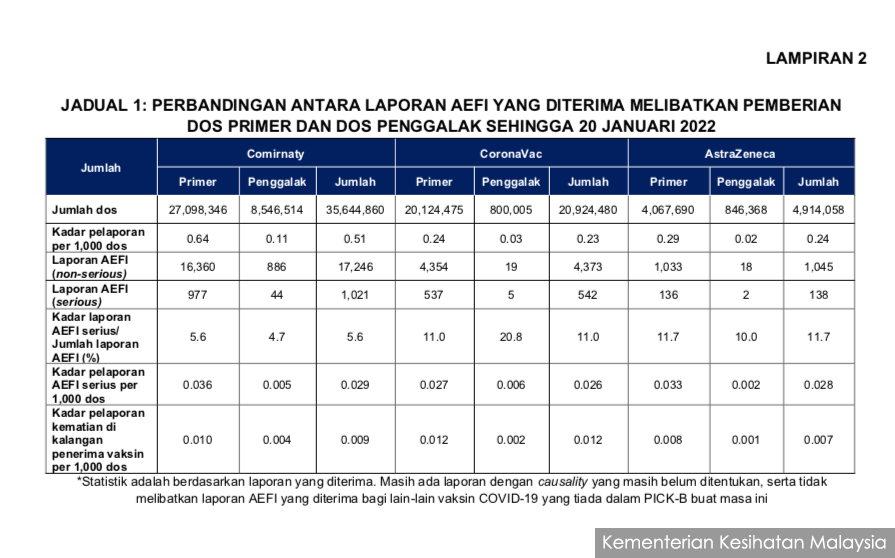
For the record, the Health Ministry’s monitoring has found the reporting rate of adverse events following immunisation (AEFI) to be lower for booster shots than for the earlier primary vaccinations.
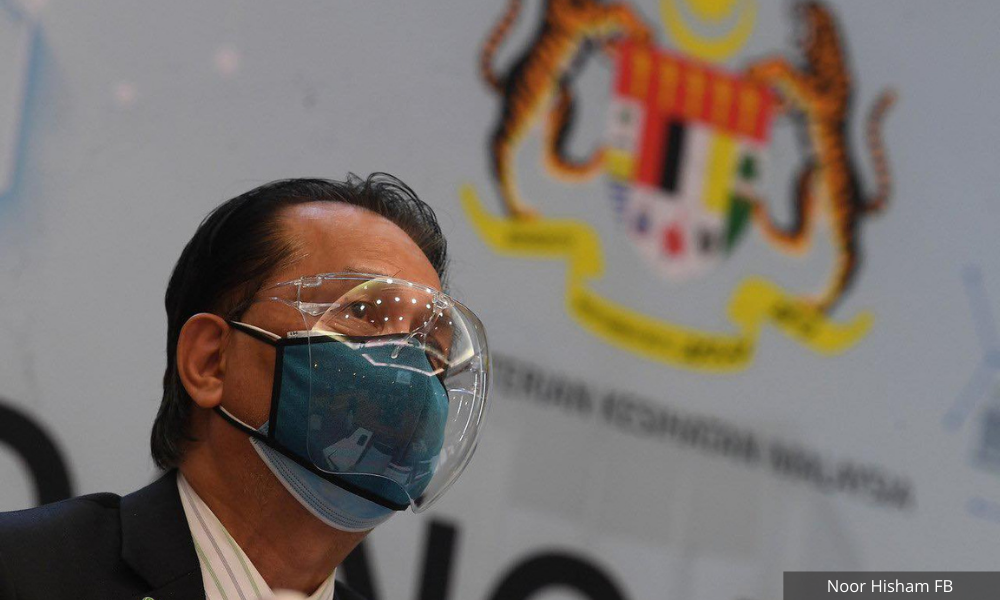
According to Health Ministry director-general Dr Noor Hisham Abdullah on Saturday, 24,411 AEFI reports have been received up to Jan 20 including 984 for booster doses.
This is out of 61,723,654 vaccine doses administered, including 10,192,887 booster doses.
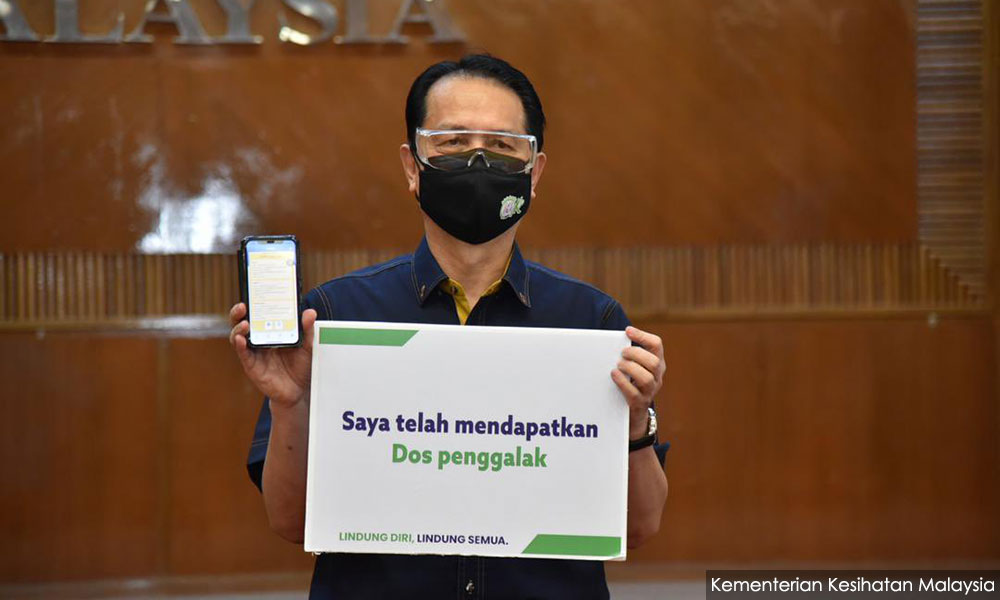
This corresponds to a reporting rate of 0.1 per 1,000 doses for booster shots compared to the overall reporting rate of 0.4 per 1,000 doses – mostly about fever, injection site pain, fatigue and headaches.
Fifty-four of the AEFI reports for booster doses are classified as serious, corresponding to a reporting rate of 0.005 per 1,000 doses.
“Monitoring of AEFI reports received by the NPRA so far concludes that the trend and rate of AEFI reports involving booster shots do not show any increase from what was seen during the administration of primary doses.
“The same reporting trend is also seen in other countries that have implemented booster programmes for Covid-19,” Noor Hisham said.
Meanwhile, in yesterday’s statement, the ministry questioned the panellist’s claim to have obtained Covid-19 vaccines for laboratory testing, since the supply of the vaccine is limited to the government and those authorised by the government.
“Moreover, laboratory testing to identify and test the potency of the vaccines requires a special environment and analytical equipment, as well as validation of specialised testing methods that need to be obtained from each manufacturer,” it said.
The ministry also disputed the claim that using a different vaccine would lead to reduced side effects.
Instead, it said adverse effects can occur after taking any medication or vaccine, including influenza or hepatitis vaccines mentioned by the panellist.
“In addition, adverse effects are not only caused by vaccines but the process of the injection itself, which can cause a rise in heart rate, fainting, and others. This is usually due to nervousness and anxiety on the part of the vaccine recipient.
“Nevertheless, there are some vaccine recipients who experience adverse effects. Therefore, members of the public are urged to seek immediate treatment if they experience serious adverse events following Covid-19 vaccination at any nearby healthcare facility,” it said.
The ministry added that those experiencing AEFI can report this through the MySejahtera app.
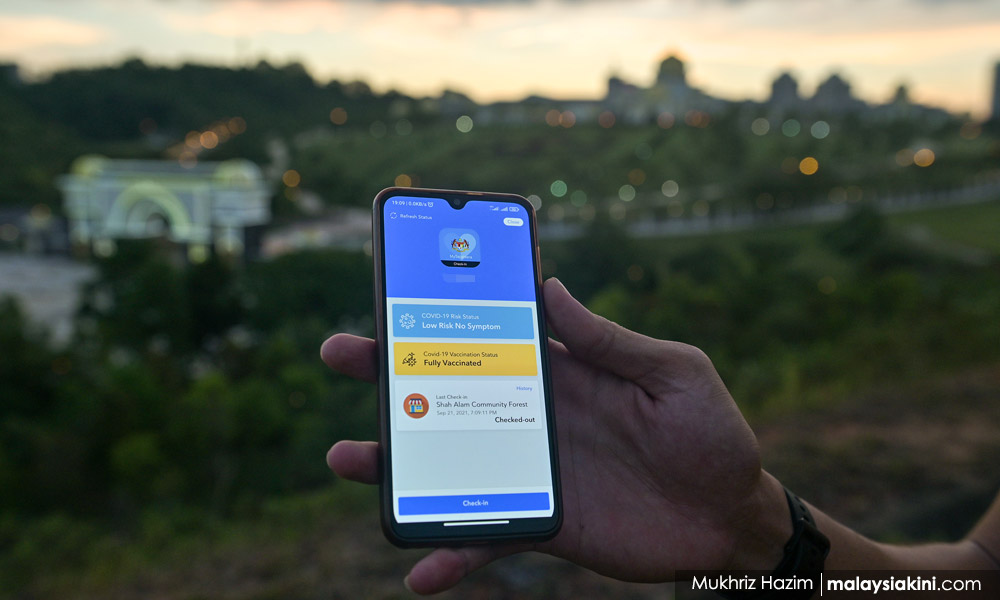
AEFI can also be reported directly to the NPRA through its Consumer Side Effect Reporting Form (Conserf), which is available in Bahasa Malaysia and English.
“If vaccine recipients experience serious adverse effects, get (medical) advice and treatment immediately at any nearby healthcare facility.
“In this situation, the AEFI report will be made by the healthcare worker treating the case. Healthcare workers can report AEFI through NPRA’s website, or the Pharmacy Information System for Health Ministry facilities.
“AEFI cases classified as serious, rare or unexpected events will undergo a detailed investigation, followed by a causality analysis between the effect and the vaccine to be undertaken by the Covid-19 Vaccine Pharmacovigilance Expert Committee,” it said.
As for the video, the ministry said it views the matter seriously as misinformation and an attempt to confuse the public and taint the ministry’s integrity.
As such, reports will be lodged with the police and the Malaysian Communications and Multimedia Commission for further action to be taken.



Report this comment
Are you sure you want to delete this comment?
This action cannot be undone.