
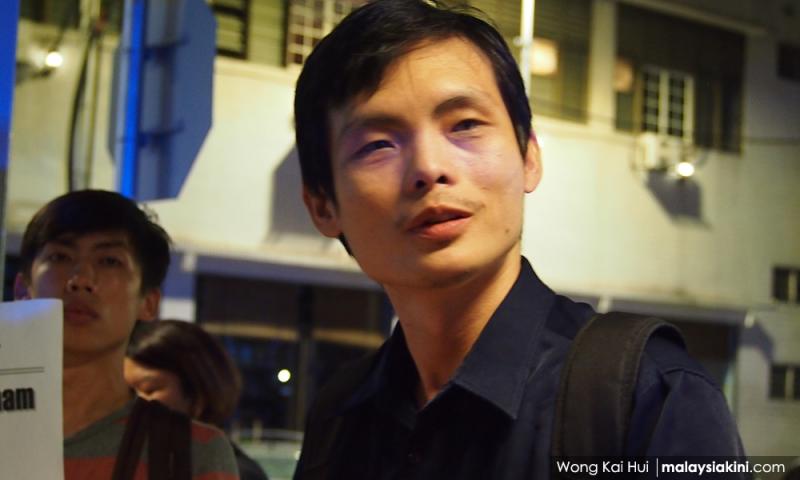
Labour activist: Amend Constitution to improve worker rights
With a seat in the United Nations Human Rights Council until 2024, it is time for Malaysia to raise the standard of workers’ rights in its Constitution to the level of neighbouring 'sending countries', said a labour activist.
Labour Law Reform Coalition (LLRC) secretary Ng Yap Hwa said protection of workers’ rights in the Constitution was lagging far behind neighbours Indonesia, Cambodia and the Philippines, and "we can learn from them because human rights were more than the minimum wage issue."
With a seat in the United Nations Human Rights Council until 2024, it is time for Malaysia to raise the standard of workers’ rights in its Constitution to the level of neighbouring 'sending countries', said a labour activist.
Labour Law Reform Coalition (LLRC) secretary Ng Yap Hwa said protection of workers’ rights in the Constitution was lagging far behind neighbours Indonesia, Cambodia and the Philippines, and "we can learn from them because human rights were more than the minimum wage issue."
In his presentation during an online webinar on freedom of association in Indonesia, Yap said workers in all three countries enjoyed better protection enshrined in their respective constitutions.
Speaking to Malaysiakini, Yap said Malaysia needed to amend the Constitution to include the elements of Article 23 of the Universal Declaration of Human Rights (UDHR) as other nations have done for their largest demographic of people, who are workers.
While the Cambodian Constitution addresses workers of "either sex" in pertinent clauses like equal pay and the right to choose any employment, the Philippines Constitution explicitly dictates that the state shall afford full protection for all.
"The Philippines Constitution ensures that it is the state's role to protect local, overseas, organised and even unorganised workers.
"More importantly, both countries uphold the rights of workers to organise into trade unions which will allow workers the fundamental right to collective bargaining and negotiations.
"Both constitutions also recognise worker rights to peaceful concerted activities including the right to strike in accordance with the law," he said.
He said none of these clauses was featured in Malaysia's Constitution and lamented that many of the clauses in the Constitution also had restrictions placed on them.
Downgraded in human trafficking report
In the webinar discussions with labour activists and trade unionists, Yap agreed that although the realities on the ground were not always ideal as employers continued to repress workers, "but at least workers, including migrants, have various channels to which they could take their grievances to".
Yap said while Malaysia struggles to recognise equal pay for equal work as recommended by the International Labour Organisation's (ILO) Convention 100, both countries have given importance to this in their Constitution.
He questions whether Malaysia would have repeatedly slipped into the lowest grading reported, caused by the country's inhumane treatment of workers - Tier 3 of the US government's Trafficking in Persons Report, had the country's Constitution been more dedicated to higher labour standards.
Forced labour had resulted in Malaysia's downgrade in the US human trafficking report.

Yap said the online webinar is part of a series of five webinars, one every consecutive month, that will dissect "Trade Union Rights in South East Asia" – more details on the webinar can be found on the LLRC Facebook page.
He explained that Malaysia had a lot to learn from countries who send their workers here, "like Cambodia is very clear about the role women play in their workforce even from their homes as they endeavour to uphold the essence of equal pay.”
"Their Constitution states that the work by housewives in the home shall have the same value as what they can receive when working outside the home.
"The constitutions of sending countries don't talk about minimum wage. They talk about living wages," he stressed.
Strong trade union presence can tackle forced labour
Electronics Industry Employees' Union Western Region (EIEUWR) general-secretary Bruno Pereira said companies with a strong trade union presence may not have been banned by the US Customs and Border Protection (CBP) for suspected forced labour in their operations.
Speaking to Malaysiakini, he said trade union members, especially shop stewards, were the eyes and ears for the trade union of the goings-on in a factory.
"If there are new workers, local or migrant workers, we can recruit them as members, so we are also aware of the workforce placement in the factory.
"For migrant workers, there will be committees set up for each nationality, so union activities are better communicated," he added.
Pereira said unions have committees like the health and safety committee, which will step in when an accident takes place to ensure that a worker is well cared for, and the case is reported.
"Even if a worker dies, the union will ensure that the autopsy was done and workers' families are compensated according to the Employee's Social Security Act.
"But in some cases, in companies where there is no trade union presence, no one will even know when a worker dies," he said, adding that the trade union was like insurance to better safety and protection.


Are you sure you want to delete this comment?
This action cannot be undone.