



Prison reform: Suaram identifies issues, solutions in latest report
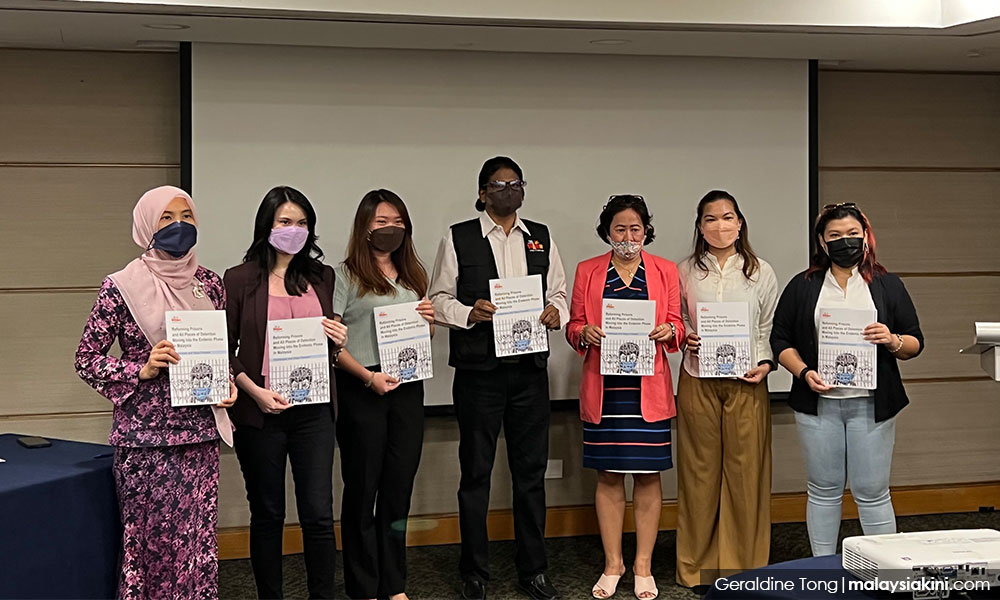
Suaram has identified the issues and challenges in reforming prisons and other places of detention that were exacerbated by the Covid-19 pandemic, as well as their proposals moving forward as Malaysia moves into the endemic phase.
This was all contained in Suaram's report titled "Reforming Prisons and All Places of Detention Moving into the Endemic Phase in Malaysia", which was launched today at the Concorde Hotel in Kuala Lumpur.
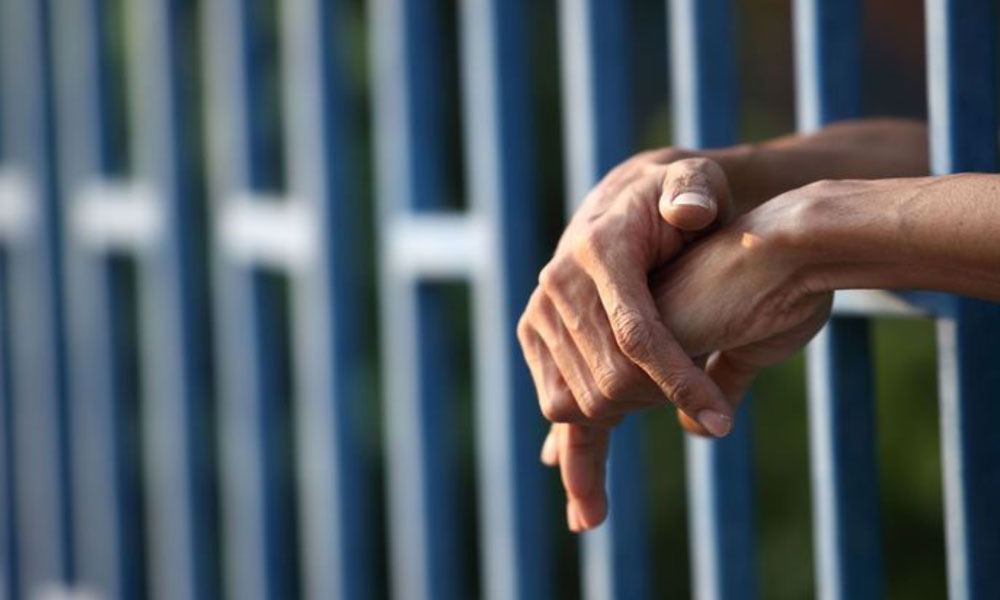
Among the issues they highlighted were overcrowding, concerns about health...
Suaram has identified the issues and challenges in reforming prisons and other places of detention that were exacerbated by the Covid-19 pandemic, as well as their proposals moving forward as Malaysia moves into the endemic phase.
This was all contained in Suaram's report titled "Reforming Prisons and All Places of Detention Moving into the Endemic Phase in Malaysia", which was launched today at the Concorde Hotel in Kuala Lumpur.
Among the issues they highlighted were overcrowding, concerns about health and living conditions, inadequate budget for facilities, lack of centralised, available and accessible data, as well as citizen perception and social reintegration.
Based on Suaram's research, overcrowding was already an issue even before the pandemic as reported numbers show that prisons were already overcrowded since 2018.
"The numbers show that the prisons were already overcrowded since 2018 if and when compared to the reported capacity.
"In 2019 alone, before the pandemic, the total number of inmates was at its peak and exceeded its usual capacity when the population was at a staggering 71,785, an increase of approximately 10 percent from 2018 (65,222)," the report read.
Several factors contributing to the overcrowding in places of detention include incarceration for minor drug offences, possibly an unbalanced discretion between police and the judiciary and the indefinite period of detention in immigration detention centres.
The report also contended that the current courts in Malaysia tend to skew towards retribution rather than rehabilitation.
"The criminal justice system imposes a great deal of importance on imprisonment as a major means of deterring crime and protecting society in the name of security. It is also seen as a primary method of punishment.
"Therefore, more offenders are imprisoned than is necessary due to the lack of alternatives," the report read.
Poor living conditions
The issue of overcrowding also heightens concerns about the inmates' health, living conditions, and treatment.
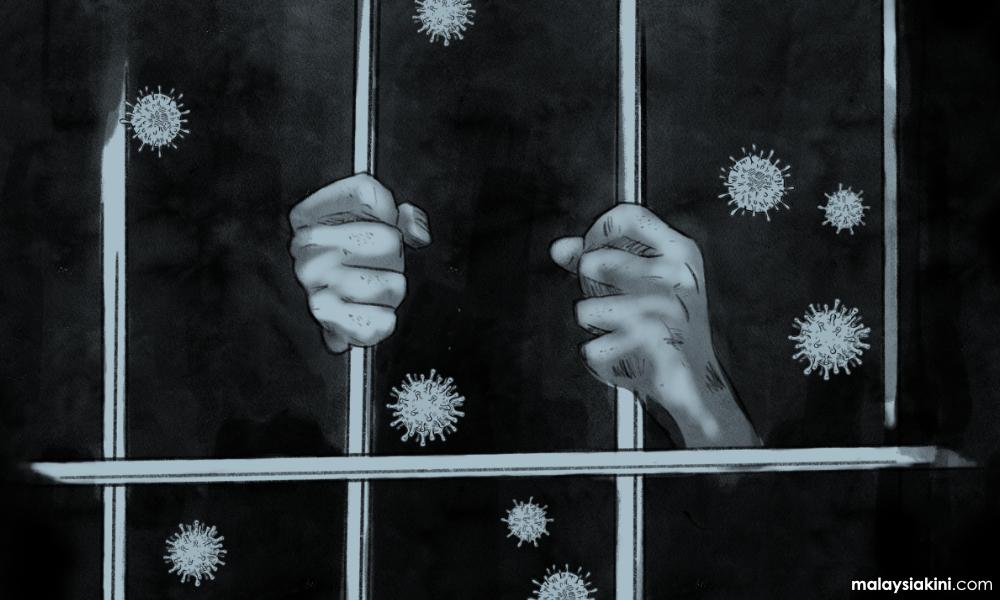
Suaram pointed out that in 2021, there were reports of clusters emerging from immigration detention centres after the raids and arrests of migrants the year prior.
The human rights organisation interviewed those detained in lockups who claimed there appeared not to be any concern for Covid-19 spreading in the facility as social distancing was not practised.
The inmates said they were not allowed to wear a mask despite being around others, and they were not instructed to perform a Covid-19 test where they were detained.
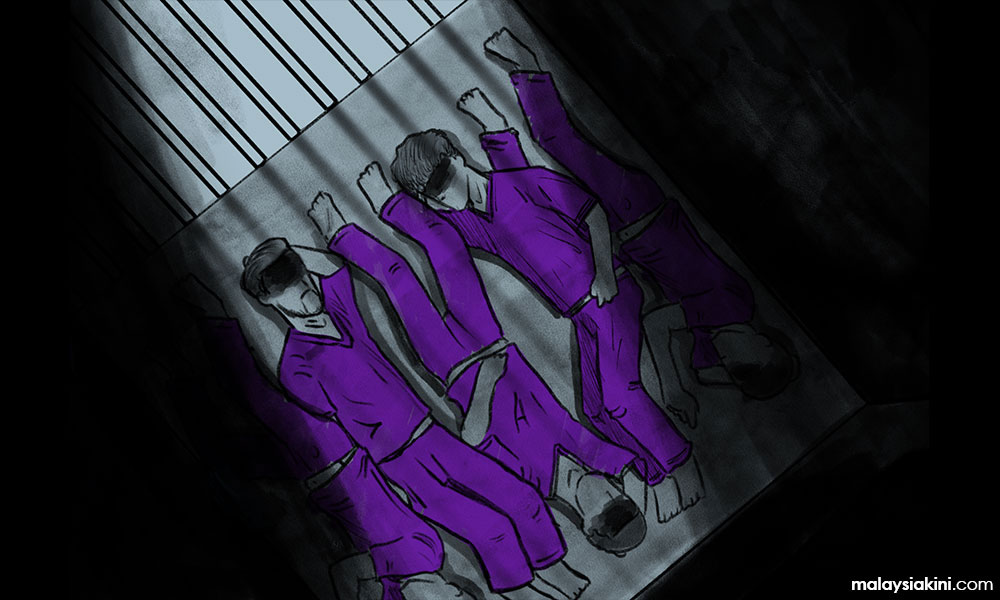
Those interviewed about their living conditions said their cells had no windows, no way to tell the time as well as no pillows or bedsheets, forcing them to sleep on the floor. Other concerns include hygiene, worries of torture, ill-treatment and deaths in custody.
Suaram also noted a lack of allocation in the budget to improve the overall system of places of detention.
While it is commendable that the government has provided additional allocations to the Prisons Department in recent years, including skills training, Suaram said there is still a lack of incentive to improve the living conditions of those being detained.
"Budget needs to be redressed, re-evaluated and allocated for prisons and all places of detention to ensure the conditions are improved and that it should be made available for the public's knowledge," the report read.
Suaram pointed out that advocacy for this matter, including the drafting of this report, is also hampered by the lack of data and statistics.
The report said that there is a lack of centralised data on the inmates, and even the figures reported from different sources tend to vary.
Another challenge is the public's perception of former inmates trying to reintegrate back into society, as there is stigmatisation and prejudice.
"Due to repeated use of (words with negative and stigmatised meanings) and a preconceived image created at the back of one's mind, society might be less open and receptive to accepting these individuals.
"Thus, this segregates them from the existing societal bubble they were once in, leading them to continue to experience socio-economic problems and be thrown into the same cycle," the report noted.
Shift to restorative justice
Among Suaram's recommendations to improve the system is for the government to implement a human rights-based approach in prisons.
This is fundamental, they said, as the human rights-based approach covers principles such as equality and non-discrimination, accountability, participation, empowerment and legality.
The government must also commit to transparency and accountability, such as by increasing the availability and accessibility of relevant data and by enacting a right to information or freedom of information legislation.
Malaysia also needs to shift its focus toward restorative justice, as practised in countries like Norway and Sweden, which places more emphasis on the normalisation and reintegration of former inmates into society.
This could help reduce the rates of recidivism and the overall rate of offences committed through strategic measures, Suaram said.
The government must also pursue alternatives to detention (ATD), especially for undocumented children.
Suaram pointed out it was last reported that as of Oct 11, 2021, 1,474 children were detained in immigration centres.
ATD is a practice that "allows for asylum seekers, refugees and migrants to reside in the community with freedom of movement while their migration status is being resolved or while awaiting removal from the country".
While the government had initiated a pilot ATD programme to address the detention of children in immigration detention centres back in late 2021, there have been no updates on the programme as of April 2022.
In order to move forward, the government must also continue to build working relationships with civil societies, NGOs, the media, researchers and so on, as well as commit to key human rights instruments.
While Malaysia has so far ratified three international conventions, Suaram said Malaysia should be looking into ratifying more treaties and conventions, especially as Malaysia has been elected to the UN Human Rights Council (HRC) for the 2022-2024 term.
The full report can be found in its digital form on the Suaram website.


Report this comment
Are you sure you want to delete this comment?
This action cannot be undone.