



Govt studying retroactive effect of mandatory death penalty abolition
The government is studying whether its plan to abolish the mandatory death penalty can be implemented retroactively.
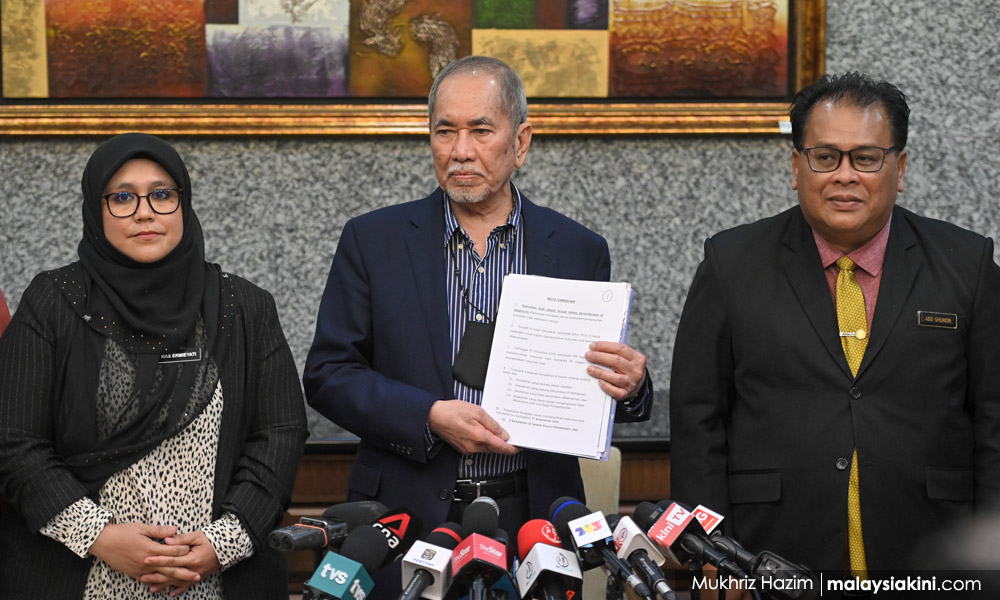
Minister in the Prime Minister's Department (Parliament and Law) Wan Junaidi Tuanku Jaafar said that there are 1,342 inmates with their death sentences on hold due to a moratorium...
The government is studying whether its plan to abolish the mandatory death penalty can be implemented retroactively.
Minister in the Prime Minister's Department (Parliament and Law) Wan Junaidi Tuanku Jaafar said that there are 1,342 inmates with their death sentences on hold due to a moratorium.
The government also has to look at cases under investigation and yet to be charged in court, he added.
"If the investigation is completed after the law is amended (to abolish the mandatory death sentence), under which version of the law do we charge them? The Prime Minister's Department's legal affairs division (BHEUU) is still studying this.
"Second, we have cases which are already in the trial stage. The old provision would apply in this case. Then, there are cases which have already been decided by the court (but are pending appeal).
"And fourthly, the cases in which offenders have exhausted their appeal processes. There are some who were pardoned, but there are also those who were denied,” he told a press conference in Putrajaya this morning.
Wan Junaidi said there are still many issues that need to be taken into account in working towards the abolition of the mandatory death penalty.
“The Attorney-General's Chambers and BHEUU are working together to solve these issues," he added.
The minister called for the press conference to explain the government's decision and plan to abolish the mandatory death penalty.

Constitutionality of tribunal
According to Wan Junaidi, the Special Committee on Substitute Sentences for the Mandatory Death Penalty chaired by former chief justice Richard Malanjum had recommended the setting up of a tribunal to review cases that have already been sentenced by the court.
However, the minister said, the government would have to study the constitutionality of such a tribunal first.
"The AGC and BHEUU have to study this matter thoroughly.
"Because there are cases which have already gone to the Federal Court. So, where does this tribunal stand to conduct a review on cases (which have been decided by the highest court)?" he asked.
Under the country's criminal justice system, the Federal Court is the highest authority and the last avenue in the appeal process.
Wan Junaidi said he has also received many other suggestions, including getting a blanket pardon for all death row inmates.
Another suggestion was to introduce the system of diyyat, or “blood money”, which is a term in Islamic law that refers to punishment on a compensational basis.
Wan Junaidi said he will hold an engagement session with the committee to discuss the tribunal. The minister also plans to seek the opinion of the current chief justice on the issues.
On the moratorium on the death sentence, the minister said it would continue as long as the abolition of the mandatory death penalty is not settled.
Asked whether Malaysia would eventually move towards total abolition of capital punishment, Wan Junaidi said he does not want to pre-empt the government on the matter.
According to him, the cabinet has not discussed it.
However, he said personally he hopes one day Malaysia would see the end of the death sentence.
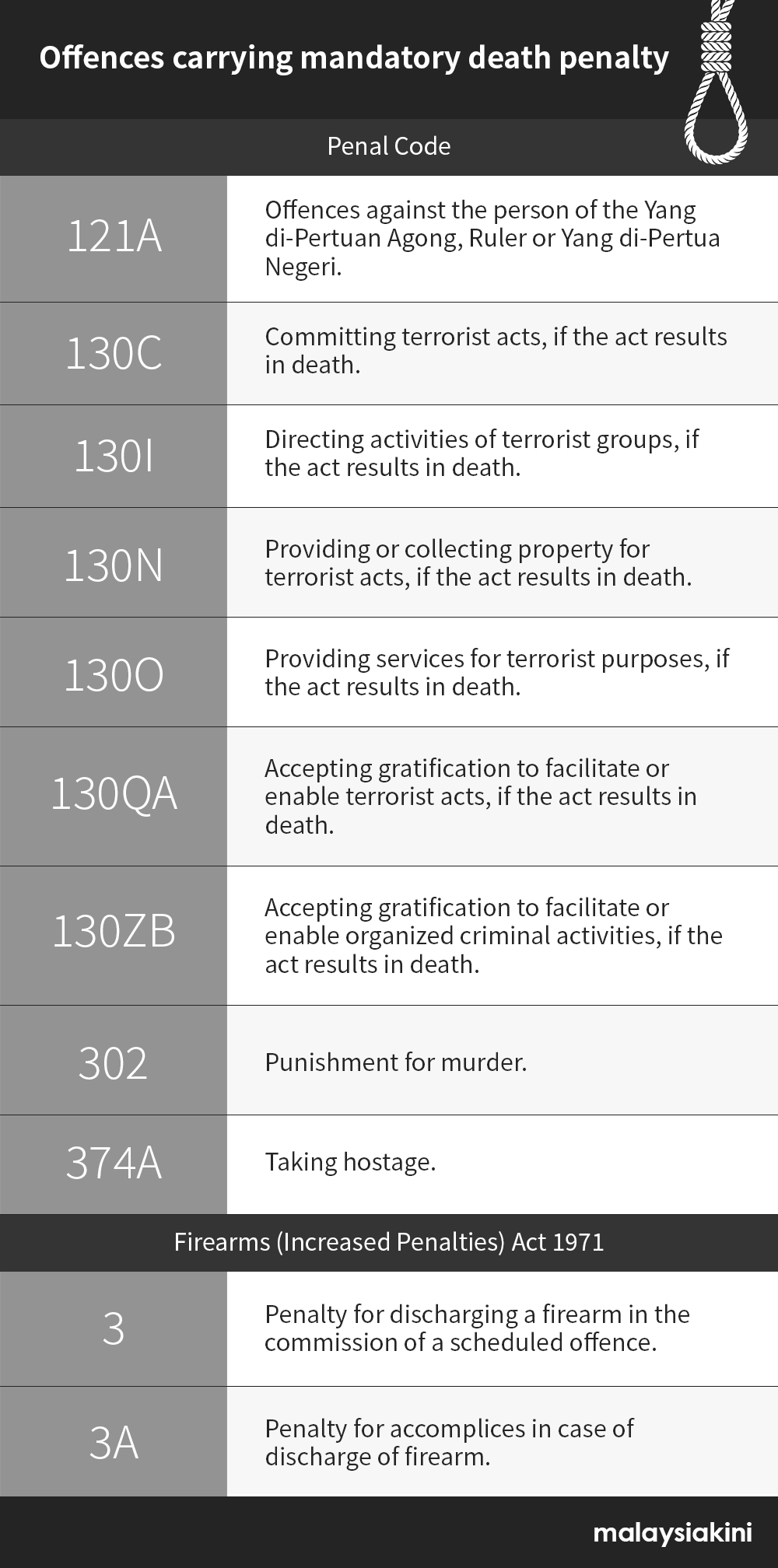
'Total disconnect' - LFL hits back at Bukit Aman statement on drug laws
Gerakan backs mandatory death penalty abolition, but not for all crimes
Mandatory death penalty: Govt expects to table abolition bill in October







Are you sure you want to delete this comment?
This action cannot be undone.