



'Total disconnect' - LFL hits back at Bukit Aman statement on drug laws
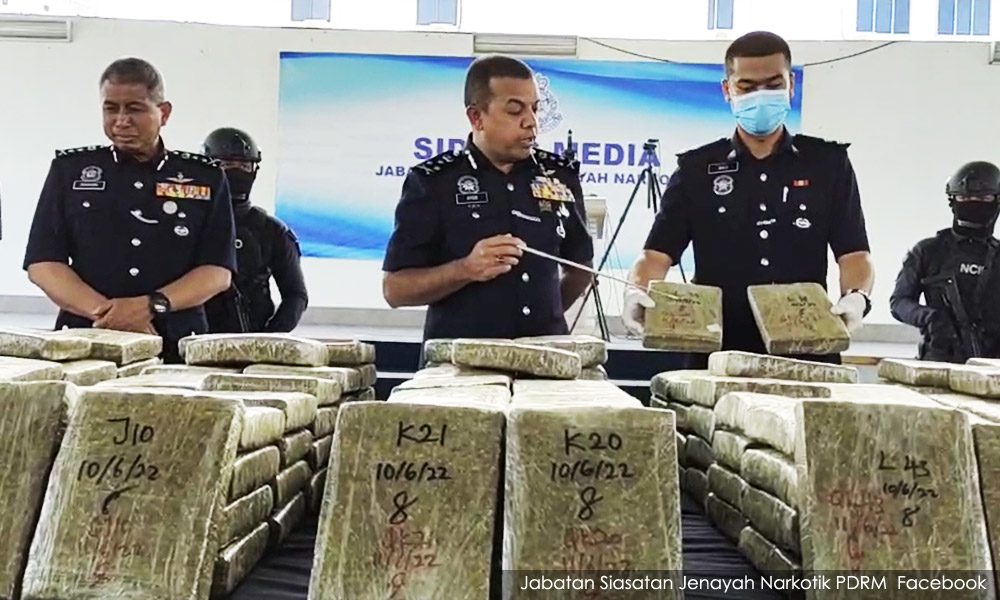
Lawyers For Liberty (LFL) has criticised Bukit Aman Narcotics Criminal Investigation Department director Ayob Khan Mydin Pitchay over his suggestion that the possession of 15 grammes of syabu should be made a capital punishment offence.
LFL director Zaid Malek, in a statement today, said that there was a “total disconnect” between Ayob’s statement and the government’s repeal of the mandatory death penalty.
Lawyers For Liberty (LFL) has criticised Bukit Aman Narcotics Criminal Investigation Department director Ayob Khan Mydin Pitchay over his suggestion that the possession of 15 grammes of syabu should be made a capital punishment offence.
LFL director Zaid Malek, in a statement today, said that there was a “total disconnect” between Ayob’s statement and the government’s repeal of the mandatory death penalty.
“There is a total disconnect between Ayob’s statement and the government’s historic announcement just two days ago on doing away the mandatory death penalty.
“This is precisely why it is undesirable for enforcement bodies such as the police to make public statements on politically controversial policy issues such as the usage of the death penalty,” he said.

Zaid pointed out that the objective of the government and the Malanjum special committee was to reduce and limit the usage of the death penalty in drug-related cases as well as others.
“Contrary to this, Ayob’s proposal adds another new category of drugs offence punishable with death,” he said.
Zaid called the Bukit Aman director’s complaint of Thailand’s decision to decriminalise the planting of marijuana as being “narrow” and “misguided”.
“It fails to take into account the fact that decriminalisation of marijuana is a part of a global trend based on scientific evidence of its medicinal and health benefit.
“Issues regarding drug usage and the decision as to whether it should be allowed or criminalised is a multifaceted issue that should be left to experts, based on proper and thorough information, scientific studies and research.
“There is no rational basis for Bukit Aman’s proposal that possession of 15 grammes of syabu should be punished with death,” he said.

Zaid reminded that the duty of enforcement authorities - such as the police - is to uphold and enforce the laws enacted.
“They have no business to take public positions on policies and legislation,” he said, before calling on the inspector general of the police and the anti-narcotics chief to respect the government’s recent stance on the usage of the death penalty.
“The police must focus on dismantling the operations of the drug kingpins who send drug mules to their death; leave drugs legislation to the government of the day and Parliament,” said the LFL director.
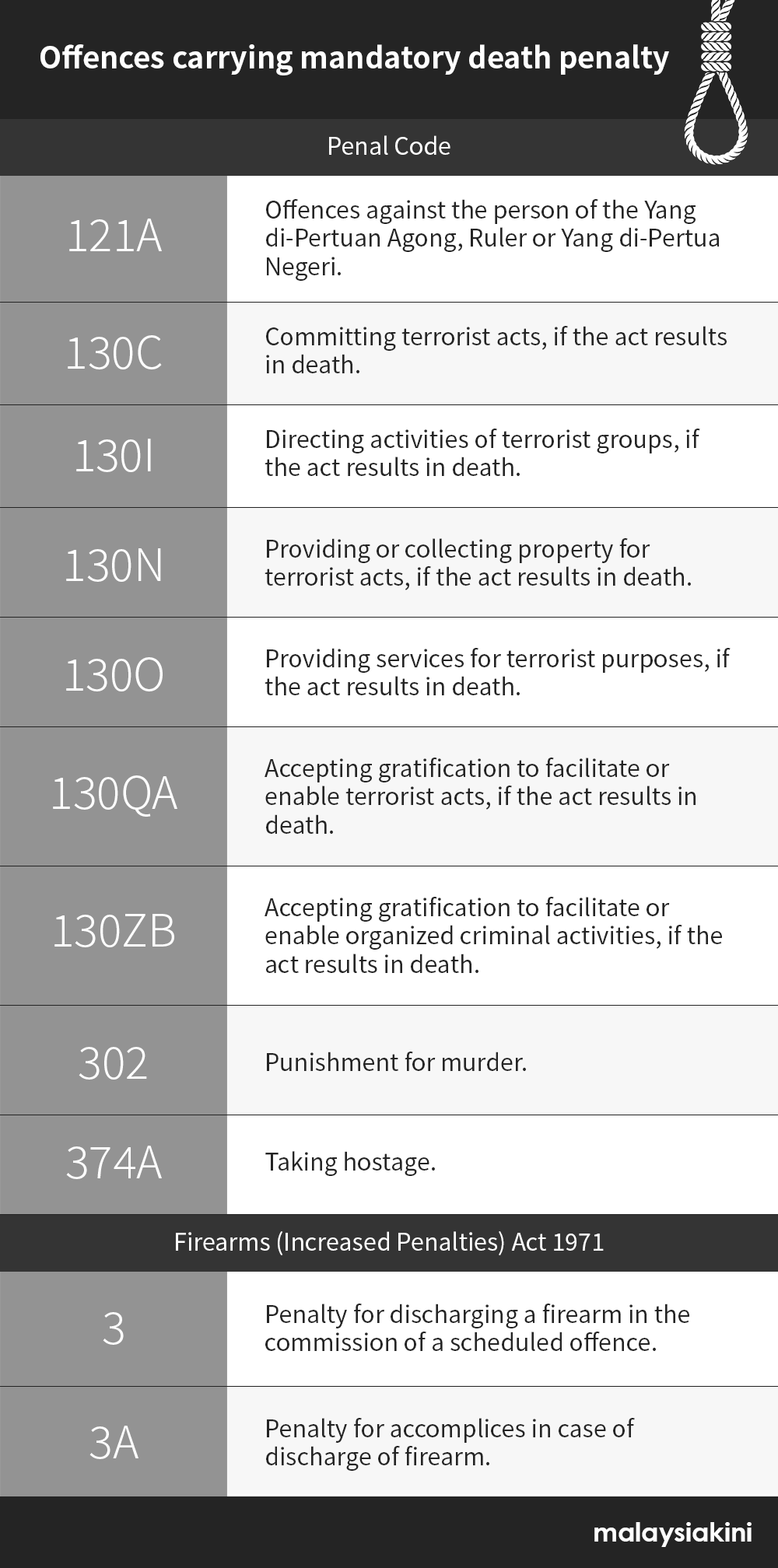
On June 10, Minister in the Prime Minister’s Department (Parliament and Law) Wan Junaidi Tuanku Jaafar revealed the government’s move to abolish the mandatory death penalty.
According to Wan Junaidi, the country would still have the death penalty even with the abolition of the mandatory sentence.
The difference after abolition is that judges would have the discretionary power to sentence a criminal to either death or a substitute punishment that he deems befitting the crime committed.
The government expects to table the necessary amendments to abolish mandatory death sentences in 11 law provisions during a Parliament session in October.
Yesterday, however, the police called for amendments to the laws related to drug penalties to allow for 15 grammes of syabu to be deemed as trafficking, in accordance with current developments in the abuse of banned substances in the country.
According to Ayob Khan, the types of drugs now widely used by addicts are syabu and ecstasy pills, as compared to heroin in the past.
He said the department was also listing banned chemicals used to produce new types of drugs such as syabu, ketamine, yaba and kuda pills.
So far in Malaysia, more than 60 banned chemicals have been listed in the production of new types of drugs compared to over 900 chemicals banned overseas.
The Dangerous Drugs Act states that any individual found to possess 15 grammes or more of heroin or morphine is deemed to be trafficking the drug - with the penalty of such offence being death.
Gerakan backs mandatory death penalty abolition, but not for all crimes
Govt studying retroactive effect of mandatory death penalty abolition
Mandatory death penalty: Govt expects to table abolition bill in October






Are you sure you want to delete this comment?
This action cannot be undone.