


/file/publisher-c1a3f893382d2b2f8a9aa22a654d9c97/2022/08/adb42c0f4f67e9aa6bcb54a8fc872309.jpg)

Helping youths express themselves through poetry
A poet, writer, bibliographer, academic and mentor, Malachi was conferred the title Emeritus Professor by the University of Nottingham upon his retirement in January 2021.
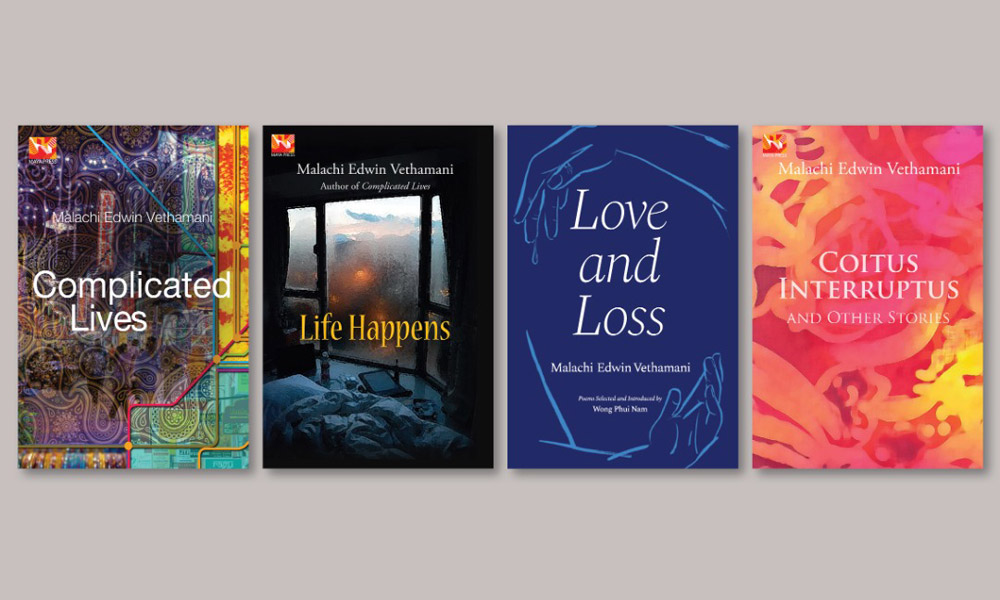
His published works include “Coitus Interruptus and Other Stories” (2018), as well as two collections of poems, “Life Happens” (2017) and “Complicated Lives” (2016).
Malachi (above) has also edited two volumes of Malaysian writings, “Malchin Testament: Malaysian Poems” (2017), “Ronggeng-Ronggeng: Malaysian Short Stories” (2020) and he edited a volume of poems titled “Malaysian Millennial Voices” (2021).
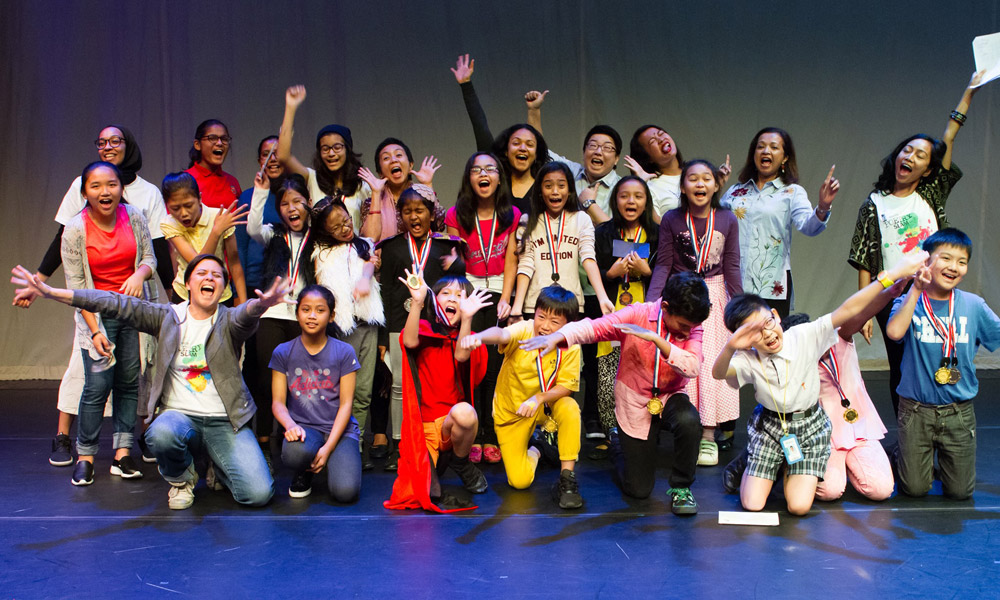
“I have been working with a lot of young writers on ‘Malaysian Millennial Voices’ and 'Year of the Rat'. The winners of the poetry competitions came from that group of young people, so that was quite nice,” he said during an interview with Malaysiakini.
He added that he personally...
Sometimes portrayed as archaic, the art of writing poetry is still alive and well, thanks to the efforts of people like Malachi Edwin Vethamani.
A poet, writer, bibliographer, academic and mentor, Malachi was conferred the title Emeritus Professor by the University of Nottingham upon his retirement in January 2021.
His published works include: “Coitus Interruptus and Other Stories” (2018), as well as two collections of poems, “Life Happens” (2017) and “Complicated Lives” (2016).
Malachi (above) has also edited two volumes of Malaysian writings, “Malchin Testament: Malaysian Poems” (2017), “Ronggeng-Ronggeng: Malaysian Short Stories” (2020) and he edited a volume of poems titled “Malaysian Millennial Voices” (2021).
“I have been working with a lot of young writers on ‘Malaysian Millennial Voices’ and ‘Year of the Rat’. The winners of the poetry competitions came from that group of young people, so that was quite nice,” he said during an interview with Malaysiakini.
He added that he personally knows many of the young poets featured in ‘Malaysian Millennial Voices’ and did talk to them about their work.
“Quite a number of them came from the University of Nottingham Malayisa's creative writing programme. We do talk to them and encourage them a lot by helping them with reading (opportunities).
“We had a book launch at (music and arts space) Merdekarya and invited them to come and read (out their poetry),” he said.
Malachi’s latest collection of poems, “Love and Loss”, was just released and it is a compilation of 65 poems. Included are some of his earlier works - “Complicated Lives” and “Life Happens”.
The rest are new poems selected and introduced by Malaysian poet Wong Phui Nam. These poems are a personal exploration of love, in all its many facets, as well as coming face to face with loss.
Wong has been working closely with Malachi and the poets. Hewas one of the judges in the Poetry Writing Competition 2021.
During the competition, they had so many submissions that there were several rounds of shortlisting.
“I had the help of writers and academics. It isn't only me who determines, but it is a collective group. We wanted different voices to come in,” Malachi said.
Addressing men's issues
Malachi is also the founding editor of Men Matters Online Journal (MMOJ), which is published twice a year, in June and December.
The recent June issue focused on five young Malaysian poets - Lim Jack Kin, Fikri Ahmad, Yee Heng Yeh, Ismim Putera and Joseph Lu.
On the idea of starting MMOJ, Malachi explained, “There is a lot of empowerment given to women. I felt that men needed their own space. It is not an antagonistic space toward women, because we invite women to write stories too.
“But they write stories and poems about men and relationships and what they entail. The focus is thematically on men and men’s issues. It is quite a young journal. We started in December 2020. This is our fourth issue.”
He said they did not focus so much on the raging pandemic when they first started.
“The earlier issues were on men’s fragility and also toxic masculinity. We wanted to see how people would address that. Moving away from the toxicity of it all, looking at men as human beings who also have feelings and have their own issues and how they dwell on that.
“This journal gives a space to anyone from any gender who wishes to explore, examine, discuss or present their viewpoints on men. Although we have had a couple of themes, it is usually open submission,“ he explained.
“We are lucky because we have a broad network and we have contributors from all over the world. We are a Malaysian journal with an international slant. I feel we should focus more on Malaysian writers. Having said that, in this June issue, we had a tribute to Edwin Thumboo, who is an eminent Singaporean poet.”
MMOJ previously paid tribute to KS Maniam and Salleh Ben Joned, two Malaysian writers who passed away recently.
Asked if they had to turn down contributions, Malachi said, “Submissions that were turned away were because we felt that there was weakness in the writing, not the subject matter.”
He said they have peer reviewers who look at the submissions. Since they do not provide editing services, rejected contributors will be told their work won’t be accepted at this time and be suggested that they relook at and rewrite their piece.
In the Young Poets section of the June 2022 issue of MMOJ, there is an article, in which Wong offers his advice to young poets.
“We want to nurture them. We don’t want them to think older poets are not connecting. We have a close relationship with them,“ Malachi emphasised.
He encourages youths to attend readings. He doesn't believe they should just write a poem and leave it at that.
He also said he likes to ask young poets to explain their writing process and talk about their work.
More female readers
Poetry seems to appeal to women more than it does to men.
“There are a lot of male poets, but there are certainly more women who read poetry. When it comes to gender, without trying to over-generalise, there are indeed more women readers than men readers. There are also more women writers.“
He points out that for the Malaysian Millennial Writers competition, the first prize was won by a young man. He said it is not that men can’t write, it is that many won’t write.
Malachi also likes the fact that young writers are more critical.

“Poetry is not just emotion and description. There is a lot of conversation that goes into it. People want to express their emotions and ideas in a literary way. They use certain vehicles, metaphors and imagery to build on the message they want to convey to the reader,” he said.
He notes that young writers express themselves through their work by talking about subjects such as their ethnicity, inequality and the like.
“When you are young, you tend to put things down and it tends to be a burst of emotion. Those are the initial seeds that you need to work on. You may think it is ready for publication but it may not be. There is always a fear of how my readers will respond.
“One thing about these young writers who have been published, many of them have gone for some kind of training,” Malachi elaborated.
These young writers, he said, either studied literature or attended a creative writing course.
“I strongly believe that if you want to write, you have to read.“ He said this in reference to poets such as Alfred Tennyson, who referred to writers like Homer and other earlier poets. Unless you have read Homer, you will not understand some of Tennyson’s references.
“One of the poems I wrote during the pandemic was ‘Reading Tennyson On Pandemic Days’. Tennyson was very melancholic in many of his poems and I had the same feeling of melancholy during the pandemic,“ Malachi said.
He believes it is important to give recognition to Malaysian writers. He points out that, over the years, Malaysian writers have received recognition overseas before they were acknowledged in Malaysia.
“Look at KS Maniam, Tan Twan Eng and Rani Manicka. So many of these people get prizes, but in Malaysia, there are no awards given to them,” Malachi said.
He is happy working with the University of Nottingham and his publisher, Maya Press, who sponsor his projects such as “Malaysian Millennial Voices” and the recently concluded Malaysian Short Story writing competition, where the oldest person who submitted a piece was aged 88.
“Publishers tell you they don’t want poetry because it doesn’t sell. But that is not true. It does sell but not all as much as novels.
“There are avenues for poets. I have a very supportive publisher. Sharon Bakar has been running Readings@Seksan, (a monthly event for local writers), for 17 years. A lot of people have gone through that.
“Then, there is the Georgetown Literary Festival in November. I will be launching my latest collection of poetry there,” he said, adding that he is still working on the title for his new collection.
You can attend the launch of Malachi’s latest collection of poems, “Love and Loss”, and meet the author on Sept 2 at 7.30pm at Hikayat, 226 Lebuh Pantai, George Town, Penang. Call 04-261 9001 or 04-261 8001 for more information.






Are you sure you want to delete this comment?
This action cannot be undone.