


/file/publisher-c1a3f893382d2b2f8a9aa22a654d9c97/2021/11/e218ba8b8b51de0aeb49b5f535db02ec.jpg)

Despite new laws, stalking survivors still live in fear
However, some survivors continue to live their lives as if any kind of attack was imminent.
On Monday (Oct 3), the Dewan Rakyat passed amendments to the Penal Code and Criminal Procedure Code (CPC) criminalising stalking.
Three survivors who spoke to Malaysiakini are not holding their breath for effective enforcement of the law and for police personnel adept at interviewing traumatised complainants.
Until then, they continue to intermittently check under their car for GPS tracking devices, scour social media platforms for fake profiles of themselves, or...
Physical and online stalking survivors may have felt some relief when the country’s justice system finally caught up with their perpetrators with new laws that criminalise harassing behaviour.
However, some survivors continue to live their lives as if any kind of attack was imminent.
On Monday (Oct 3), the Dewan Rakyat passed amendments to the Penal Code and Criminal Procedure Code (CPC) criminalising stalking.
Three survivors who spoke to Malaysiakini are not holding their breath for effective enforcement of the law and for police personnel adept at interviewing traumatised complainants.
Until then, they continue to intermittently check under their car for GPS tracking devices, scour social media platforms for fake profiles of themselves, or take the long route home if any car is on their tail.
The three women welcomed the progressive amendment in the law after surviving years of harassment with their tormentors’ incessant outpourings which can escalate or abate according to their moods.

Under a new Section 507A in the Penal Code, an individual would be considered stalking if the person repeatedly intends to cause, or know or ought to know, that such an act causes distress, fear, or alarm to any person of their safety.
It is punishable by up to three years imprisonment and fines.
The CPC amendment allows victims, their counsels, and guardians of a child or incapacitated adult to seek a court-issued protection order via an ex parte application.
This will prohibit the suspected offender from further committing any act of stalking described under Section 507A of the Penal Code.
As a cyber-stalking survivor, Hazel (not her real name) also played a role in the formulation of the new law, sharing her experiences with the Legal Affairs Division in the Prime Minister’s Department and at stakeholder meetings.
“I am very happy that as few as two harassing messages can be treated as criminal stalking.
“I am very happy with the definition because they describe the perpetrator who has been stalking me to the letter and he has done much more.
“But, first, believe the survivors because, by the time they go to the police station, they have enough proof of harassment, are under extreme distress, and are seeking help and protection,” said Hazel who was confused about why the police disbelieved and neglected complainants.
Malaysians stalked but don’t report
According to a survey “Understanding Malaysians’ Experience of Stalking” conducted by Vase.ai and the Women’s Aid Organisation (WAO) published in 2020, 88 percent of Malaysians have experienced an act associated with stalking.
It revealed that 60 percent of Malaysians have experienced these acts on more than one occasion or continuously.
The survey revealed that 33 percent of Malaysians have experienced individuals whom they did not want showing up at their homes, workplace, or school.
However, 69 percent of respondents who experienced an act of stalking did not report it to the police.
Hazel, who has made four police reports against her cyber-stalker, shared that one police officer made a “double entendre” remark if she was “that good” for her ex-boyfriend to be relentlessly pursuing her.
Recalling one occasion when she was at the police station, on her knees, and sobbing, Hazel said proper training could teach officers to avoid victim blaming when survivors were already traumatised.
Unfortunately, Hazel was recently diagnosed with a life-threatening illness and attributes her illness to the three years of stress caused by her stalker.
Another survivor who had more than seven reports made against a neighbourhood stalker for physical harassment is able to hold up the collection of reports like a fan of cards.
She shares that she sold her house to move to another town, but had to move twice before settling down at her last location.
Considering another move soon but always renting, Teja (not her real name) confessed that when making police reports with proof in hand, the police officers questioning would usually take a demeaning tone once they found out she lived alone.
Sensitisation training necessary
Meanwhile, a cyber-stalking victim two months into her new job, Tasha (not her real name) has made three police reports but was not surprised when she was given a pep talk and advised to ignore the messages and close her Facebook account.
It was clear that her stalker was someone from her new workplace when she started receiving photos of herself at work but has not been able to identify her stalker even after more than two years of harassing messages sent to her on Facebook and Instagram.
Tasha even considered leaving the job she loved when after one year, the messages that started out as friendly advice cautioning her against befriending colleagues escalated into violent accusations and pornographic visuals from fake accounts in her name accompanied by obscene messages.
The harassment eventually became hundreds of foreign nationals calling to sexually harass her after her number was shared in a group.
All this despite the five complaints she made with the Malaysia Communications and Multimedia Commission (MCMC).
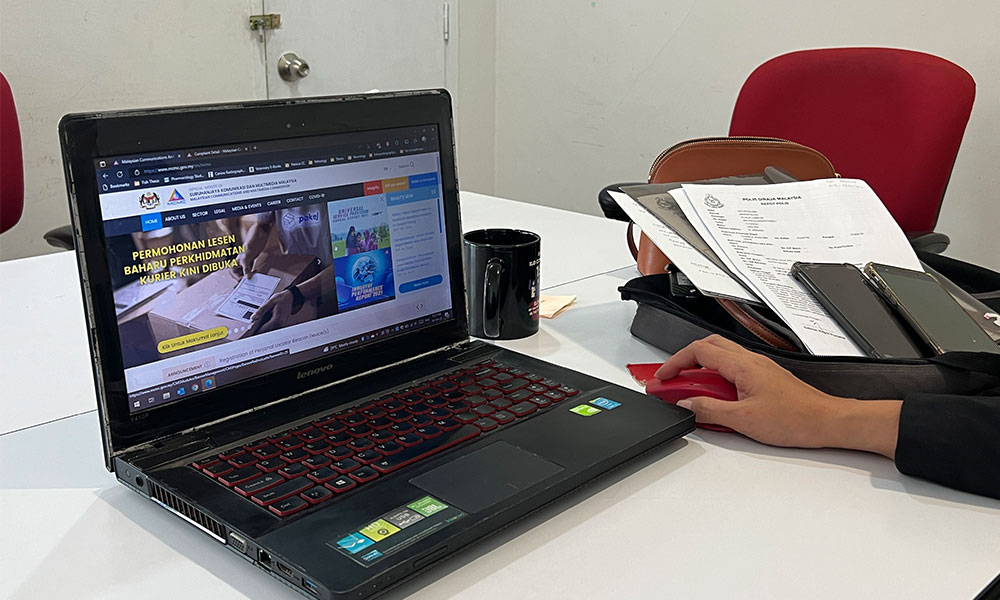
“In Malaysia, we have laws but we don’t enforce them,” remarked Tasha, while Hazel and Teja pointed out the need for sensitisation training for frontline police officers to avoid victim blaming.
“The police, especially the frontline officers need to be trained because they cannot expect the victim to deconstruct the crime to make it easier for them to identify what to do.
“The police need to be trained as to what kind of questions to ask which will elicit the right answers.
“I believe the Child Investigative Centre also known as D11 division should take the lead in training all frontline officers to handle sensitive cases, such as stalking,” Hazel suggested, adding that the division should also draft questions and train officers to show empathy to victims.
New laws not retrospective
Last month, Deputy Minister in the Prime Minister's Department (Parliament and Law) Mas Ermieyati Samsudin estimated that after the laws were passed in both houses of Parliament this month they would come into effect in December.
Hazel also pointed out the importance of the new law being publicised among Malaysians to create an awareness of criminal behaviours.
“I hope there is more awareness of how social media harassment or online harassment is now criminal behaviour,” she expressed.
Meanwhile, Association of Women Lawyers (AWL) committee member Meera Samanther told Malaysiakini that the new laws could not be used to prosecute conduct carried out previously before the act was gazetted.
“In other words, it does not apply retrospectively,” she said.
Meera who has been with the working group to make stalking a crime since their first meeting in 2006 said there was not enough information about stalking that may have led to murder because there has never been a category for stalking.
She said it was a proud moment for all those who worked so hard on making stalking a crime in Malaysia.

Meanwhile, on Monday after passing the bill at the lower house of Parliament, WAO deputy executive director Yu Ren-Chung posted screenshots of a tweet from October 2020 written as a tribute to former law minister Liew Vui Keong when he passed away.
He said Liew decided to support the #MakeStalkingACrime movement after their first briefing with him.
“A multi-agency committee was set up – which survived the change of government.
“As law minister, VK also drove efforts to abolish the mandatory death penalty, decriminalise suicide, create a law commission, create a police commission, and much more,” Yu described.
/file/publisher-c1a3f893382d2b2f8a9aa22a654d9c97/2022/10/8afcff62f64e73cb81c8c87dac9ec361.jpg)
/file/publisher-c1a3f893382d2b2f8a9aa22a654d9c97/2022/09/c3393be572867210f77fa60220508cdc.jpg)
/file/publisher-c1a3f893382d2b2f8a9aa22a654d9c97/2022/08/161c2b09fa856cb4cd990e1d9d616f79.jpg)




Report this comment
Are you sure you want to delete this comment?
This action cannot be undone.