
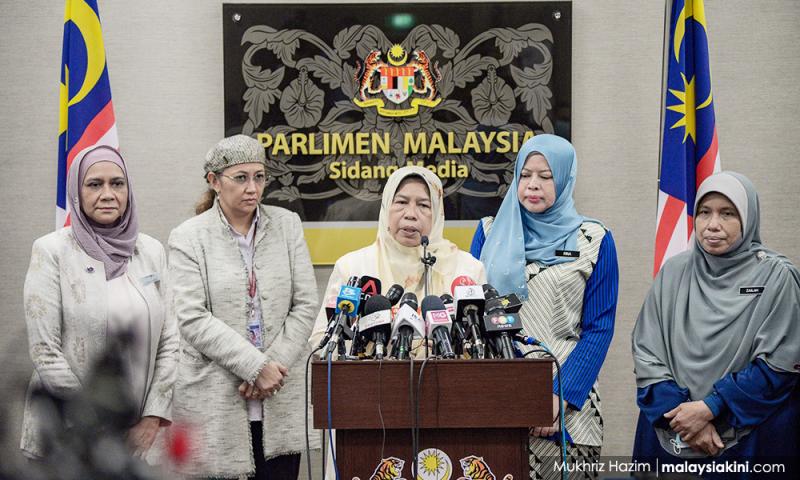
The Joint Action Group for Gender Equality (JAG) urged all parties to field more women in the 15th general election (GE15) to achieve a minimum 30 percent of women participation in politics.

Malaysia currently has one of the lowest women’s representation in Parliament in Southeast Asia with women holding 14 percent of the seats, compared to the regional average of 20 percent, the group said.

“Malaysian women deserve recognition of the barriers that they face to political empowerment. They also deserve opportunities and support to take up political leadership, in light of not only their calibre but also their extensive reach to the community.

“Our women’s entry to and participation in politics remains limited, due to patriarchal sociocultural barriers and political institutions,” the group said in a statement today.

It added that women politicians have to deal with public distrust over their leadership capabilities and unrealistic expectations to balance “feminine” and “masculine” traits of leadership.

They also face obstacles in getting campaign resources and fundraising due to having less political influence, while also having less time to focus on campaigning due to household responsibilities often relegated to women.

JAG said all these factors could compromise the electoral competitiveness of women.

“Efforts by political parties to fulfil the 30 percent target is thus an important step towards creating a gender-equal political arena for our women and as an indicator of our willingness to uphold gender equality,” the group said.

Despite the constraints women face in politics, they are as competitive as their male counterparts, JAG said, adding that research shows women candidates have performed better than male candidates at the federal level, with the exception of PAS.

Legislation passed

Over the years, it said, women politicians have played an instrumental role in highlighting women's interests at the legislative level and instituting relevant policy changes.

Among the examples JAG provided included the Domestic Violence Act, the Sexual Offences Against Children Act 2017, and the Anti-Sexual Harassment Bill.

“(These acts) are the culmination of cooperation between women policymakers who are critical actors in championing gender equality such as Maria Chin Abdullah (Petaling Jaya), Hannah Yeoh (Segambut), Azalina Othman Said (Pengerang), and Kasthuri Patto (Batu Kawan), and women’s rights groups,” it said.

Aside from that, women MPs have also consistently brought up issues such as unequal citizenship rights, childcare centres, single mothers, criminalising stalking, maternity leave, and more, in Parliament debates.

As such, fulfilling the women's political participation target is not just about improving the country’s political empowerment index or upholding its commitment to the United Nations Convention on the Elimination of All Forms of Discrimination Against Women (Cedaw) and the Sustainable Development Goals (SDGs).

“As women constitute half of the national population, it is a necessity for inclusive development, and ultimately for a Malaysia that is truly prosperous for all,” JAG said.