


/file/publisher-c1a3f893382d2b2f8a9aa22a654d9c97/2023/09/c61281dd537d8d67492f5b042a29bb6c.jpg)

Walid - an action film with a strong social message
Written by Areel and Hafiz Derani, Walid (which hits local cinemas on Sept 14) puts the spotlight on issues such as the right to education, migrant rights, stateless children, and human trafficking.
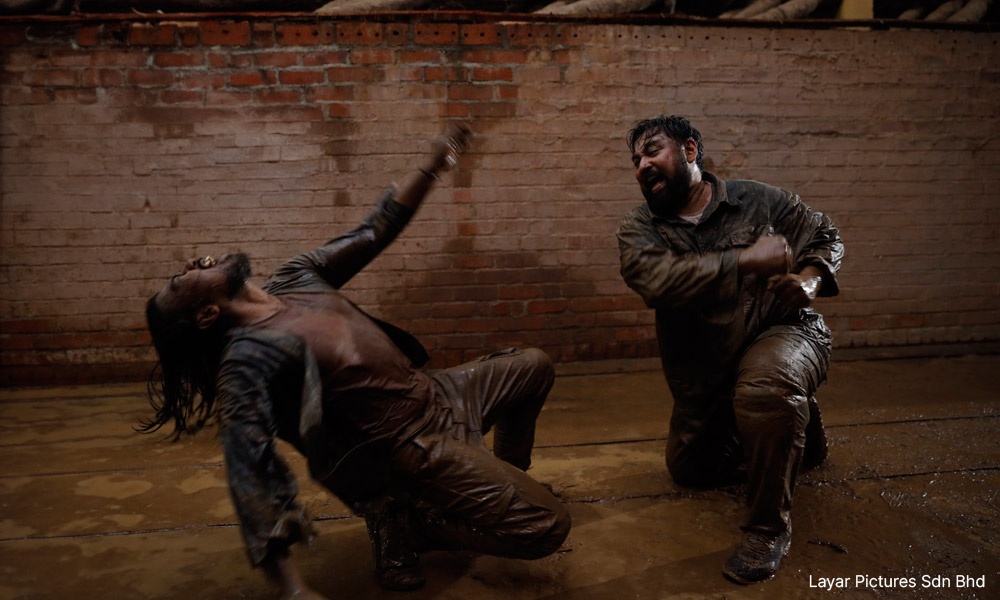
Throw in some well-choreographed silat action scenes and this movie should draw in the viewers.
Walid revolves around the titular character played by Megat Sharizal Yusoff who spends his free time teaching underprivileged children. He notices a young girl Aisha watching him teach and invites her to join in.
Aisha and her mother are shunned by villagers because they are “outsiders”. However, that does not stop Walid from teaching her and a special bond develops between teacher and student.
All that is shattered when Aisha and other children are...
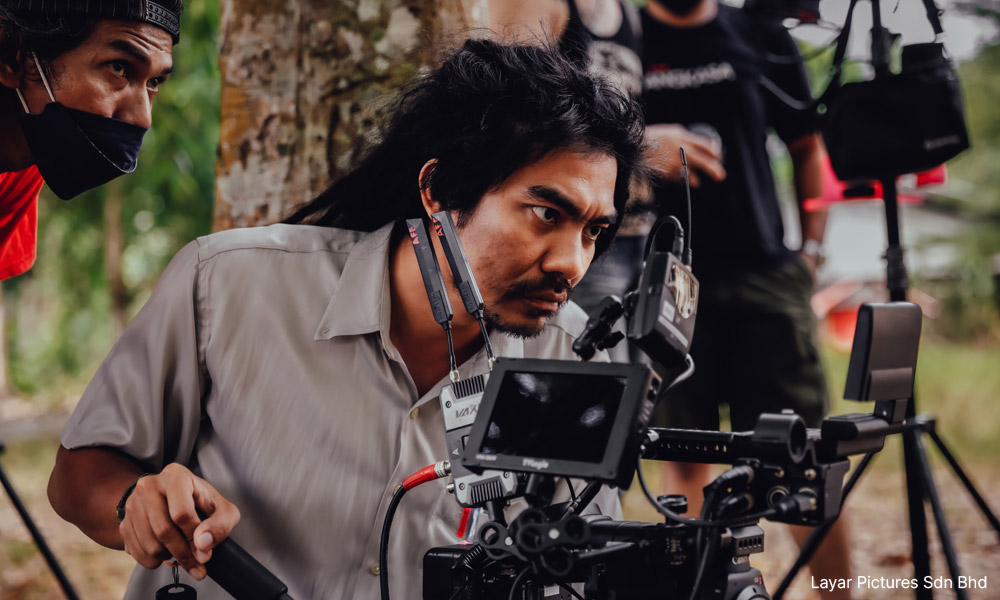
Filmmaker Areel Abu Bakar’s latest cinematic offering, ‘Walid’, tackles many hot-button topics.
Written by Areel and Hafiz Derani, Walid (which hits local cinemas on Sept 14) puts the spotlight on issues such as the right to education, migrant rights, stateless children, and human trafficking.
Throw in some well-choreographed silat action scenes and this movie should draw in the viewers.
Walid revolves around the titular character played by Megat Sharizal Yusoff, who spends his free time teaching underprivileged children. He notices a young girl Aisha watching him teach and invites her to join in.
Aisha and her mother are shunned by villagers because they are “outsiders”. However, that does not stop Walid from teaching her and a special bond develops between teacher and student.
All that is shattered when Aisha and other children are kidnapped by a crime syndicate and Walid decides to go searching for them.

He eventually takes matters into his own hands to rescue the children before they are sold off.
The movie also stars Namron and Putri Qaseh.
US screenings
Walid was screened at Cinema Village in New York from July 28 to Aug 3; and Laemmle Glendale movie theatre in Los Angeles from Aug 11 to Aug 17.
Areel’s previous film the martial arts flick ‘Geran’ (2019) won the Daniel A Craft Award for Excellence in Action Cinema at the 19th New York Asian Film Festival and Special Jury Award at the 31st Malaysian Film Festival.
Silat gayong features prominently in both Geran (internationally called ‘The Deed of Death’) and Walid, which makes it a big box-office draw for many Malaysian movie lovers.

The idea to make Walid came to Areel when he was in Tawau, Sabah, and coming into contact with the Bajau Laut community.
“We saw a lot of Bajau Laut people and their children who were begging in the villages. They did not have any form of identification so they could not go to school.
“They would be begging in the town and if there is a raid by authorities, they will all run away.”
Areel said the idea to make a film about stateless children who could not go to school and lived in constant fear that they would be caught by the authorities came to him there.
Change of location
The movie was initially supposed to be shot in Tawau but due to the Covid-19 restrictions, they ended up shooting in Northern Kedah instead.
“You have people from Thailand, Myanmar, and Cambodia who come across the border and many don’t have permits to work here legally. There are children too but they can’t go to school.”
Areel said these people live in remote villages and their children can be seen playing with the other children in the village. He said issues arise because the villagers view them as outsiders.
Aisyah in the movie is essentially a stateless child and she and her mother are viewed as outsiders treated with disdain by the villagers.
Areel took up silat as a schoolboy but stopped taking classes after Form Two. He and his friends practised at home whenever they were free.
“Silat is the medium to attract the audience to come watch the film. Action is a universal language. We used silat as a means to showcase the culture of the place,” said Areel.
He points out that action films made in other countries incorporate their fighting styles. So he uses silat because the movie is set in Malaysia.
Not a buff hero
Actor Megat does not look like your typical martial arts hero.
“I choose to not use a stereotypical look for the movie. I wanted to change people’s mindset. It is not about how a person appears on the screen but the message we want to convey,” said Areel.
Megat’s regular guy appearance tallies the fact that Walid is an ordinary man who is forced to go above and beyond to take on the bad guys in the movie.

The issues showcased in Walid are stuff ripped from the news headlines such as the right to education, migrant workers, human trafficking, and human rights.
Areel said most Malaysians do not care about people in Aisyah’s situation. They are used because they don’t have proper identification and they are a means to make money for some people.
Trafficking children for sex or being sold off so that their organs can be harvested is not unheard of.
So far, reviews from critics who watched the film in New York and Los Angeles have been very positive.
“We wanted to get the views of people outside of Malaysia. We are surprised and happy that not only was it screened at cinemas there but they have embraced the film,” said Areel who added that it is a big achievement because Walid is a 100 percent Malaysian-made film.
He said that based on the positive response in these two major cities, he is optimistic they can screen it in other places outside of Malaysia and also be picked up by a streaming service.
Areel is especially taken up by the way American film reviewers caught the nuances of the social issues he was trying to convey in Walid.
“Education, human trafficking, and migration are global issues,” he added.
When asked what he hopes viewers will take away with them when they watch Walid, Areel said, “I hope people can accept the truth or reality of what is happening near our place.
“Don’t just watch it from a political angle or the point of view of a religion, but watch it from the perspective of humanity and responsibility,” he said.
/file/publisher-c1a3f893382d2b2f8a9aa22a654d9c97/2019/03/3c129c92bf765e584c7bd158bd8d543e.jpg)
/file/publisher-c1a3f893382d2b2f8a9aa22a654d9c97/2023/05/b6059c1fae5726f16d4f452001af9253.jpg)
/file/publisher-c1a3f893382d2b2f8a9aa22a654d9c97/2023/03/f35a246d33876d64165f029ffafc6ee8.jpg)
/file/publisher-c1a3f893382d2b2f8a9aa22a654d9c97/2022/09/6dcdd215fcb2d02343e899967df68a0c.jpg)


Are you sure you want to delete this comment?
This action cannot be undone.