


/file/publisher-c1a3f893382d2b2f8a9aa22a654d9c97/2023/02/ead6a63c9a9c98d5460b95605195162c.jpg)

Animal welfare coalition urges end to 'catch and kill' practice
A coalition of animal welfare NGOs has called for an end to the ‘catch and kill’ practice which it says has proven ineffective in controlling stray animal populations.
In a statement today, the group called for more humane and effective practices to combat the issue of overpopulation of stray cats and dogs.
"The traditional 'catch and kill' practice, which has been in use for the past 60 years, has proven ineffective in reducing the stray animal population.
"Therefore, the coalition...
A coalition of animal welfare NGOs has called for an end to the ‘catch and kill’ practice which it says has proven ineffective in controlling stray animal populations.
In a statement today, the group called for more humane and effective practices to combat the issue of overpopulation of stray cats and dogs.
"The traditional 'catch and kill' practice, which has been in use for the past 60 years, has proven ineffective in reducing the stray animal population.
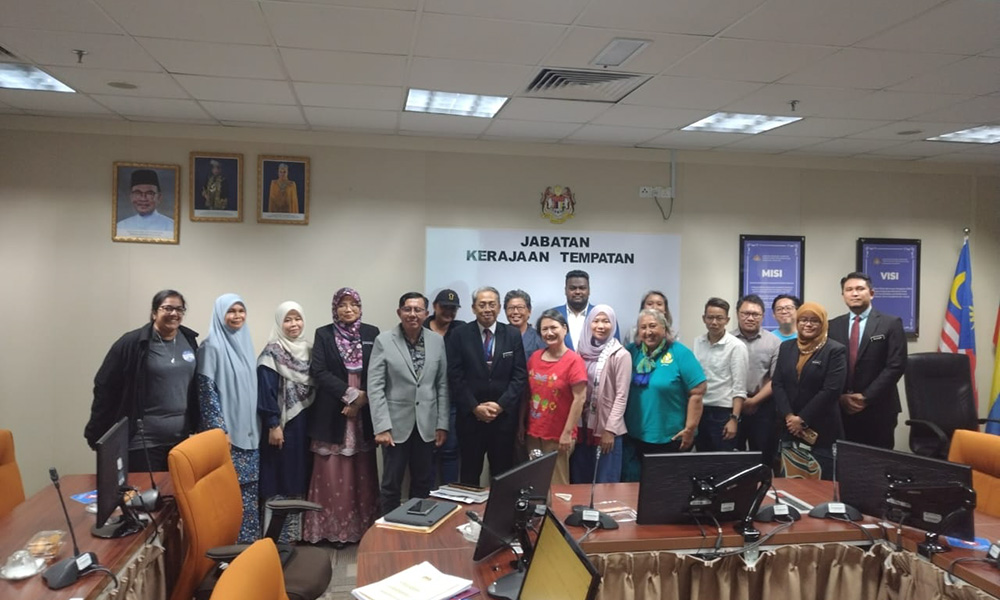
"Therefore, the coalition, consisting of 15 animal welfare NGOs from across Malaysia, recently met with the Local Government Development Ministry, along with the Veterinary Services Department, to address this long-standing issue.
"It is important to note that Malaysian regulations pertaining to dog culling do not align with the standards set by the World Organization for Animal Health in animal welfare. As a result, this misalignment negatively impacts Malaysia's overall score on the Animal Protection Index 2020," said the group.
It also said that the mishandling and inadequate management of roaming animals by local councils have led to inhumane treatment of these animals.
The groups added that this has resulted in public outrage, and conflicts with pet owners and concerned citizens that have garnered significant media attention over the years.
"While the coalition understands the constraints and limitations faced by the councils, we strongly urge the government and local councils to impose a compulsory spay and neuter policy, along with microchipping for owned pets, to reduce the occurrence of abandoned dogs and cats.
"It is essential to enforce stricter regulations on pet sales and breeders.
"Authorities should also adopt the Trap-Neuter-Vaccinate-Rehome/Release (TNVR) method, which is a humane and effective approach to managing stray populations. By adhering to the key recommendations outlined in the Animal Protection Index, TNVR, in collaboration between authorities and local NGOs, has yielded positive results in many countries," the group said.
It cited that the Penang Island City Council and its partner Independent Aid for the Protection and Welfare of Animals (IAPWA) Penang have already implemented this council-NGO collaboration since 2018, successfully trapping, neutering, releasing, or rehoming more than 5,800 dogs to date.
The group said this demonstrates the feasibility of such cooperation and the possibility of putting an end to the killing of stray animals in Malaysia.
Proper training needed
Negeri Sembilan has also recently announced a ban on killing strays, along with compulsory neutering of pets and animals at construction sites.
The NGOs also called for proper training on humane animal handling for council staff and contractors involved in dealing with stray animals.
They suggested issuing warning letters or fines to the owners instead of immediately seizing owned animals.
The coalition expresses its willingness to work hand in hand with local councils in implementing the TNVR method and partnering to address the overpopulation of stray cats and dogs.

"The government, together with NGOs, must also explore cost-effective methods and demonstrate a proactive and responsive approach to address public concerns regarding the inhumane treatment of strays.
"The coalition calls for a multi-sector partnership in reducing the stray population through evidence-based, cost-effective, and humane approaches. We urge continuous engagement and collaboration between the government and private sectors to ensure sustainability and continuity in our efforts," it said.
The statement was attributed to the Malaysia Animal Protection Society, Gabungan Keprihatinan Haiwan Terbiar, Canine Cares, IAPWA Penang, Malaysian Animal Kindness Society, Malaysian Dogs Deserve Better, Noah’s Ark Ipoh, Persatuan Haiwan Terbiar Malaysia, Persatuan Penyelamat Haiwan Terbiar, Furrykids Safehaven, Seremban Second Chance Animal Society, SPCA Penang, SPCA Selangor, SPCA Sandakan Sabah, SSPCA (Sarawak) and SPCA Tawau.
/file/1102/3be67cdfff7e99703eed4cefa941283a.jpeg)
/file/publisher-c1a3f893382d2b2f8a9aa22a654d9c97/2023/05/676797a0131254fd3e4a823daa47f3b3.jpg)
/file/publisher-c1a3f893382d2b2f8a9aa22a654d9c97/2023/06/0b2c68a6297b8d0304b54b35b16ec6ee.jpg)
/file/publisher-c1a3f893382d2b2f8a9aa22a654d9c97/2023/03/b4d09da51439cd65db368433ee217d4d.jpg)
/file/publisher-c1a3f893382d2b2f8a9aa22a654d9c97/2021/06/17ac158e80d2ffde6501f21d464c05fc.jpg)


Are you sure you want to delete this comment?
This action cannot be undone.