


/file/publisher-c1a3f893382d2b2f8a9aa22a654d9c97/2024/02/cd69be3361b8d500e508948b84fbd701.jpg)

Artist overcomes parental resistance to master calligraphy
MALAYSIANSKINI | Sarawak-born ink and calligraphy artist Jordant Chang Sao Suo was never encouraged to pick up the brush even though his father Cheng Haw Chien is a renowned Malaysian calligrapher, poet, author, and educator.
If you are confused by the different surnames, Cheng is the father's ‘glamourous’ work name while Chang is the name on his identity card.
As his parents wanted him to have a more stable profession, Jordant studied industrial design in Melbourne, Australia, and even worked in the corporate sector for many years.
However, he couldn’t turn his back on his love for drawing and painting. When he held his solo exhibition in 2007 at the Kuala Lumpur Central Gallery, he started getting noticed by connoisseurs of ink paintings. Subsequently, his paintings were showcased at exhibitions in Australia, Singapore, and China.
In 2017, he decided to quit the safety net of his day job and committed fully to life as an ink painter and calligraphy artist. That same year he founded Clarity Art Center, where he teaches ink painting and calligraphy.
Jordant, who is now 40, feels that his inclination...
MALAYSIANSKINI | Sarawak-born ink and calligraphy artist Jordant Chang Sao Suo was never encouraged to pick up the brush even though his father Cheng Haw Chien is a renowned Malaysian calligrapher, poet, author, and educator.
If you are confused by the different surnames, Cheng is the father's ‘glamourous’ work name while Chang is the name on his identity card.
As his parents wanted him to have a more stable profession, Jordant studied industrial design in Melbourne, Australia, and even worked in the corporate sector for many years.
However, he couldn’t turn his back on his love for drawing and painting. When he held his solo exhibition in 2007 at the Kuala Lumpur Central Gallery, he started getting noticed by connoisseurs of ink paintings. Subsequently, his paintings were showcased at exhibitions in Australia, Singapore, and China.
In 2017, he decided to quit the safety net of his day job and committed fully to life as an ink painter and calligraphy artist. That same year he founded Clarity Art Center, where he teaches ink painting and calligraphy.
Jordant, who is now 40, feels that his inclination towards the arts was probably due to watching his father at work when he was growing up.
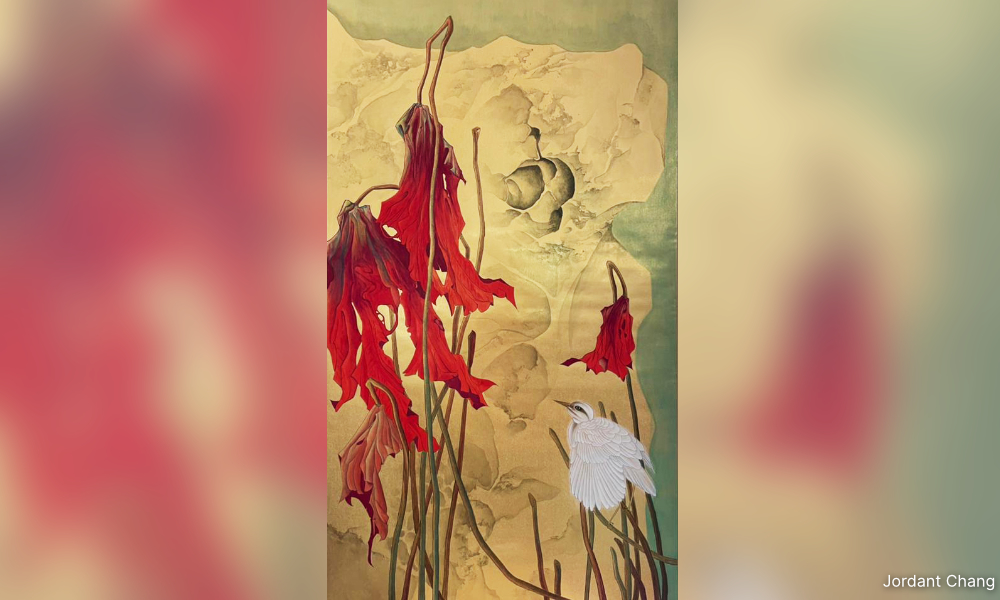
“When I was little, I did enjoy messing around with paint,” he recalled.
Oddly enough, despite his reservations about having his son follow in his footsteps, Chang Senior did give him some basic training in art before he went off to study Down Under.
Jordant learned to balance his career and his passion for years before he decided to become a full-time artist. He admitted it was not easy but pointed out it was important to be consistent when it comes to the quality of his work.
By then, his father supported the decision and encouraged him further.
“I went to China because of my dad. My father wanted me to learn from the best,” said Jordant, who regularly gets invited by the government of China to showcase his work in different cities.
Left-hander dilemma
He started learning the finer points of Chinese calligraphy in 2016 but had to overcome one minor problem at first.
“I’m left-handed, so it was very challenging for me. When I started taking lessons, my master forced me to use my right hand. Because if you’re using your left hand, you can’t write out very nice forms that showcase the beauty of the strokes,” Jordant explained.
So now he uses both hands for his work. The right is for calligraphy and the left is for his ink paintings.
During the Chinese New Year season, he gets requests for specially drawn calligraphy that is viewed as auspicious.
“People always like the colour red during Chinese New Year, as red signifies good luck and fortune. They want to hang the words of good fortune to be written on red paper and placed on both sides of the door. This symbolises renewal and good fortune,” he said.
However, there are a few rules that must be followed.
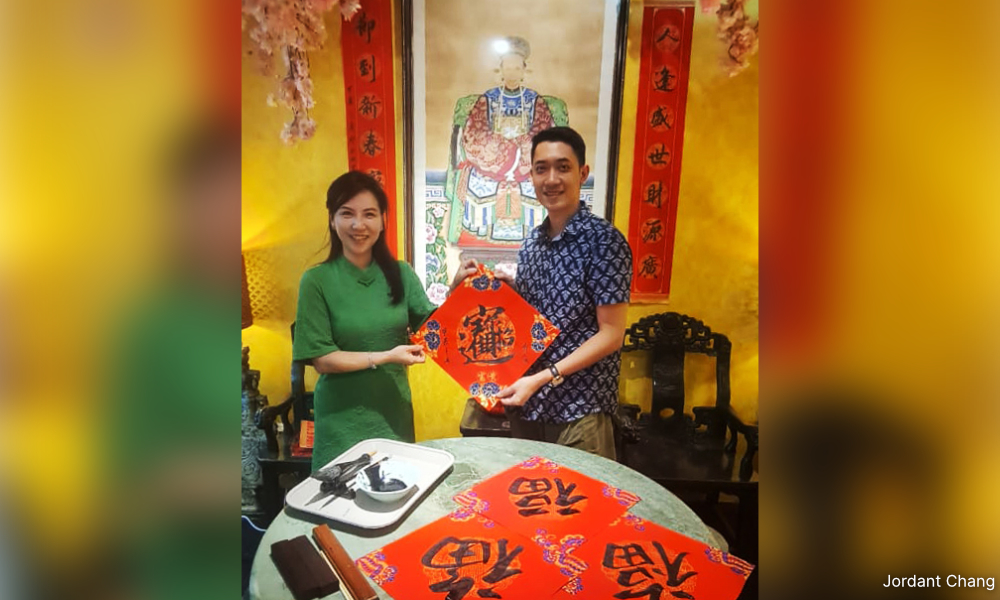
“Couplets are used with no word limit but each line must have the same number of characters. The second line mirrors the first line in both grammar and imagery - numeral to numeral, noun to noun, verb to verb.
“It also has to rhyme. The English language uses vowels and consonants to rhyme but the Chinese language uses tones,” he explained.
He has been invited to several functions to showcase his work this Chinese New Year.
Learning the fine art of calligraphy
Jordant advises anyone who wants to take up calligraphy to take a look at other artists’ work on social media.
“This way, you can see the entire process of how calligraphy is drawn,” he advised.
“After that, if you want to learn, take a class where a proper master can mentor you.
“If you are keen to become an artist, you have to be very disciplined, but if you want to take it up as a hobby, drawing once a week is fine,” he added.
His students’ ages range from 12 to 70. He believes that most of them are taking up calligraphy because of social media.
Chang noted that more and more people are trying to reconnect to their roots via art. He also noted that even those who are not Chinese are picking up the brush to learn calligraphy because they seem to have a special connection to the art form.
In the future, he hopes to be able to teach calligraphy to school children.
“In China, they have a very systematic method of teaching calligraphy. This allows people to learn and master the skill of calligraphy,” he explained.
Though some may already refer to him as a calligraphy master, he said he has a long way to go and much to learn about an art form that dates back over 2,000 years.
In 2018, he received a Silver Award at the Tokyo Metropolitan Art Museum’s Japan International Calligraphy and Painting Exchange Exhibition.
Painting with ink
Jordant’s ink paintings are noted for their delicate brushstrokes and elegant muted colours.
“I like to change things up a bit,” he said, describing his style.
“There are three main categories - landscape, flowers and portraits. An artist usually chooses one of these three categories.”
He has created works in all three categories.
When asked why he chose to use Chinese ink instead of regular paints like watercolour, he simply replied: “It just has magic.”
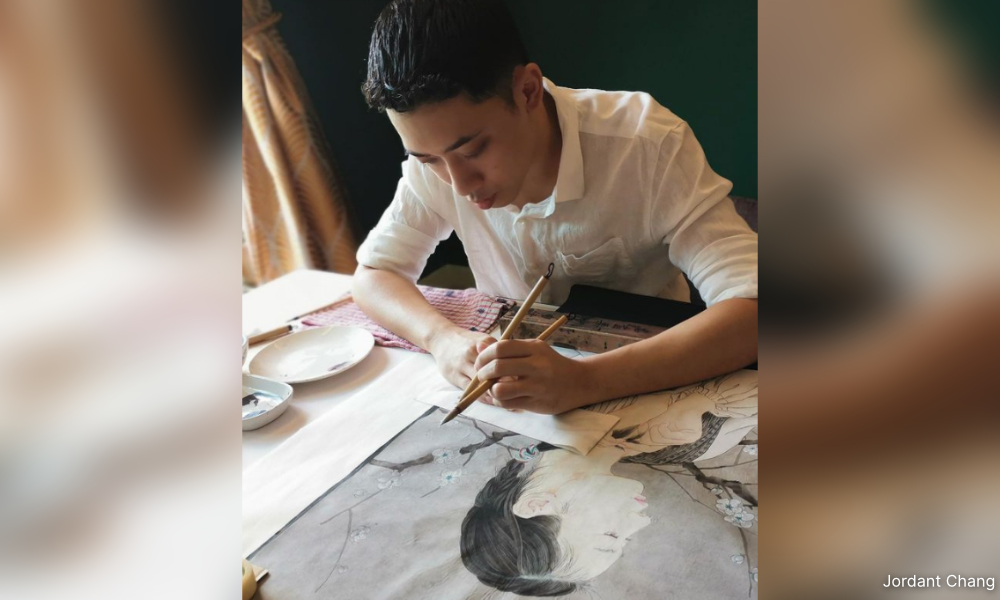
Though it is similar in terms of viscosity to watercolours, he said that the paper used is much thicker and that he can get all his art supplies in Kuala Lumpur.
To the young people out there who want to become full-time artists, Jordant advises them to follow their hearts.
“Right now, I have over 70 students. Half of them took up art as a hobby, something they could do during their free time. The rest are seriously looking at an art career,” he observed.
When asked if he has any exhibitions planned for the near future, he said there were none, but right now, he is just happy teaching and passing on what he knows to his many students.
China has a thriving art scene and market for artists who want to perfect their skills.
“If you want to master it, you probably will have to go to China and learn from the masters there,” he added.
MALAYSIANSKINI is a series on Malaysians you should know.
Malay director proud of Cantonese film despite language obstacle
Chance encounter with squirrel helped dropout find his calling
Kam Raslan and his 'Old Boy' revival
Graffiti artist Octo - Malaysia's answer to Banksy?
Jagat director's new film to premiere at prestigious festival
Young Kadazan keeps hope alive for rural communities in need
'I wanted to be a rock star' - distinguished don recalls his roots
/file/publisher-c1a3f893382d2b2f8a9aa22a654d9c97/2020/01/765140115b51092143c3eac71941a061.jpg)
/file/publisher-c1a3f893382d2b2f8a9aa22a654d9c97/2024/01/8c5387f4c6894818225d9dce650fe97a.jpg)


Report this comment
Are you sure you want to delete this comment?
This action cannot be undone.