




Orang Ulu's reforestation effort pays off
The Orang Ulu of Uma Bawang in Northern Sarawak's Baram District have successfully carried out replanting trees as a community-based initiative for the long-term conservation and rehabilitation of logged-over tropical rainforests.
The Orang Ulu of Uma Bawang in Northern Sarawak's Baram District have successfully carried out replanting trees as a community-based initiative for the long-term conservation and rehabilitation of logged-over tropical rainforests.
 Since it was launched in 1992, more than 20,000 young trees have been planted covering an area of about 80 hectares of native customary rights (NCR) land near the 85-door Kayan longhouse, Uma Bawang Residents Association (UBRA) chairperson Jok Jau Evong told
malaysiakini
.
Since it was launched in 1992, more than 20,000 young trees have been planted covering an area of about 80 hectares of native customary rights (NCR) land near the 85-door Kayan longhouse, Uma Bawang Residents Association (UBRA) chairperson Jok Jau Evong told
malaysiakini
.
"You can say we the Orang Ulu want to repair the damage caused by commercial logging through reforestation," he said.
The association, established in 1988 and registered with the Registrar of Societies (ROS) in March 1990, launched the re-planting project in 1992 using only local timber species such as meranti, kapur and engkabang (illepeanut).
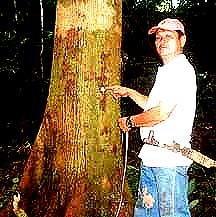 Jok Jau said members of the association supplied 10,000 seedlings for the replanting and rehabilitation of the forests in Sungai Milibut and Sungai Temhah Uket.
He said the project is administered and managed by members of the committee with the co-operation of every member through the self-help concept.
It is being expanded in stages according to the available manpower and the seasonal fruiting of the various tree species within the locality to supply the required seedlings, he added.
Efforts recognised
By 1998, the association managed to step up the replanting of various wood species to more than 2,000 young plants and by 2001 to more than 8,000 young plants, mostly meranti and engkabang in an area near the longhouse at Sungai Keluan.
"We were overjoyed in 2002 when the efforts of our members to promote biodiversity conservation and forest rehabilitation were duly recognised and received the top award in the field - the United Nations Equator Initiative Prize," Jok Jau said.
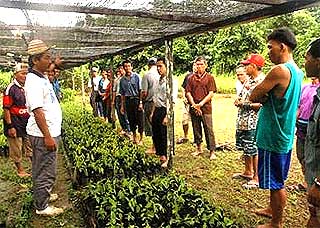 "It acknowledged our community project at Sungai Keluan as Southeast Asia's most exemplary model on biodiversity conservation and forest resources management .In the same year, our association also received another award from Slow-Food Movement Organisation that attaches the importance of food cultivation from natural resources," he added.
In January 2006, the association was given grants by the UNDP to increase and expand its activities for the planting of 20,000 young trees on their NCR land.
Jok Jau said he was grateful for the support and co-operation given by members who have demonstrated their commitment to preserve their communal forests.
"Our members who are from the Kayan community are never to be underestimated for their will and determination and commitment to such an effort," he added.
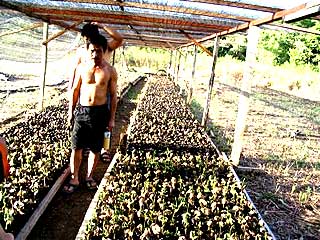 Many international NGOs have praised the project and among them are Friends of The Earth International which has declared the project as setting a fine model for the preservation and rehabilitation of communal forests that should be adopted by other communities elsewhere.
Jok Jau hoped the Sarawak government would also support the project so that it could continue to be implemented.
"I hope we could also provide the inspiration to other communities and to use the opportunities to train themselves on how to administer and manage our communal forest resources," he added.


