


Bangladesh MP: Over 1,000 undocumented citizens in M'sian prisons
This could be one reason why, despite the unprecedented influx of Bangladeshis to Malaysia last year, its government is not recording a corresponding increase in foreign remittances.
“It is very important for the Bangladesh government to address issues plaguing overseas employment effectively,” said the chairperson of its Parliamentary Caucus on Migration and Development, Tanvir Shakil Joy.
Workers sending money home is a key source of foreign currency income for Bangladesh. Malaysia ranks the second-largest destination for its workers, with...
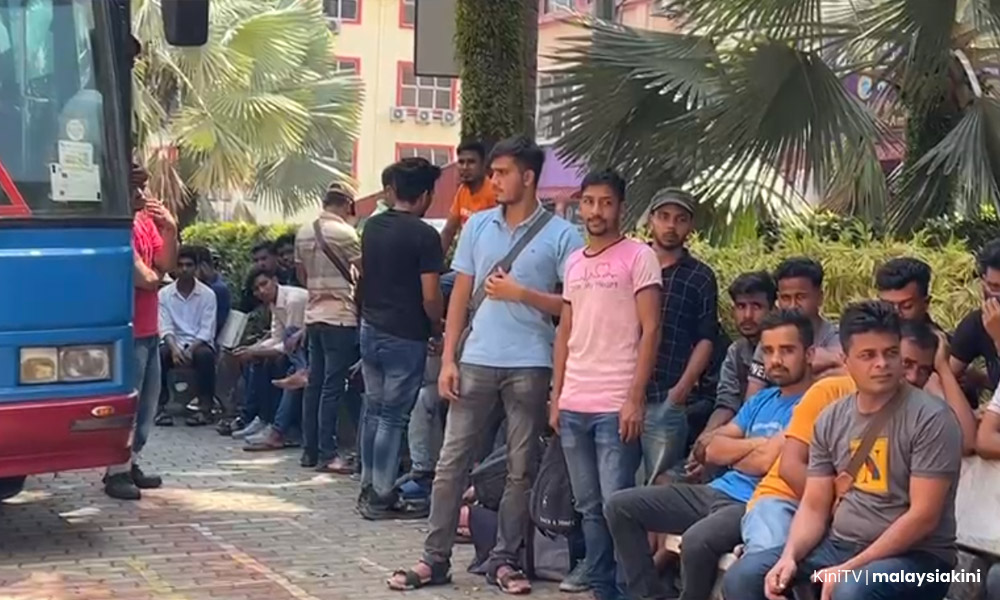
Over 1,000 Bangladeshis are currently in Malaysian prisons due to their undocumented status.
This could be one reason why, despite the unprecedented influx of Bangladeshis to Malaysia last year, its government is not recording a corresponding increase in foreign remittances.
“It is very important for the Bangladesh government to address issues plaguing overseas employment effectively,” said the chairperson of its Parliamentary Caucus on Migration and Development, Tanvir Shakil Joy.
Workers sending money home is a key source of foreign currency income for Bangladesh. Malaysia ranks the second-largest destination for its workers, with 351,000 recruited last year.
Despite the exodus, annual remittances have hovered below RM104.28 billion (US$22 billion) over the past two years, disappointing the government’s expectation of a significant surge.
However, last year, Malaysia also earned notoriety for workers trapped in job scams. Hundreds of Bangladeshis were rescued from deplorable conditions across Malaysia by the Labour Department.

They were stranded with no jobs and possibly victims of trafficking networks that span across borders in the region.
In Bangladesh, layers of sub-agents from rural areas to the city partake in exorbitant recruitment fees that entrap workers in forced labour conditions or dupe them into job scams.
Tanvir, who is from the country’s ruling Awami League party and represents 395,000 constituents in Sirajganj-1, northern Bangladesh, has been receiving many complaints of worker abuse, high recruitment fees, job scams, and labour violations.
These issues often lead individuals to either become undocumented or compel them to flee unbearable work conditions.
The Bangladesh government is opting for unconventional solutions to stem the rot.
Legalising sub-agents
Bangladesh will introduce a law to legalise sub-agents in the overseas employment recruitment sector by the end of this year.
“Sub-agents, previously operating informally, will no longer evade legal scrutiny once the law is enacted.
“We aim to address the primary issues afflicting the foreign employment industry right now: job scams and high recruitment fees,” he told Malaysiakini.
Sub-agents, also known as “dalal”, operate independently, earning commissions based on collections which is why the sheer volume of sub-agents poses a monitoring challenge for the government.
“They will be required to align with any of the 700 legal recruitment agencies, limit their operations to one area, and register for an identification card that will enable oversight.
“The recruitment agencies will bear responsibility for the actions of their sub-agents and will stand to incur fines or even short jail terms.
“The identities of the sub-agents along with their ID numbers will be published online for workers to verify their legitimacy without the need to leave their villages,” he said.
Tanvir said the government’s initial efforts to eradicate sub-agents through strict penalties and community warnings proved futile.
In reality, sub-agents had seamlessly integrated into the recruitment system, as they enjoyed the community’s trust fostered by personal connections, such as being neighbours or having familial ties.
“They think, ‘He is my brother, he is my neighbour, so I can trust him’,” he said.
New law being finalised
About five years ago, the parliamentary caucus and Bangladesh civil society organisations investigating the matter proposed that sub-agents be incorporated into a framework to legalise and regulate their operations.
Admitting to the complexity of the process, Tanvir acknowledged, “It has taken us a long time, given the pros and cons involved. It hasn’t been an easy task.
Last year, the Bangladesh government enacted amendments to the Overseas Employment and Migrants Act 2023, recognising the need to establish comprehensive regulations for sub-agents operating within the overseas employment recruitment sector.
The Law, Justice, and Parliamentary Affairs Ministry and the Expatriate Welfare and Foreign Employment Ministry are finalising the new enactment to be tabled in the Bangladesh Parliament this year.
The law will outline the responsibilities, duties, and code of conduct for sub-agents.
Its objective is to ensure fair conduct and accountability in the recruitment process, ultimately safeguarding the rights and interests of workers, recruitment agencies, and employers.
Why Bangladeshis pay high recruitment fees
Coming to Malaysia is the start of a challenging journey for most Bangladeshi job seekers and the exorbitant recruitment fee serves as a painful initiation, yet it paves the way for a hopeful outcome for the worker and their families.
Returning before completing at least five years of work is not an option, even if the initial contract is for just one year, said Tanvir.
“Most Bangladeshis don’t want to settle here but want to work for 10 to 15 years, earn a lot of money, build a house back home, have savings for children’s education, and start a small business.
“That is their only aspiration and whenever someone goes abroad, their extended family becomes dependent on them.
“They take the risk of mortgaging their land, selling their livestock, and borrowing from moneylenders with high interest rates because they are confident they can earn it back and still have enough money for a better future,” he explained.


Report this comment
Are you sure you want to delete this comment?
This action cannot be undone.