


/file/publisher-c1a3f893382d2b2f8a9aa22a654d9c97/2024/05/a8438da74f6c1e4ac65c08205e5d255a.jpg)

'Braderwheelchair’ rues poor disabled access in Klang Valley
Nur Izhar Idham said this resulted in him rating accessibility in the area at four to five out of 10, with one being the worst and 10 being the best.
He said shopping malls were only a safe space for the disabled in theory -as they provide shelter, air-conditioning, and lifts.
“However, we’re often faced with...
MALAYSIANSKINI | From the lack of lifts to uneven surfaces, wheelchair users face daily struggles as they attempt to navigate their way around the Klang Valley.
Nur Izhar Idham said this resulted in him rating accessibility in the area at four to five out of 10, with one being the worst and 10 being the best.
He said shopping malls were only a safe space for the disabled in theory -as they provide shelter, air-conditioning, and lifts.
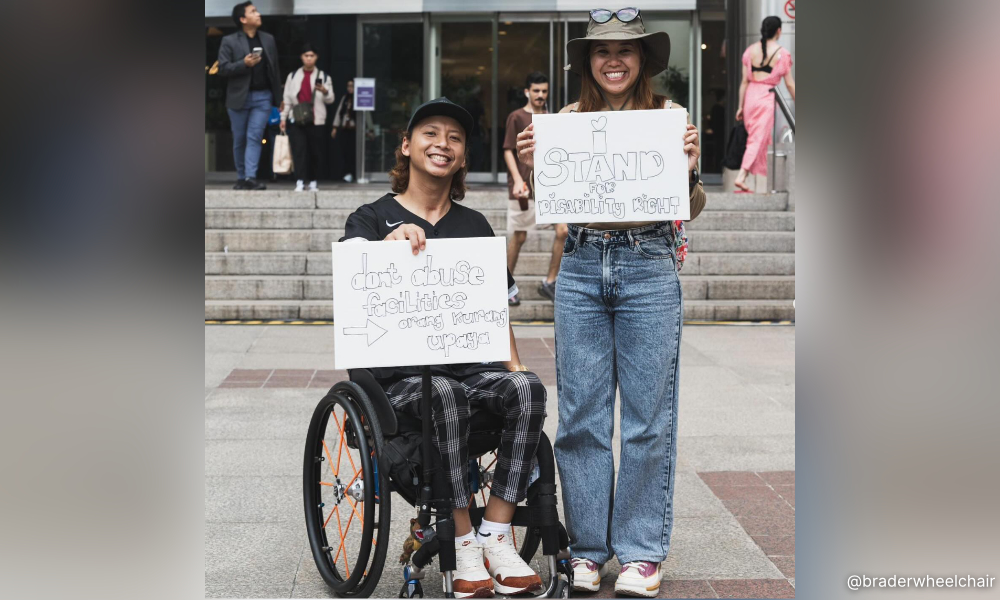
“However, we’re often faced with people who misuse the disabled parking and disabled toilets - or the malls themselves don’t have proper drop-off points,” the 38-year-old businessperson told Malaysiakini.
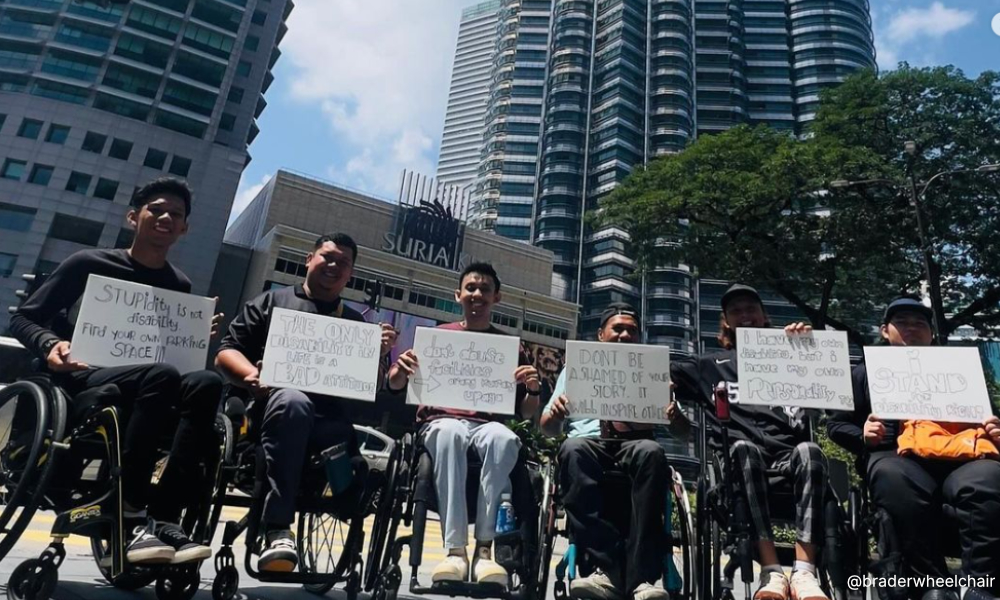
Outside of malls, it’s a toss-up, he added.
“Public transportation is never reliable for wheelchair users.
“The stations have broken-down elevators and stair lifts, and even ramps that are not following Uniform Building By-Laws 1984 standards.
“Not to mention, bus stations are practically inaccessible due to their poor infrastructure,” Izhar said.
When it comes to navigating the outdoors, roads are uneven and there are rarely proper paths for wheelchair users.
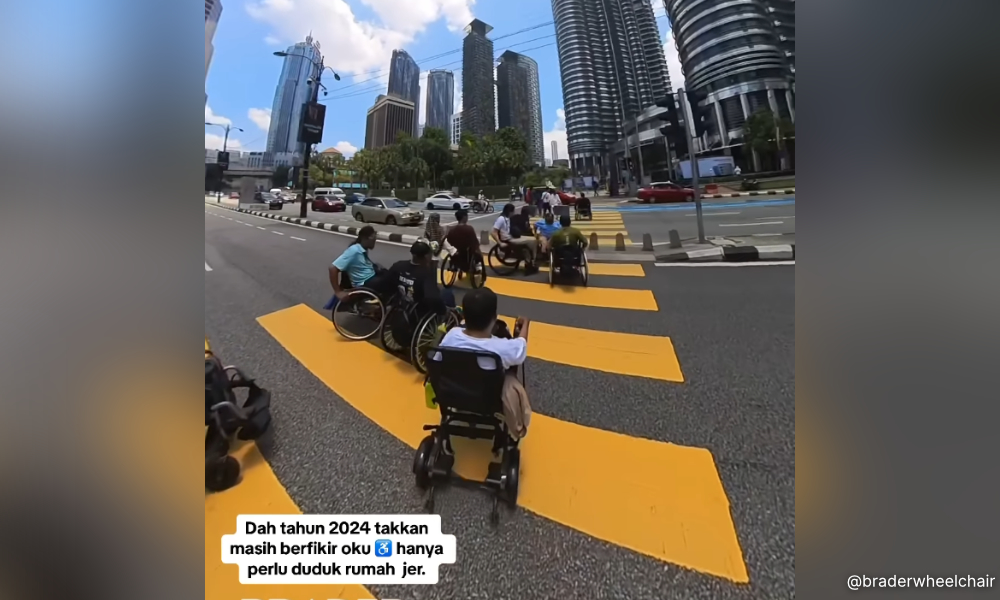
“With improper designs, simple things like a kerb or steep ramp can hinder us from moving around,” he added.
Using social media
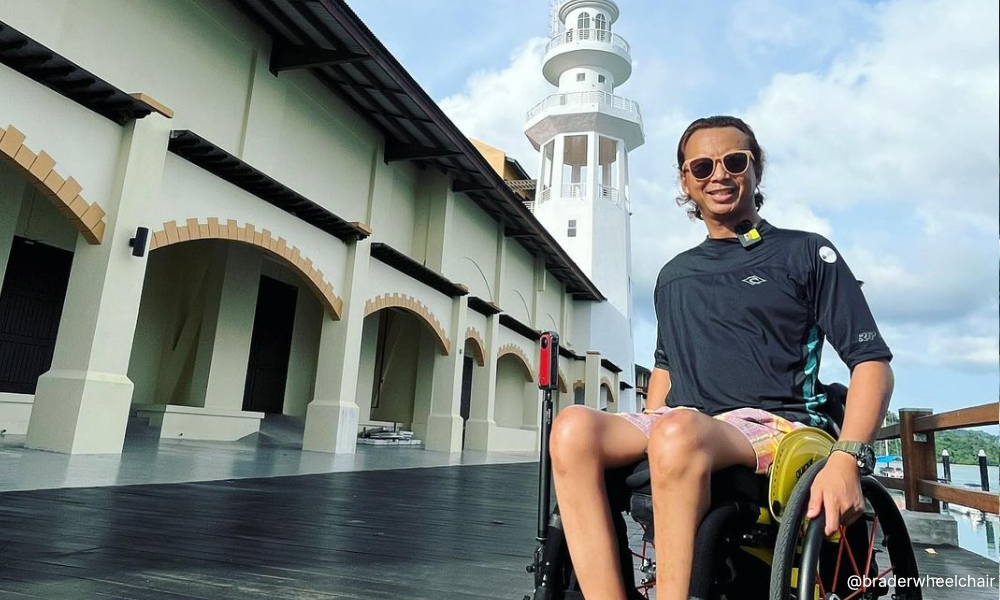
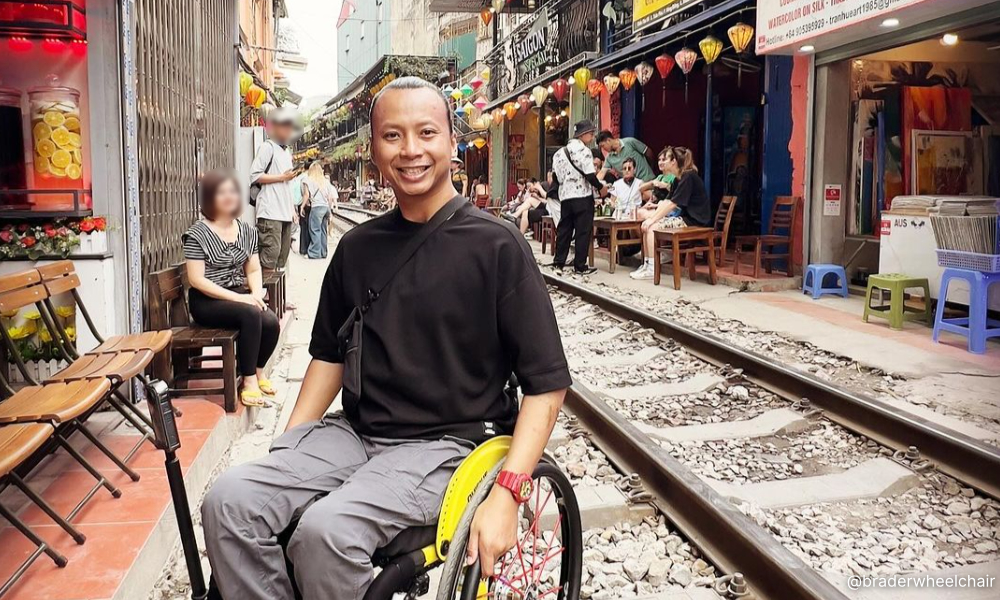
Izhar became popular on social media, particularly TikTok and Instagram, where he is known as @braderwheelchair.
He posts videos of his travels around the Klang Valley, raising awareness among social media users about the needs of disabled people and what accessibility looks like.
“My aim is to raise awareness and educate people about wheelchair facilities and life on wheelchairs,” he said.
On his disability, Izhar said that when he was 18 years old, he got into an accident and became wheelchair-bound ever since.
Despite the setback, he remains active and cheerful.
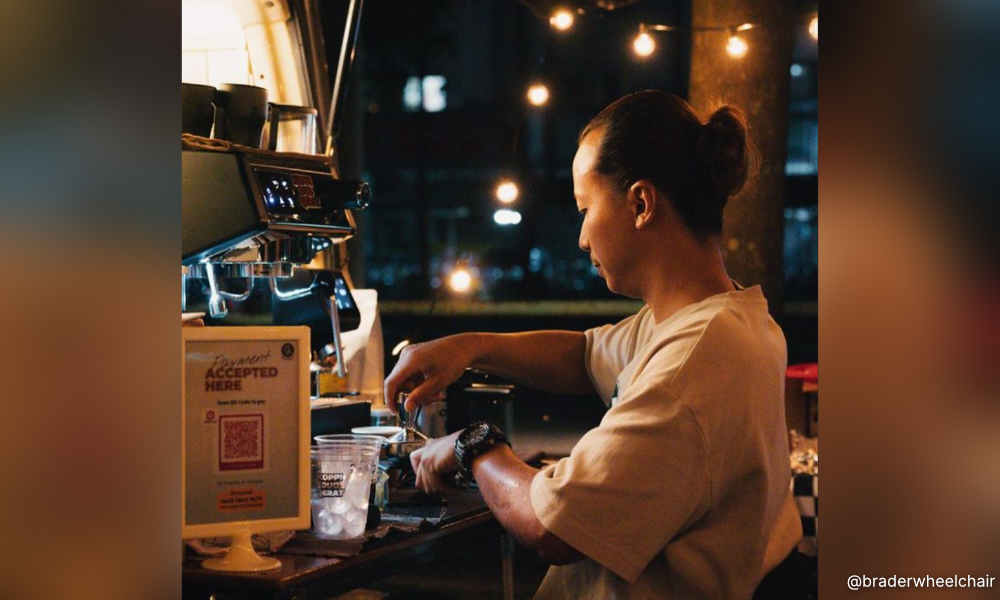
“Most of us (people with disabilities) have active and healthy lives,” he said.
His social media pages display examples of how he participates in physical activities - with one video showing how he uses his arms to exit a swimming pool to get into a wheelchair.
“The wheelchair community does not stay at home but deserves to be out and about, but poor infrastructure and surroundings put us in danger at times.
“We try to manoeuvre whenever possible but we hope shortly that things will improve and the Klang Valley will be more accessible to not only wheelchair users but to all communities,” he said.
Implementing universal design
For this to happen, the authorities must implement universal design in all places, he said.
Universal design is a rights-based and anti-discrimination concept of the design and composition of buildings, and the environment to make them accessible to all communities, regardless of age and abilities.
For example, it takes into account the eye level of children to ensure their view is not obstructed by what may be in their path, especially in places with heavy traffic.
Universal design allows for the participation of the maximum number of community members in a location.
It has seven principles: equitable use, flexibility in use, simple and intuitive use, perceptible information, tolerance for error, low physical effort, and appropriate size and space for approach and use.
Examples of common universal design applications include wide doorways, handles instead of knobs, sitting areas in public spaces, and covered walkways with level surfaces.
Proponents of universal design have pointed out that it benefits everyone, not just those who are disabled.
On that note, Izhar explained that poorly designed infrastructure is a waste of taxpayer and developer resources as these facilities become unused.
An example Izhar cited was badly designed ramps which are included for the sake of satisfying laws.
However, due to their poor design, wheelchair users are unable to use the so-called accommodation, leading to misconceptions that such facilities are unnecessary, he added.
Asked why he thinks accessibility is poor in the Klang Valley, Izhar said many reasons were involved.
“One of them would be the cost of designing accessible features.
“Social perception and stigma also tell society that disabled people do not need to come out of the house, resulting in lesser need to design for the disabled,” he opined.
Fortunately, many people in the Klang Valley are very helpful and he often has good experiences in soliciting help from people around him. Still, people with disabilities should not have to rely on others to get around.
“Manpower can never replace accessibility and independence,” he said.
Izhar also spoke about how disabled people lack the privilege of being able to do things the way able-bodied people do, something that the latter takes for granted.
“We may not be born equal with others but we want an opportunity like the rest too,” he added.
Izhar also has another message to his community: “Don’t just stay home, be afraid, or shy to go out.
“Go out, make friends, and fully utilise all the public facilities.”
MALAYSIANKINI is a series on Malaysians you should know
With tales of the marginalised, Aishah Zainal is off to a flying start
Opening young people's eyes to workers' rights
Juggling ice hockey and art a natural choice for Dhaniya
Sabah singer beats doubts to pursue mature themes in new album
/file/publisher-c1a3f893382d2b2f8a9aa22a654d9c97/2024/03/bb60a8a1fc4b0bf25524e4574e06da08.jpg)
/file/publisher-c1a3f893382d2b2f8a9aa22a654d9c97/2024/03/b5059ab754c762385e2d21f4f9cb7ad4.jpg)
/file/publisher-c1a3f893382d2b2f8a9aa22a654d9c97/2024/03/6e5688bc51e4408a31c88af20beb60c8.jpg)
/file/publisher-c1a3f893382d2b2f8a9aa22a654d9c97/2024/03/f6540840078aa0dffd851f2317cb7176.jpg)
/file/publisher-c1a3f893382d2b2f8a9aa22a654d9c97/2024/02/2d636d9a3c090b1be8f0bd3dc3d0cc8a.png)


Report this comment
Are you sure you want to delete this comment?
This action cannot be undone.