


/file/publisher-c1a3f893382d2b2f8a9aa22a654d9c97/2023/12/26e88a0705bfa75ec592d5476e228873.jpg)

NUTP sec-gen's views on DLP prevent education progress, says Page
Parent Action Group for Education Malaysia (Page) has hurled brickbats at National Union of the Teaching Profession (NUTP) secretary-general Fouzi Singon for saying that the Dual Language Programme (DLP) should be implemented in selected types of schools only.
Page chairperson Noor Azimah Abdul Rahim said such views prevent the country’s education system from progressing.
“Malaysia cannot afford to have someone like this to...
Parent Action Group for Education Malaysia (Page) has hurled brickbats at National Union of the Teaching Profession (NUTP) secretary-general Fouzi Singon for saying that the Dual Language Programme (DLP) should be implemented in selected types of schools only.
Page chairperson Noor Azimah Abdul Rahim said such views prevent the country’s education system from progressing.
“Malaysia cannot afford to have someone like this to represent teachers. This is the reason why our education system seems stagnant,” she told Malaysiakini.
This comes after Free Malaysia Today reported that Fouzi said NUTP’s stand on the DLP is that it should be reserved for students in boarding schools and special plan schools (sekolah rancangan khas) as these students are “specifically selected to become professionals in the country”.
Azimah (above) expressed Page’s disagreement with NUTP’s view which she described as “discriminatory and reflects poorly on the noble teaching profession”.
“According to the Teacher Code of Ethics, among the responsibilities of a teacher towards a student is to ‘direct their whole professional effort to assist the pupil to develop his/her whole personality including his/her ability to work’.
“Many day schools produce more outstanding students than those from boarding schools.
“Boarding schools are for B40, so many are not accepted (there) because the household income is too high, and not because the applicants are incapable,” she added.
Yesterday, Fouzi said that issues arose when ordinary schools attempted to implement the DLP despite their students lacking proficiency in English.
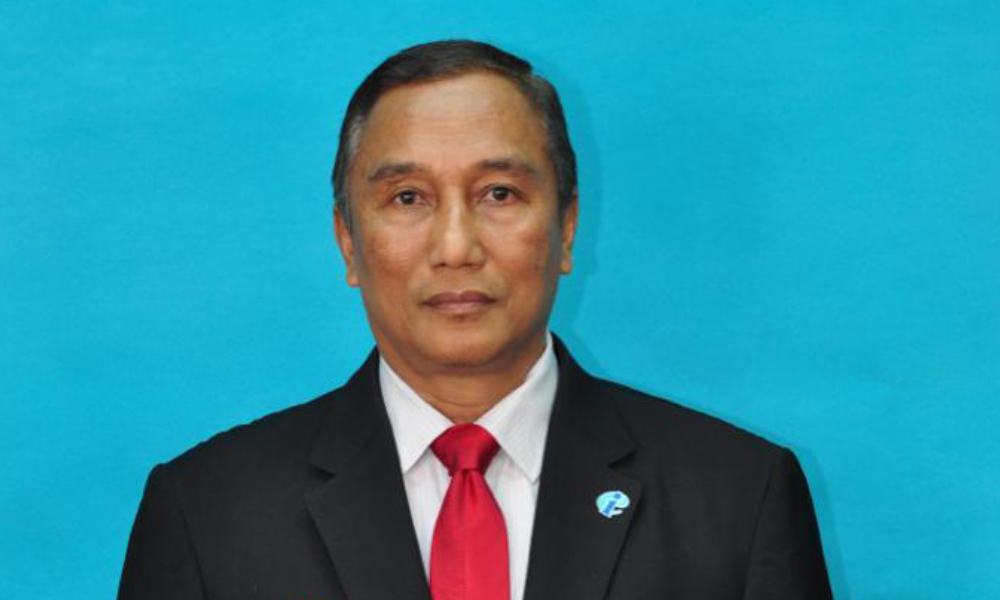
The NUTP official also claimed that those against the current DLP implementation came largely from a “small group of technocrats and middle-class individuals” pushing for the ministry to give in to their preferences.
“These individuals are neither education experts nor schoolteachers familiar with educational issues nationwide,” he was reported as saying.
Lacking vision, ignorant
Unimpressed with Fouzi’s statement, Azimah said his views clearly show that he does not have the same aspirations as parents do for their children.
“He seems to lack vision and is ignorant of the demands of the critical workforce, which the prime minister desperately needs to align with the offers of foreign direct investments,” she added.
READ MORE: Your KiniGuide to the school Dual Language Programme
Azimah reminded Fouzi that Malaysia is short of 30,000 engineers and the Academy of Sciences Malaysia has stated that the country needs 500,000 science-related personnel.
“The multinational companies investing in Malaysia need a workforce that can communicate in English, not just Malay.
“We need to move forward and embrace change and education reforms. Incidentally, 300 million people in China speak English.
“Fouzi is doing a disservice to Malaysians for playing to the gallery of politicians,” she said.
Experts' involvement in crafting DLP
Azimah also dismissed Fouzi’s notion that those pushing for DLP are a “small group of technocrats and middle-class individuals” with no teaching background.

She reminded Fouzi that Page and NUTP, together with the Education Ministry, were participants instrumental in the formulation of DLP - which was approved by the National Economic Council in 2015.
In addition, there were 100 stakeholders in the syndicated English language lab - invited by Malaysia’s Performance Management and Delivery Unit (Pemandu) - tasked to oversee a project helmed by the Prime Minister’s Department to find radical measures to improve English proficiency.
READ MORE: MP SPEAKS | DLP guidelines: A step in right direction
“High-ranking Education Ministry officials, industry players, employers and manufacturer federations and university academicians were among those present.
“The then education minister endorsed it, the director-general called it a defining moment.
“To turn around now and call it ‘a small group with no expertise in education’ is a grave mistake and shows the depth of knowledge a leader of one of the most important associations in education has,” Azimah said.
On that note, she asked what NUTP can offer to improve the education system.
“Unfortunately, no one is held accountable or responsible for faults or negligence nor reprimanded for under-achievement in the Education Ministry.
“There seems to be no shame in failing,” Azimah added.
/file/publisher-c1a3f893382d2b2f8a9aa22a654d9c97/2024/06/d090e2dfdeee03d448f1a8d719dd8a0b.jpg)
/file/publisher-c1a3f893382d2b2f8a9aa22a654d9c97/2023/11/30bd20407ef5bd954d44a3ec2232106a.jpg)
/file/publisher-c1a3f893382d2b2f8a9aa22a654d9c97/2023/01/2d0c5672587b2d7c36f7486ed872e9b8.jpg)
/file/publisher-c1a3f893382d2b2f8a9aa22a654d9c97/2024/03/3c199f72a4f52c04c55abf526fd02476.jpg)
/file/publisher-c1a3f893382d2b2f8a9aa22a654d9c97/2023/01/d69e3aeaf75e5a09c46f9efd86f1a3ac.jpg)


This NUTP sec gen Fouzi should be given the boot. How to improve standard of education with this frog in the well mentality. Education opportunities should be given to all students, not just selective groups.
Are you sure you want to delete this comment?
This action cannot be undone.