


/file/publisher-c1a3f893382d2b2f8a9aa22a654d9c97/2022/10/5891d71a63d170d9315745de57538e19.jpg)

Group calls for openness on sexual health as student HIV rates spike
Federation of Reproductive Health Associations Malaysia (FRHAM) has called for more open discussions about sexual health following the rise in HIV-positive rates among tertiary students.
Its chairperson Dr Kamal Kenny said this would help young people make informed decisions.
“Openly discussing sexual health, particularly the...
Federation of Reproductive Health Associations Malaysia (FRHAM) has called for more open discussions about sexual health following the rise in HIV-positive rates among tertiary students.
Its chairperson Dr Kamal Kenny said this would help young people make informed decisions.
“Openly discussing sexual health, particularly the HIV epidemic, is essential.
"However, in Malaysia, this topic is often avoided, leaving higher education students with limited access to accurate information necessary for making informed decisions and avoiding risky behaviours," the consultant and social psychologist said in a statement today.
He was responding to Higher Education Minister Zambry Abdul Kadir who said in a parliamentary reply on July 2 there was a 0.9 percent increase in new HIV cases identified from 2020 to 2023 among tertiary students aged 18 to 25.
While there was a slight decrease in 2021 to 186 cases, the numbers rose again in 2022 to 221 and in 2023 to 224.
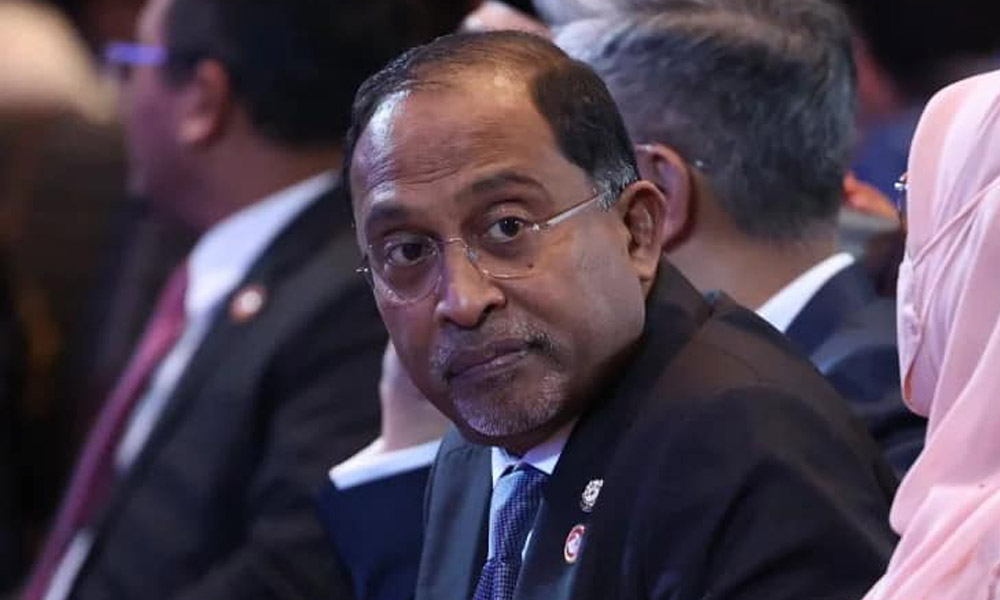
To effectively address this issue, the minister said it was crucial for stakeholders to understand its underlying dynamics.
Sex ed restrictions
FRHAM programmes in higher education institutions often encountered restrictions, Kamal said, such as not being allowed to discuss HIV or use certain images.
He pointed out that the educational syllabus barely touches on sex education, exacerbating the problem.
“As a result, students increasingly turn to social media and influencers for information, which can lead to the spread of misleading or inaccurate details.
“This trend was particularly evident during the pandemic when social media use surged, leading many to fall victim to misinformation,” he said.

FRHAM reported that 48 percent of new HIV cases in 2021 were among individuals aged 13-29.
“Without proactive engagement from colleges and universities to educate students about sexual health and safe sex, this number will likely rise.
“Unfortunately, some educational institutions resist efforts to initiate these crucial conversations with students," Kamal added.
Lower screening age
He said the Education and Health Ministers must view rising HIV infections among higher education students as a significant warning signal.

“Today's youth are tomorrow's leaders, and we cannot let stigma and discrimination hinder their future."
Kamal went on to call for lowering the HIV screening age from 18 to 16 to enable earlier intervention, given the increasing number of cases among university students.
He also supported the Malaysian AIDS Council’s call for greater availability of pre-exposure prophylaxis (Prep) to combat the spread of HIV among the youth.
/file/publisher-c1a3f893382d2b2f8a9aa22a654d9c97/2023/09/1811056fe44c591880f44a57a1deddd4.jpg)
/file/publisher-c1a3f893382d2b2f8a9aa22a654d9c97/2022/02/fefdc5a44eee60c5ed7ac61bbfa3c5cd.jpg)
/file/publisher-c1a3f893382d2b2f8a9aa22a654d9c97/2019/02/793a4928e360bcfffdbbe6a5f9333895.jpg)
/file/publisher-c1a3f893382d2b2f8a9aa22a654d9c97/2023/03/47be41ee564b9c223261401d2bdb2f9c.jpg)


Are you sure you want to delete this comment?
This action cannot be undone.