


/file/publisher-c1a3f893382d2b2f8a9aa22a654d9c97/2023/09/1811056fe44c591880f44a57a1deddd4.jpg)

Minister: Data shows anti-HIV drug programme reduced related diseases
PARLIAMENT | Health Minister Dr Zaliha Mustafa has revealed data to support the government’s decision to expand the controversial pilot programme dispensing free HIV pre-exposure prophylaxis (PrEP) to 30 health clinics next year.
The pilot programme was heavily opposed by a group of Muslim healthcare professionals, who expressed concern that providing free PrEP to those who practise “free sex” and homosexual sex may force Muslim doctors to act against their religious beliefs.
PARLIAMENT | Health Minister Dr Zaliha Mustafa has revealed data to support the government’s decision to expand the controversial pilot programme dispensing free HIV pre-exposure prophylaxis (PrEP) to 30 health clinics next year.
The pilot programme was heavily opposed by a group of Muslim healthcare professionals, who expressed concern that providing free PrEP to those who practise “free sex” and homosexual sex may force Muslim doctors to act against their religious beliefs.
PrEP reduces the risk of transmitting HIV via sex by 99 percent.
Addressing the Dewan Rakyat today, Zaliha said the programme, which has been carried out in 18 health clinics under the Health Ministry since January, has succeeded in lowering several types of diseases.
“As of Sept 30, a total of 2,714 individuals have received PrEP treatment, and based on preliminary analysis up to the sixth month, we found that the rate of diseases such as syphilis decreased from 11 percent to less than one percent.”
Zaliha said this when answering a question from Dr Ahmad Yunus Hairi (PN - Kuala Langat) during the ministerial question session.
The minister added that the percentage of patients who no longer use condoms decreased from 6.3 percent to 3.9 percent, while patients who had more than one partner also dropped from 44.5 to 36.1 percent.
“There are 14 clients who stopped using PrEP because they no longer engage in risky sexual activities, but there are three HIV-positive cases (0.11 percent) because users do not comply with the use of PrEP and this rate is much lower than in other countries that implemented PrEP earlier.
“Preliminary findings show that individuals taking PrEP adhere to and practise HIV prevention advice through consistent condom use and better behaviour despite using PrEP,” she said.
Zaliha explained that the data collection on the drug use is expected to be completed on Dec 31 and the data will be analysed in early January 2024.
She noted that the PrEP programme has been expanded to 21 clinics and will be increased to 30 health clinics next year.
“We will analyse the data to see the direct and indirect health impacts of giving PrEP and changing risky behaviour,” she said.
Patient travelled from K’tan to KL
Zaliha said the programme costs RM512,000 but is funded by the Global Fund via the Malaysia AIDS Council.
Through it, PrEP, which usually costs RM80 to RM140 a month through private clinics, is dispensed for free at selected public health clinics.
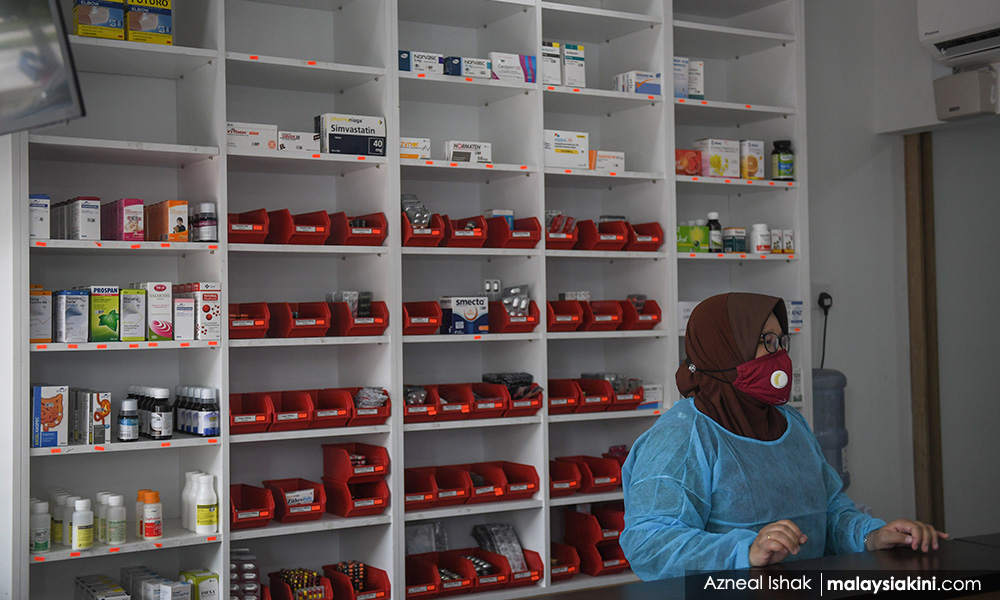
Zaliha added there were participants who travelled from Kelantan to Kuala Lumpur because PrEP was not dispensed in health clinics in Kelantan.
She said this shows there is demand and a need to expand the programme further.
“The government’s stand is to implement… ‘health for all’. Anyone who is at risk will receive treatment.”
Besides religious concerns, the Muslim doctors who opposed the dispensing of PrEP at health clinics also said it is wrong to dispense the drug without counselling to stop individuals from practising risky sexual behaviour.
Addressing this, Zaliha said the ministry is also conducting awareness campaigns against such behaviours and urged religious leaders to support the programme.
“We hope religious leaders can play a role in helping these patients because PrEP is not just a way to reduce the risk of transmitting HIV but also to change behaviours to become better,” she said.
/file/publisher-c1a3f893382d2b2f8a9aa22a654d9c97/2023/07/337fa1cffb9c2bb4ecd865d97a7ab5c7.jpg)
/file/publisher-c1a3f893382d2b2f8a9aa22a654d9c97/2019/11/ae272057d31745954e2574d8cb5adb3b.jpg)
/file/publisher-c1a3f893382d2b2f8a9aa22a654d9c97/2020/04/a78717a3b59873ed2de78b7995effd25.jpg)
/file/publisher-c1a3f893382d2b2f8a9aa22a654d9c97/2023/03/47be41ee564b9c223261401d2bdb2f9c.jpg)
/file/publisher-c1a3f893382d2b2f8a9aa22a654d9c97/2023/01/c55444a4cd5707a7998227c47653e854.jpg)
/file/publisher-c1a3f893382d2b2f8a9aa22a654d9c97/2023/03/107e3ffbd9a4deb6d8c01ee55290514b.jpg)


Report this comment
Are you sure you want to delete this comment?
This action cannot be undone.