


/file/publisher-c1a3f893382d2b2f8a9aa22a654d9c97/2024/07/4fcf577d397416a4f5a96f21ea1b74d7.jpg)

Not just stateless, Sabah eviction dragnet also expels citizens
It is estimated that people in over 1,300 homes were evicted in the government’s “Operation Squatter Colonies” in Lahad Datu, leaving 3,000 other coastal families in fear.
The evictions started in March after Deputy Chief Minister II Joachim Gunsalam’s announcement to evict about 130,397 people from 33,566 houses in the state by 2025.
So far in Lahad Datu, one inland village - Kampung Pancuran - has been evicted for encroaching on privately owned land.
A source in the district land office confirmed the 41 families evicted last month were citizens.
With no relocation plans offered, the residents have...
Although the mass evictions in Sabah have been viewed by many as concerning stateless persons, even citizens are thrown out in the state’s “zero squatter” campaign.
It is estimated that people in over 1,300 homes were evicted in the government’s “Operation Squatter Colonies” in Lahad Datu, leaving 3,000 other coastal families in fear.
The evictions started in March after Deputy Chief Minister II Joachim Gunsalam’s announcement to evict about 130,397 people from 33,566 houses in the state by 2025.
So far in Lahad Datu, one inland village - Kampung Pancuran - has been evicted for encroaching on privately owned land.
A source in the district land office confirmed the 41 families evicted last month were citizens.
With no relocation plans offered, the residents have sought shelter at the nearby Tun Mustafa Community Hall, garnering the sympathies of the Umno division there.
Local Umno leader Sharif Musa Sharif Mabul said the residents are bumiputera who lived in the village for a long time, and urged the state to provide them with alternative housing, the Daily Express reported.
Joachim reportedly delegated the “zero squatter colony” plan to the respective local authorities to carry out, while conducting a study on land available for public housing.
He did not respond to Malaysiakini’s query on whether those evicted will be offered public housing.
Police lead evictions
Police have led evictions, which took place on the west coast in Labuan and Likas, at Kudat in the north, and Semporna in the east.
In Lahad Datu, which is 140km north of Semporna, 83 eviction notices were issued, affecting 225 people, the district land office source told Malaysiakini.
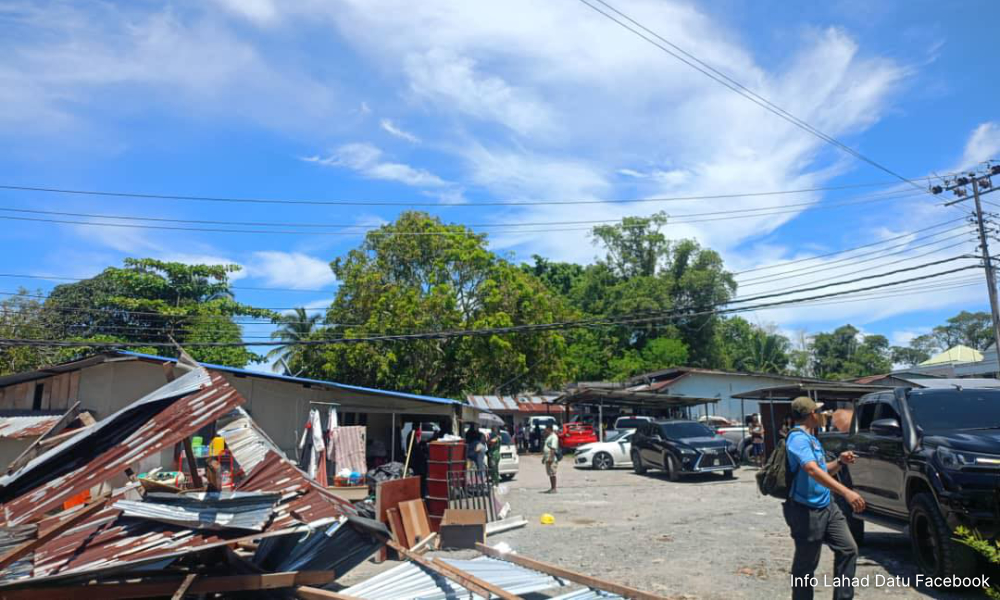
Among the notices, 17 were issued at premises occupied by citizens, 26 to “foreigners”, and the remaining 40 were not accounted for.
It is unclear if “foreigners” also include undocumented or stateless individuals.
“Following the issuance of these notices, the relevant parties have voluntarily begun demolishing the squatter houses and left the premises,” said the source.
The source was unable to say if any families were offered to be relocated to people’s housing programmes (PPRs).
Checks by Malaysiakini with villagers revealed that no eviction notices were issued at the Lahad Datu villages of Kampung Air, Kampung Panji, and Kampung Puyut.
The lack of an official eviction list on the websites of the local council and district offices does little to allay fears.
Citizenship doubted
“The goal seems to be to remove all these houses, whether the residents have identification cards or are citizens,” said activist Wong Kueng Hui, 29.
Wong is the director of Mandiri Sabah, a coalition of 126 NGOs. He was once stateless but received his citizenship after a long legal battle with the National Registration Department.
“Even if they are citizens, locals view those with IDs living in these settlements as having obtained them through the dubious ‘Project IC’.
“This push appears to be about winning votes, not solving the underlying issues,” he said, implying that the “zero squatter campaign” is a politically calculated move taking advantage of local xenophobia.

The insecurities and concerns among the larger indigenous groups - such as the Kadazan, Dusun, and Murut (KDM) - about their political rights and sovereignty are deeply rooted in Sabah’s chequered immigration history.
It began with mass migration into Sabah which started with violence in Mindanao, Southern Philippines in the 1970s.
In the 1980s, alleged mass issuance of citizenships to the recent migrants in exchange for votes - often dubbed Project IC - laid the basis for more widespread xenophobia.
Local NGOs who spoke to Malaysiakini on condition of anonymity said a public apology in recognition of Project IC would have to be the first step toward correcting the wrong.
Facing evictions for generations
While calls have been made for proper relocation plans for evicted communities, others believe the issue is far too complex and cannot be remedied through state housing programmes.
Many of those facing evictions have gone through this before and for generations.
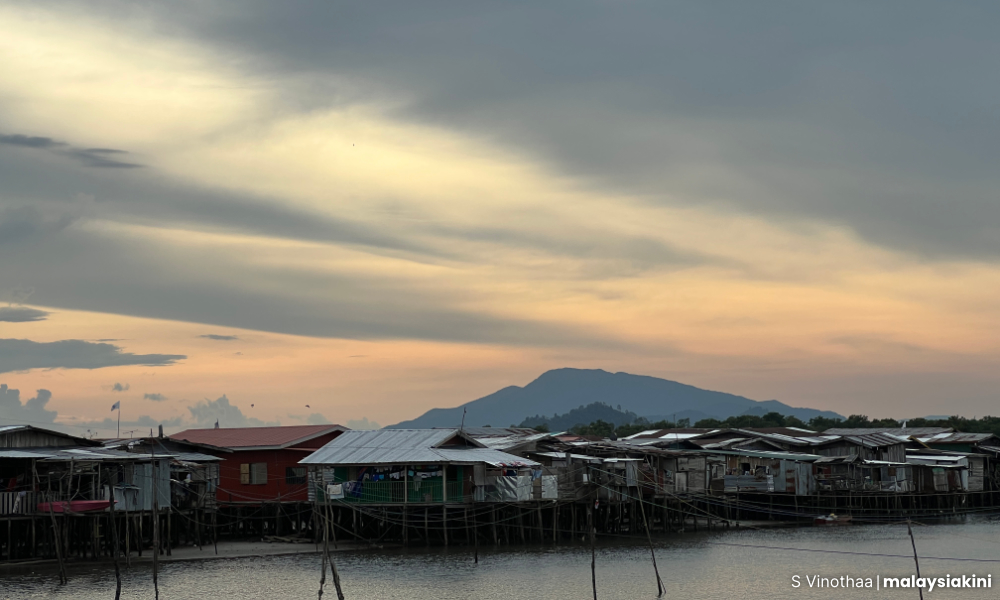
Kampung Air, the largest among them, extends at least 1km seaward and village head Ibrahim Inton said he has not received notice but the fears of eviction are ever present as he gets enquiries daily.
Siti, who spoke to Malaysiakini on condition of anonymity, moved to Kampung Air in 2001 when her home in neighbouring Kampung Panji was demolished.
Kampung Panji, which sits above the water on stilts, has since been rebuilt, but Siti stayed put in Kampung Air.
“I lived in Kampung Panji from 1988 before our homes were demolished and we fled to Kampung Air.
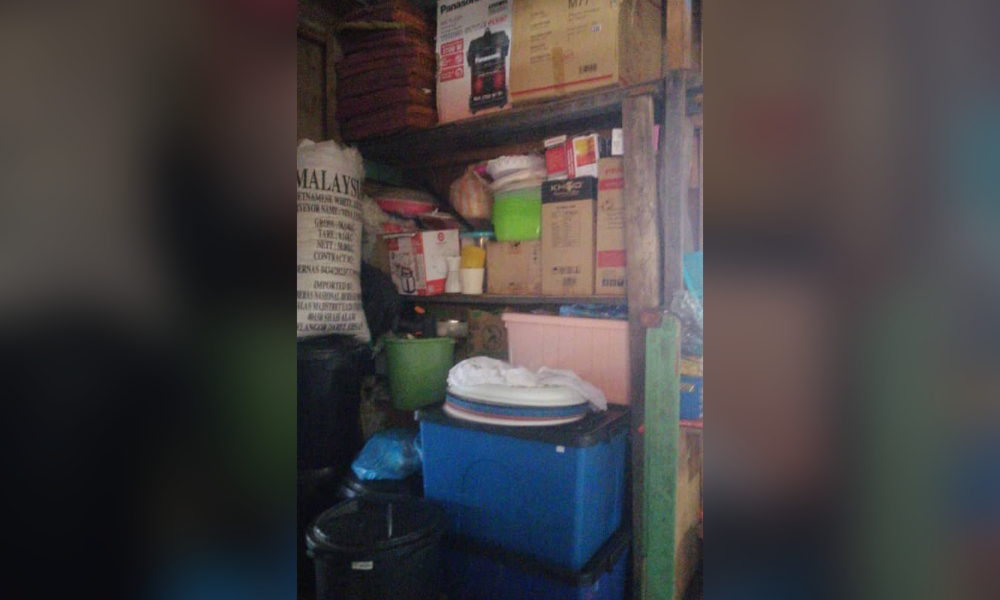
“Where can I go now? I have no house and my children are still in school. Please help us,” said the distraught Siti, whose belongings are packed and sealed in boxes, for fear of sudden eviction.
These villages are also not homogeneously occupied by the stateless, or even just the Bajau Laut.
They are home to various ethnicities - the Bajau Laut, Bajau, Suluks, and families from mixed ethnicities - some of them citizens, some not.
Bureaucratic and legal challenges may also mean some families have some stateless members and others who are not.
Evicted over and over again
When the village demolition phase of the “Ops Gasak Laut” reached Lahad Datu in April 2022, about 100 families in Kampung Panji faced the grim reality of impending homelessness.
At the time, the villagers were told by two companies that they owned the land and all structures up to 5m into the sea would be demolished to make way for construction.
The villagers said they filed an affidavit to the High Court in Tawau.
The affidavit explained that the municipal council and the Eastern Sabah Security Command (Esscom) had moved the community from the town’s streets to the coastline and let them build homes there 10 years ago.
Following that, residents of houses planted into the seabed off the shoreline were granted a stay of execution, as they were not trespassing on land planned for development.
Red stakes planted along the shorelines delineate the developer’s area, but eviction fears still loom large.

According to villagers, the three villages have been under constant scrutiny, with immigration and narcotics enforcement units conducting at least four raids last month.

Another fear the villagers share is about being relocated to the nearby barren island of Pulau Sakau, which lacks necessities and amenities, as well as means of livelihood.
Some enterprising villagers use their limited funds to bring food, vegetables, and even gas tanks from the town centre to the villages using wheelbarrows.
If they are moved to an island that requires boats to travel to and from the mainland, the prices of these essential items could rise significantly.

A stateless villager of Bajau-Suluk parentage told Malaysiakini that most villagers, especially the Bajau Laut, live hand to mouth and would have no means to move their belongings if evicted.
The villager and her husband, a Malaysian of Bajau descent, are unsure of what would happen if they were evicted but believe it could happen anytime.
“Day or night, many have their dinghies on standby ready to flee with their children, important heirlooms and documents, if any,” she said.
/file/publisher-c1a3f893382d2b2f8a9aa22a654d9c97/2024/07/653651b0f0e69470b737c068f40e1746.jpg)
/file/publisher-c1a3f893382d2b2f8a9aa22a654d9c97/2024/07/bc0d2402e28513be1278aa6e25e0f3f5.jpg)
/file/publisher-c1a3f893382d2b2f8a9aa22a654d9c97/2019/04/8254cb5434a6cc505fba2b68fa400fb6.jpg)
/file/publisher-c1a3f893382d2b2f8a9aa22a654d9c97/2024/07/9662c1ea05a5e569d5a54fa3ed31b59e.jpg)
/file/publisher-c1a3f893382d2b2f8a9aa22a654d9c97/2024/06/2fee2a3a590100a212aa8f9a5684cef9.jpg)


Report this comment
Are you sure you want to delete this comment?
This action cannot be undone.