


/file/publisher-c1a3f893382d2b2f8a9aa22a654d9c97/2021/01/33cb5186cd316ed778d63c2a11f2c487.jpg)

Liew proposes embedding RON95 subsidy in green transition policy
As the government considers restructuring subsidies for RON95 petrol, Deputy Investment, Trade, and Industry Minister Liew Chin Tong believes that the argument for fiscal austerity alone is not enough to convince the public.
The Johor DAP chairperson said the government needs to combine the restructuring of the RON95 subsidy with a green transition policy to gain popular support.
“The government can’t raise the price of RON95 solely from the...
As the government considers restructuring subsidies for RON95 petrol, Deputy Investment, Trade, and Industry Minister Liew Chin Tong believes that the argument for fiscal austerity alone is not enough to convince the public.
Instead, the Johor DAP chairperson urged the government to combine the restructuring of the RON95 subsidy with a green transition policy to gain popular support.
“The government can’t raise the price of RON95 solely from the perspective of fiscal austerity, it must be framed within a green transition context.
“When your economy is transitioning to green from head to toe, and everyone is participating in that transition, many things will become easier,” Liew said during an interview on Malaysiakini’s Chinese-language podcast.
The deputy minister emphasised that the government needs to secure the support of at least half the population for the subsidy rationalisation.
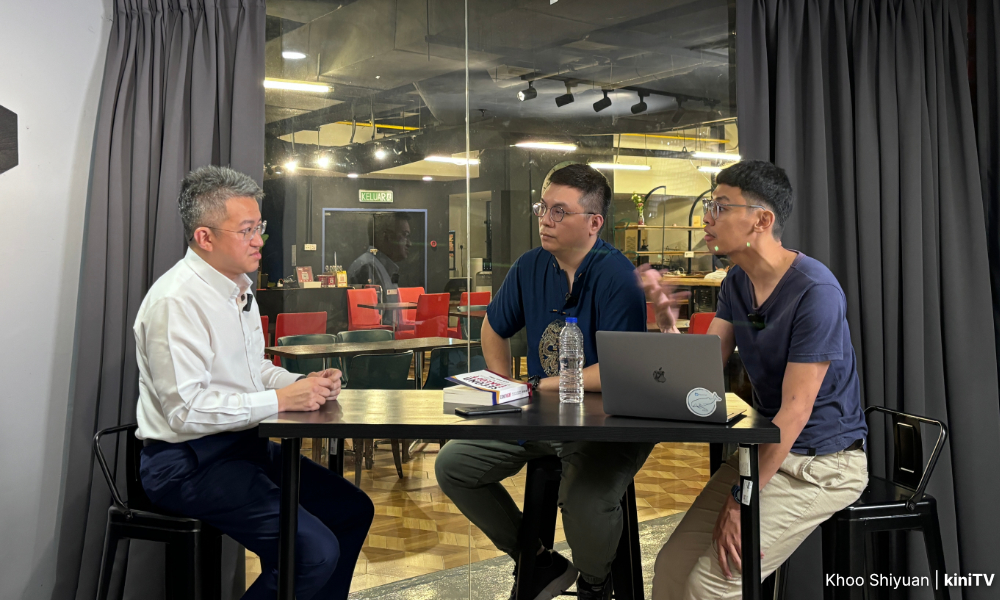
To achieve this, Liew proposed that the cost savings from restructuring the subsidy be invested in green initiatives, including better urban planning, promoting electric vehicles (EVs), and increasing the number of public buses.
He pointed out that there was a common misconception among the public that they must own their own homes and with housing developers building townships far from city centres, this leads to car dependency and high demand for petrol.
“We see a phenomenon where city centres, such as Kuala Lumpur, have good public facilities, many houses, and ample space, yet few people actually live in these areas.
“We need to reimagine our cities. If we can improve the walkability of central Kuala Lumpur, many more people could live there,” he added.
Liew suggested that once the industrial structure changes, young people could choose to rent in city areas instead of buying houses and cars.
He cited the example of Chinese developers who build workers’ dormitories or talent condominiums near construction sites, allowing migrant workers to walk or cycle to work - a practice he praised as an improvement.
EVs for less petrol dependency
Liew said the government will assist car owners in transitioning to EVs, which will help reduce petrol dependency.
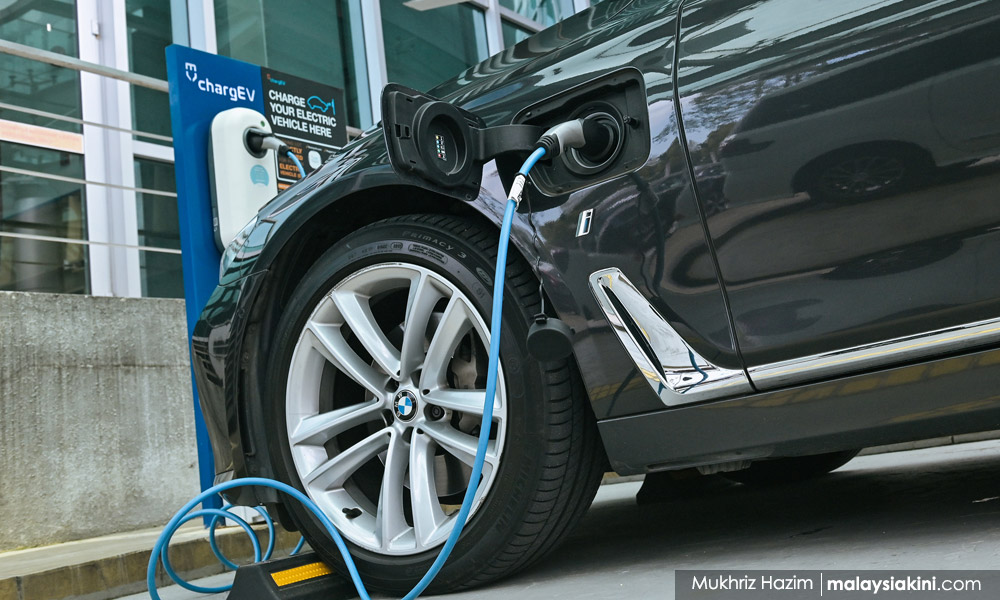
“Especially for those who use cars frequently, the government will give you the opportunity and time to switch to EVs or hybrid EVs.
“Your petrol usage will decrease, and you can take part in the green transition. We don’t have to be stuck in traffic every day. Even though the government has to invest more, the quality of life will improve,” he added.
Liew believed that 2025 will mark the first year of the EV era, with many EVs priced under RM100,000 expected to be assembled and sold in the local market.
For mid- and lower-income groups, Liew is of the view that the government will provide cash subsidies.
He also suggested that the government invest in more public buses, particularly in rural areas.
Green transition best way forward
Malaysiakini asked Liew about the long-term nature of policies such as better urban planning, promoting EVs, and improving public transport, compared to the potentially imminent restructuring of the RON95 subsidy.
“In the end, it is up to the government to decide. The Economy Ministry, the Finance Ministry, and the prime minister need to determine how to implement these changes, but I believe the best approach is through a green transition,” he replied.
On June 28, Economy Minister Rafizi Ramli hinted that the government might announce the removal of the blanket subsidy for RON95 petrol, as it did for diesel.
On July 2, Prime Minister Anwar Ibrahim informed the Dewan Rakyat that Putrajaya had yet to finalise its subsidy rationalisation plan for RON95 petrol, noting that the government wants to monitor the impact of previously introduced targeted subsidies for electricity, chicken, and diesel first.
/file/publisher-c1a3f893382d2b2f8a9aa22a654d9c97/2024/06/2f670f25db5928fe8371150f9c5ec206.jpg)
/file/publisher-c1a3f893382d2b2f8a9aa22a654d9c97/2024/06/04989a242c39a7c52942592f330049b9.jpg)
/file/publisher-c1a3f893382d2b2f8a9aa22a654d9c97/2024/07/96c57cc838dc5b7fc354263ebe7671a3.jpg)
/file/publisher-c1a3f893382d2b2f8a9aa22a654d9c97/2024/08/f284a844f4ca09863bc174096909f812.jpg)


Report this comment
Are you sure you want to delete this comment?
This action cannot be undone.