


/file/publisher-c1a3f893382d2b2f8a9aa22a654d9c97/2024/09/a9cf38c627b5576e4c31519d3e9a2124.jpg)

Govt plans to expand 'private wings' in public hospitals - minister
The government is mulling expanding “private wings” in government-run hospitals to generate revenue for the country’s underfunded public healthcare system.
Speaking at the World Cancer Congress (WCC) 2024 in Geneva, Switzerland on Sept 17, Health Minister Dzulkefly Ahmad said that establishing full-paying patient (FPP) services within public hospitals would boost revenue by offering private services through existing infrastructure.
“I believe that as a tax-based health financing system...
The government is mulling expanding “private wings” in government-run hospitals to generate revenue for the country’s underfunded public healthcare system.
Speaking at the World Cancer Congress (WCC) 2024 in Geneva, Switzerland on Sept 17, Health Minister Dzulkefly Ahmad said that establishing full-paying patient (FPP) services within public hospitals would boost revenue by offering private services through existing infrastructure.
“I believe that as a tax-based health financing system, I’ve got to be moving into things like having private health facilities within a public hospital.
“That would be like a full-paying patient wing in a public hospital where you could generate income,” health portal CodeBlue reported Dzulkefly as saying yesterday, adding that it would target the M40 community.
Dzulkefly said the government would establish a special-purpose vehicle within his ministry to assist in the programme, which will be called Rakan MOH.
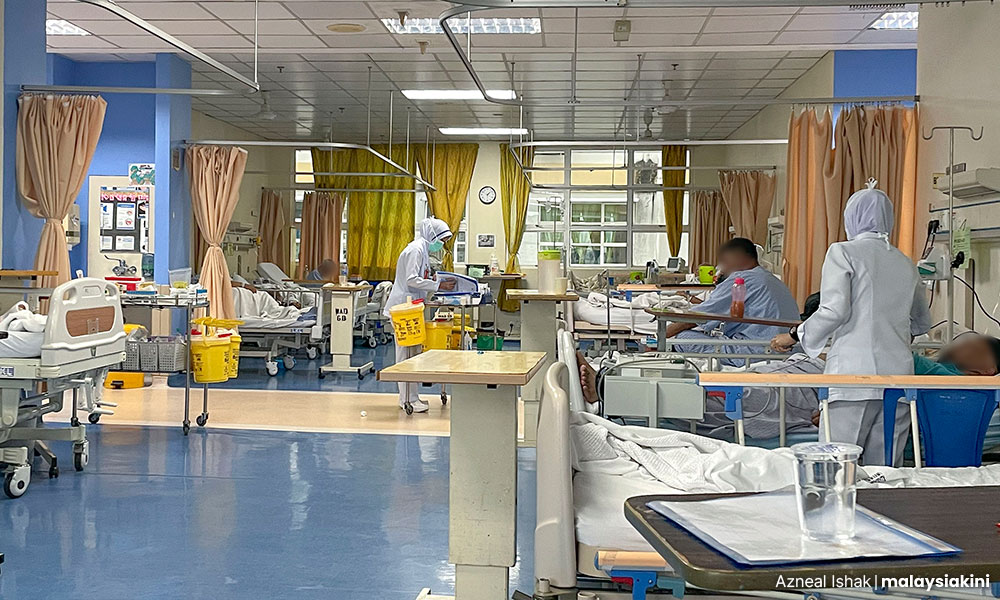
“You must understand now, in our system, to see a doctor, you only pay RM1, which is only about 20 cents, and to see a specialist, you are paying RM5, which is about US$1 and that, going forward, is certainly not sustainable,” he added.
According to CodeBlue, this was not the first time Dzulkefly mentioned the programme as the latter had briefly touched on Rakan MOH in his speeches at the Health Ministry’s Budget 2025 dialogue session with stakeholders in Putrajaya last Sept 9, as well as at the Family Medicine Scientific Conference 2024 in Johor Bahru last Sept 5.
For now, FPP services are available in five public hospitals in the Klang Valley, namely Putrajaya Hospital, Ampang Hospital, Selayang Hospital, Sultan Idris Shah Serdang Hospital, and Sungai Buloh Hospital.
Another five are the Penang Hospital, Sultanah Aminah Hospital Johor Bahru, Sultan Ismail Hospital (Johor Bahru, Johor), Queen Elizabeth II Hospital (Kota Kinabalu, Sabah) and Sarawak Heart Centre (Kuching).
The services offer patients an option to choose their specialist doctors, access to first-class or executive wards, and services at more competitive rates than private hospitals.
However, these services are currently limited by the availability of resources, expertise and facilities.
Previously, former Health director-general Dr Noor Hisham Abdullah wrote in 2019 that the government collected RM22 million in revenue in 2018 from the FPP service in the 10 hospitals.
‘Stemming brain drain’
Apart from generating revenue for the government, Dzulkefly also said that expanding the Rakan MOH programme would help curb brain drain among specialists.
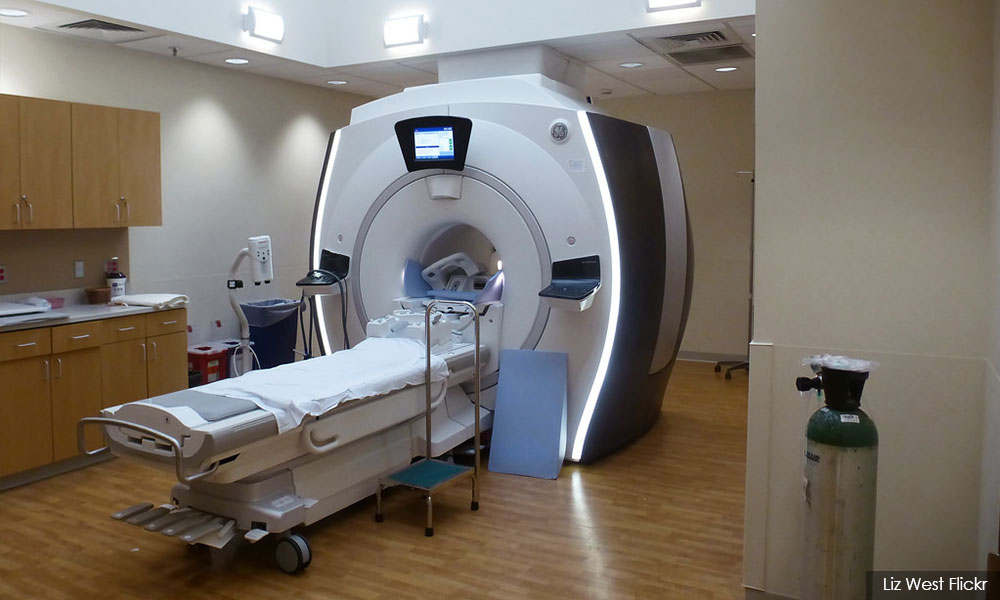
“I particularly would want to innovate, to get to have more funding where I could generate income from my private wing in my public health facilities, where I see there are excess capacities, by way of MRI, by way of CT scans, by way of specialists who are willing to do more so that they get a bit more, and they retain in our public sector,” he said.
“Besides, I’m doing outsourcing, meaning now, I have nephrology, cardiothoracic services, cardiology, radiology, and imaging, where I get to outsource.
“I can’t be building more and more brick and mortar. So, I get them to come and I engage the private sector, but be paid at our cost.
“Public-private partnership is vital for us to get to something that at the end, you get to address the B40 group in your public hospital, you get to address your M40 through our kind of private wings where it’s not as expensive as the private sector, and then the T20, you get to innovate through private health insurance.”
However, Dzulkefly did not specify at the congress if the M40 and T20 communities seeking treatment in the hospitals would be restricted to the private wing, leaving the “public” wing accessible only to the B40.
He also did not provide details on whether the Rakan MOH programme, through the SPV, would extend the operational hours of FPP services to regular business hours and provide the latest drugs and treatments that are not available in the “public” wing to attract more customers, beyond just better room and board or choice of specialists.
Underfunded, struggling
On that note, Dzulkefly pointed out that Malaysia currently spends just 4.4 percent of its gross domestic product on health care, with 2.3 percent contributed by the public sector and 2.1 percent by the private sector.
He added that the Health Ministry has struggled to secure larger budget allocations and is looking for new ways to generate revenue.
“Health finance transformation, to me, is the greatest challenge, being an upper middle-income economy and predominantly a health system that is financed by a tax base, as opposed to SHI (social health insurance) or insurance base.
“I told the prime minister, ‘If you can’t give me the resource, allow me to be resourceful and innovative’,” Dzulkefly said.
/file/1313/52df22d18d79cb932c24d7a83ed0b8f7.jpeg)
/file/publisher-c1a3f893382d2b2f8a9aa22a654d9c97/2024/08/dc8088ce37579e2fef5f2f5a1bda15d6.jpg)
/file/publisher-c1a3f893382d2b2f8a9aa22a654d9c97/2023/08/4d6bc51deb93c6104e2909f5a28096a9.jpg)
/file/publisher-c1a3f893382d2b2f8a9aa22a654d9c97/2024/05/77ec3a12aab4647d2651c04da49b3347.jpg)
/file/publisher-c1a3f893382d2b2f8a9aa22a654d9c97/2023/04/a6123dff28fc9f23bc03b4a66d6e252b.jpg)
/file/publisher-c1a3f893382d2b2f8a9aa22a654d9c97/2022/10/003394b5afef80bd737e2b0066289902.jpg)


Report this comment
Are you sure you want to delete this comment?
This action cannot be undone.