


/file/publisher-c1a3f893382d2b2f8a9aa22a654d9c97/2024/10/bc98aa74c1de87bd3645b0c46d791e18.jpg)

FT Mufti Bill: MCA concerned with increasing govt control over religion
MCA has called on the government to reconsider the Mufti (Federal Territories) Bill 2024, expressing concerns that the government is increasing control over religious affairs beyond what was seen under the previous BN government.
In a statement today, the party said it was concerned that this may undermine the nation’s values of freedom, democracy, and fairness, leading to national regression.
MCA has called on the government to reconsider the Mufti (Federal Territories) Bill 2024, expressing concerns that the government is increasing control over religious affairs beyond what was seen under the previous BN government.
In a statement today, the party said it was concerned that this may undermine the nation’s values of freedom, democracy, and fairness, leading to national regression.
“MCA fully respects the status of Islam as the religion of the federation and acknowledges the government’s authority to legislate and amend laws.
“However, given the issues raised by this amendment, we urge the government to ensure that any legal changes take into account Malaysia’s multicultural society, adhere to the spirit of constitutional democracy, and safeguard the values of diversity, moderation, and inclusivity from being eroded.
“In fact, this bill has already caused unease among non-Muslims, and even some Malay Muslim lawyers and academics have expressed opposition, among them Zaid Ibrahim, former minister in the Prime Minister's Department for Legal Affairs and Judicial Reform.
“It is clear that the government needs to carefully reconsider this amendment,” said MCA.
Key issues
The party said it believed that the biggest controversy surrounding the bill lies in the fact that Islamic rulings (fatwa) issued by the mufti of the Federal Territories will be made binding, giving them legal effect and enforceability upon all Muslims in the Federal Territories.
It said that among the key issues raised by this bill include the power of non-elected officials.

“The mufti of the Federal Territories, as a non-elected official, would have the power to enact legally binding regulations on all Muslims in the Federal Territories. If this also extended to non-gazetted fatwas, this goes against the spirit of democracy.
“Granting such significant legislative power to religious officials who are not subject to the oversight of elected representatives is inconsistent with the principles of a representative democracy,” said MCA.
It also said the bill would call into question the applicability of laws.
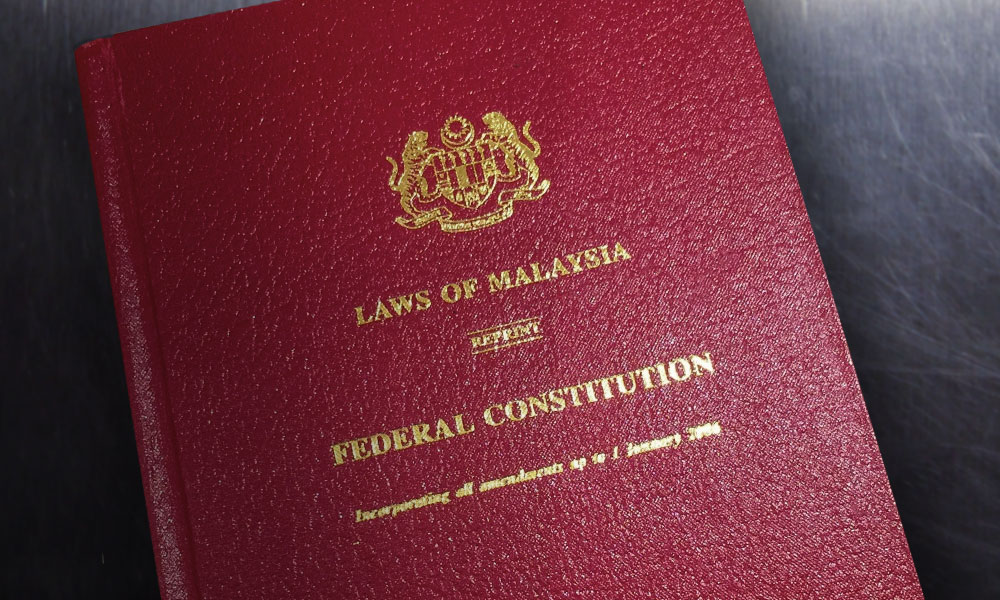
“Under the Federal Constitution and multiple rulings of the Federal Court, fatwas and Islamic rulings cannot bind non-Muslims. Should the bill contain elements that affect the rights of non-Muslims, it would be constitutionally invalid,” said MCA.
It also questioned how the bill would affect cross-border issues.
“According to the bill, fatwas issued by the mufti of the Federal Territories will apply to all Muslims in the Federal Territories, not just local Muslim residents.
“So if a Muslim from Johor or Singapore violates a fatwa while travelling in the Federal Territories, how should such cases be handled? This situation adds complexity to the implementation of the bill,” it added.
Finally, MCA pointed to the potential undermining of the position of the head of state as the head of Islam.
“According to notable lawyers, including human rights lawyer Latheefa Koya, Section 4(1) of the bill states that the muftis are the heads of Islamic authorities in the Federal Territories, which may undermine the position of the head of state as the Islamic leader of Malaysia, as stipulated in the Federal Constitution,” said MCA.
Elevating, empowering mufti institution
Yesterday, Minister in the Prime Minister's Department (Religious Affairs) Mohd Na'im Mokhtar assured that the bill was not drafted hastily but rather through a careful and lengthy process.
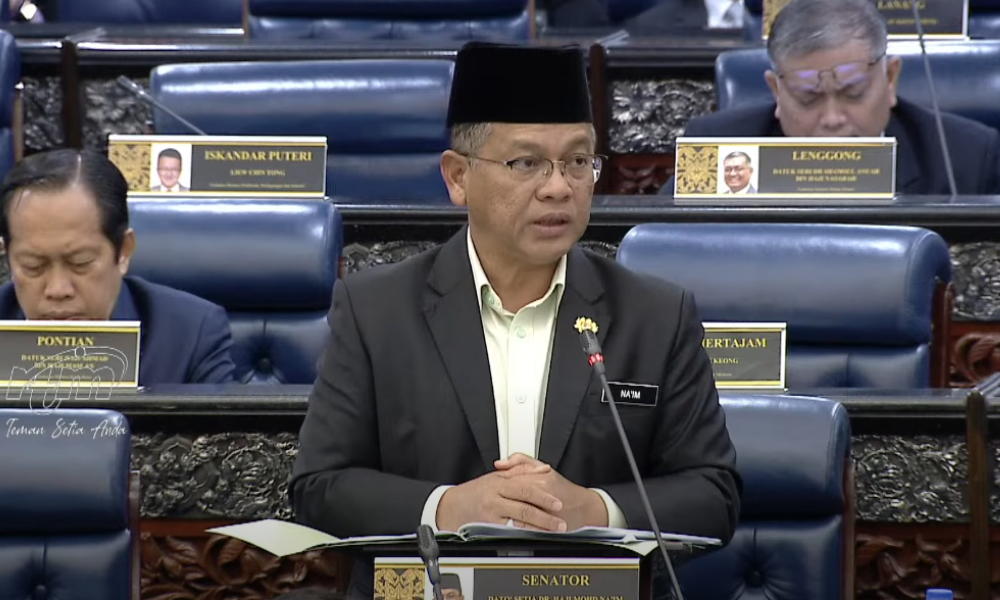
In explaining this, Na’im (above) shared that a committee was formed to study and draft a specific Act for the mufti three years ago.
He said that the committee included representatives from the Federal Territories Mufti Office, the Islamic Development Department (Jakim), the Attorney-General’s Chambers, the Syariah Judiciary Department, the Federal Territories Syariah Court, the Federal Territories Islamic Religious Council, and the Selangor Mufti Department.
“The drafting of the bill is an effort by the government aimed at elevating and empowering the institution of the mufti in the Federal Territories.
“Through this empowerment, the field of fatwa issuance and the development of Islamic law can be administered in an organised, transparent, and authoritative manner to enhance the effectiveness of Islamic governance in Malaysia,” he said.
/file/publisher-c1a3f893382d2b2f8a9aa22a654d9c97/2024/07/89ddb9b0bda9358603d6e85557597eac.jpg)
/file/publisher-c1a3f893382d2b2f8a9aa22a654d9c97/2023/10/8057db374f3eba8d6ee4cc3e845490a8.jpg)
/file/publisher-c1a3f893382d2b2f8a9aa22a654d9c97/2020/07/f092dd2f912e05ebaafc5277ecad92e6.jpg)
/file/publisher-c1a3f893382d2b2f8a9aa22a654d9c97/2022/09/4f02a6bffa726fac1fbfd10a6eb8f3bb.jpg)
/file/publisher-c1a3f893382d2b2f8a9aa22a654d9c97/2022/03/ada87903f0aca98ecf4f6546f16b6de3.jpg)
/file/publisher-c1a3f893382d2b2f8a9aa22a654d9c97/2021/07/5b7a143287301b9c9fe45c2010a00bdb.jpg)


Are you sure you want to delete this comment?
This action cannot be undone.