


/file/publisher-c1a3f893382d2b2f8a9aa22a654d9c97/2024/10/70dd5420a4fd46a2549e8df14a18da68.jpg)

Asri doubts even minister gets teachings defined in FT Mufti Bill
Perlis mufti Mohd Asri Zainul Abidin has swiped at the de facto religious affairs minister, Mohd Na’im Mokhtar, over the Federal Territories Mufti Bill.
Asri said that most Muslims do not understand the teachings of the Ashairah and Maturidiyyah schools of theology, which are proposed to be identified as part of the identity of Ahli Sunnah wal Jamaah (adherents to the Sunni Islamic tradition).
Perlis mufti Mohd Asri Zainul Abidin has swiped at the de facto religious affairs minister, Mohd Na’im Mokhtar, over the Federal Territories Mufti Bill.
Asri said that most Muslims do not understand the teachings of the Ashairah and Maturidiyyah schools of theology, which are proposed to be identified as part of the identity of Ahli Sunnah wal Jamaah (adherents to the Sunni Islamic tradition).
Moreover, he claimed, Na’im himself may not fully understand the matter.
“I dare to say, God willing, the religious affairs minister who is eager to impose such conditions on the people’s faith also may not understand it well.
“I can prove it, God willing, if I am given the opportunity in an open forum, witnessed by the people, to engage with him on a few questions related to Ashairah, Maturidiyyah, al-Junaid, and al-Ghazali.
“If he is truly knowledgeable, let him first demonstrate his understanding before forcing it on the people.
“If he himself is incapable, does he want to lead the common people astray, ultimately misleading himself?” he questioned.
On Monday, Malaysiakini reported that Asri invited Na’im to have an open dialogue to discuss the bill.
Yesterday, Muhammad Razak Idris, the political secretary to Na’im, indicated readiness to accept Asri's invitation to discuss the issue related to the bill, which will be read for the second time in the Parliament session this month.
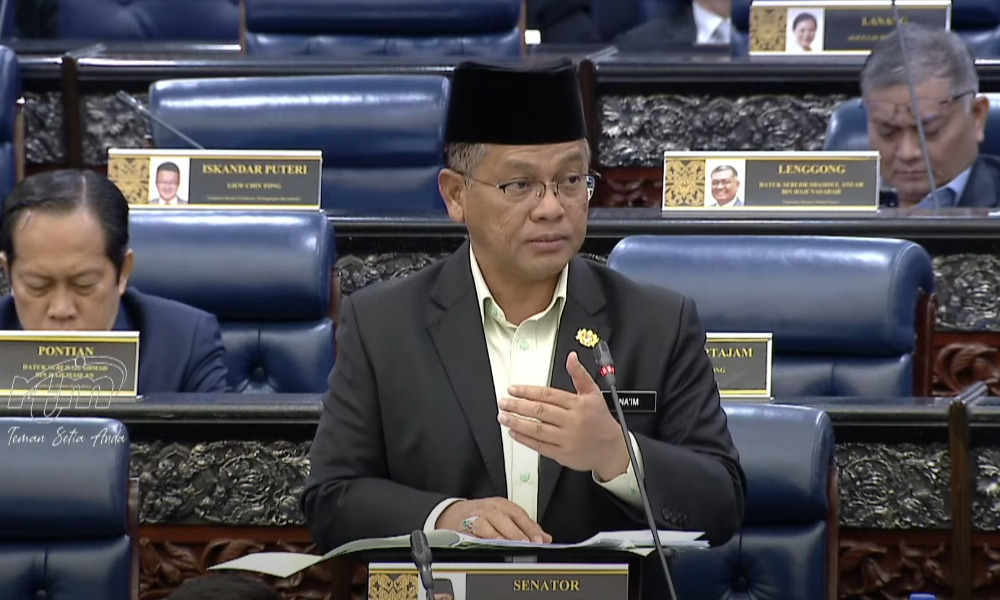
He said that the minister’s office and agencies under the Prime Minister’s Department (Religious Affairs) are open to discussions with various parties to gather input, suggestions, and views to strengthen the administration of Islamic affairs.
Asri was among the first to criticise the mufti bill, citing opposition to the narrowing of the interpretation of Ahli Sunnah to Ashairah and Maturidiyyah teachings and the Sufism method of Imam Junaid al-Baghdadi and al-Ghazali.
Risking ‘deviancy’
In today’s statement, Asri said the bill could make someone in the Federal Territories appear “insufficiently Islamic”, causing them to be excluded from Ahli Sunnah and be considered deviant.
He also mentioned that following the schools of theology such as Ashairah and Maturidiyyah, merely knowing the founders’ names and one or two theological issues is not enough.
Instead, he said, the discussions on faith related to qidam (pre-eternity), azali (eternity without beginning), jisim (corporeality), jauhar (substance), time, space, and several theories and assumptions of physics need to be comprehended.
“In terms of fiqh (practice), a person can merely taqlid (follow), but in matters of akidah (faith), this is not allowed.
“In fact, according to some prominent figures of Ashairah, anyone who fails to provide proof of faith in Allah like the arguments of Ashairah, their faith is invalid.
“In other words, this makes them a kafir,” he said.

Asri expressed his belief that at least 97 percent of Muslims in the country would not be able to understand the discussions of the Ashairah and Maturidiyyah creeds.
He said that the majority of the people believe naturally, as it happened with the early generation of Islam during the era of Prophet Muhammad and his companions.
“For instance, common people say the Quran is the word of God (kalam Allah). They do not think about establishing that the recited Quran is not the real word of God, because it is created, whereas the word of God is God’s inherent speech (kalam nafsi) which exists in the essence of God.
“All these things confuse the common people. Will they be declared deviant for failing to understand such matters?”
He also expressed concern about the possibility of an era of takfir (excommunicating others as unbelievers) beginning within the Muslim community.
“Will the government make declaring people as deviant part of its agenda? Will the people be tested on the validity of their creed?
“Or, perhaps after this, it will be suggested to include it on the identity card: Religion: Islam Ashairah Maturidiyyah Junaid and Ghazali,” he sarcastically remarked.
/file/publisher-c1a3f893382d2b2f8a9aa22a654d9c97/2024/10/bc98aa74c1de87bd3645b0c46d791e18.jpg)
/file/publisher-c1a3f893382d2b2f8a9aa22a654d9c97/2024/07/89ddb9b0bda9358603d6e85557597eac.jpg)
/file/publisher-c1a3f893382d2b2f8a9aa22a654d9c97/2023/10/8057db374f3eba8d6ee4cc3e845490a8.jpg)
/file/publisher-c1a3f893382d2b2f8a9aa22a654d9c97/2020/07/f092dd2f912e05ebaafc5277ecad92e6.jpg)
/file/publisher-c1a3f893382d2b2f8a9aa22a654d9c97/2022/09/4f02a6bffa726fac1fbfd10a6eb8f3bb.jpg)


Are you sure you want to delete this comment?
This action cannot be undone.