


/file/publisher-c1a3f893382d2b2f8a9aa22a654d9c97/2023/06/19deac6e0ca556da2f5b26a2a7ed5f4c.jpg)

Is PN for all or just Malays? Muhyiddin answers
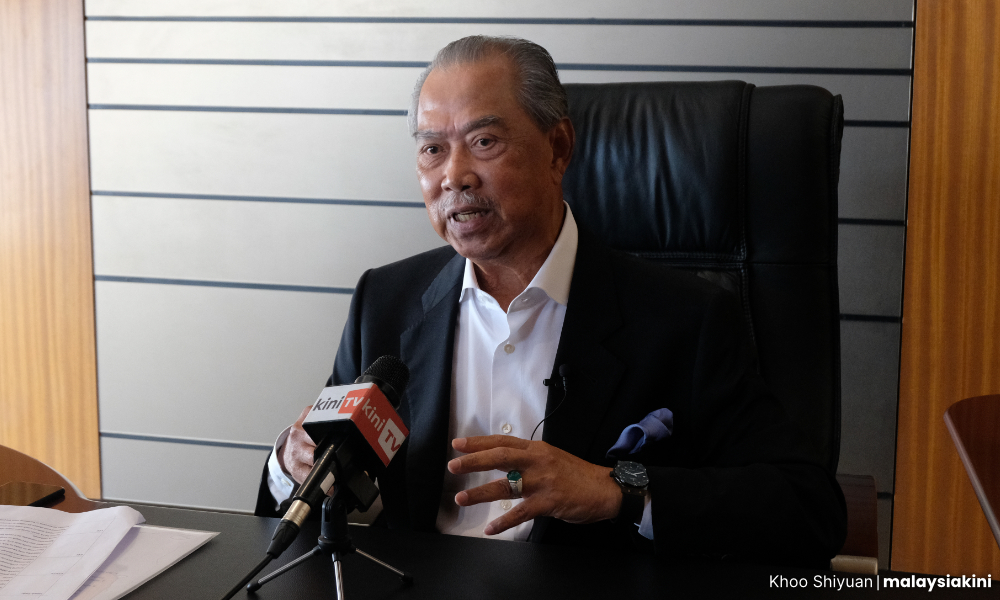
INTERVIEW | Perikatan Nasional chairperson Muhyiddin Yassin answers questions about the opposition coalition, especially PAS, which detractors accuse of sowing hatred and divisiveness among the races.
Against this backdrop, the former premier, in an exclusive interview with Malaysiakini, revealed how the coalition intends to convince non-Muslims to vote for PN.
In defence of his coalition partner, Muhyiddin pointed to the restraint that PAS observed when it was part of his administration for 17 months from March 1, 2020, to Aug 16, 2021.
Below are some of the questions and answers from the interview...
INTERVIEW | Perikatan Nasional chairperson Muhyiddin Yassin answers questions about the opposition coalition, especially PAS, which detractors accuse of sowing hatred and divisiveness among the races.
Against this backdrop, the former premier, in an exclusive interview with Malaysiakini, revealed how the coalition intends to convince non-Muslims to vote for PN.
In defence of his coalition partner, Muhyiddin pointed to the restraint that PAS observed when it was part of his administration for 17 months from March 1, 2020, to Aug 16, 2021.
Below are some of the questions and answers from the interview.
Malaysiakini: You stress a lot about inclusivity. But over the past few months or years, PN has become a platform that promotes divisiveness, only concerned about Malay-Muslim issues, at least that is the perception.
How do you overcome this visceral fear?
Muhyiddin: This is not new. That question has been raised many times... I do acknowledge that. (There are) different ways of assessing parties, especially members of PN. Bersatu is like this, PAS is like that, and we have Gerakan. But it is okay.
If you ask me that question, I will ask you again - ‘do you not remember that we were once in the government?’ I led that government. In those difficult times during Covid-19 we had to instantaneously help solve problems on how to manage Covid-19 or else many people would die.
Who were those people in that government? I’m asking you. PAS was there, yes? MCA was there, MIC was there. What did we do? We did what was necessary.
Did you ever hear during that time PAS talk about 'potong kaki, potong tangan, potong kepala (cut off feet, hands and head)? What I’m trying to say is, that (question) is unavoidable. Because PAS’ existence has been for more than seven decades. That has been their forte in terms of (engagements) with Malay Muslims.
Now PAS’ leaders are not from Cairo, Jordan. They come from European countries and universities. Terengganu MB (Ahmad Samsuri Mokhtar) is an aerospace engineer from a US university. That is the actual profile of PAS leaders. Which means they too understand that they have to move forward. To be national in nature.
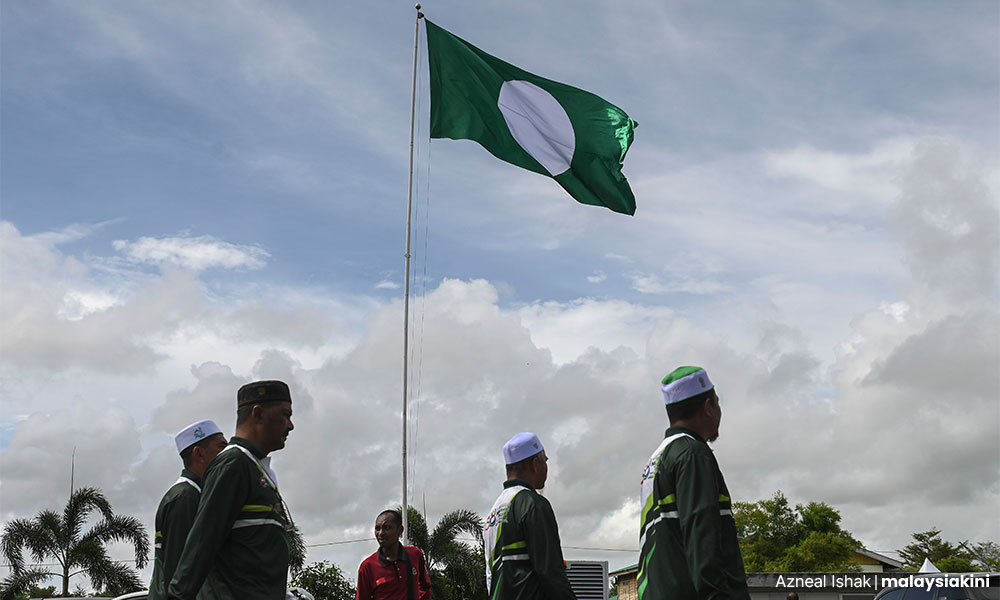
To be in the federal government is not talking about ‘hukum-hukum’ (punishments). Even the Muslims sometimes these days tak suka sangat (don’t like it much). Muslims know what is halal haram. Non-Muslims in Malaysia too know that as well.
They respect Muslims, and we (Muslims) respect non-Muslims. But of course, you cannot avoid statements from certain individuals, and that is not the position of the party.
Some comments will be made and some PAS leaders will say it is not the position of the party. That is their personal view (instead).
But most of the statements came from PAS president Abdul Hadi Awang himself.
Depends on what issue. You have to look at it from a broader sense. He raised issues on Islam, and he’ll quote the hadith, Quran, and Islamic history. There are certain things which are valid.
Being non-Muslim, and I’m sorry to say this, sometimes you (interviewer) misinterpret. I think what is happening now, after leading PN for many years and meeting very regularly, I came to understand that moving forward is about understanding the multi-ethnicity and religious backgrounds in Malaysia.
Respect others, and of course, in certain cases where you believe strongly in some issues about Islam, that too has to be well explained.
I am a Muslim. My father was a religious teacher. But you don’t see me go in that (divisive) way because I understand. I have gone through more than five decades in politics. I understand what the people want.
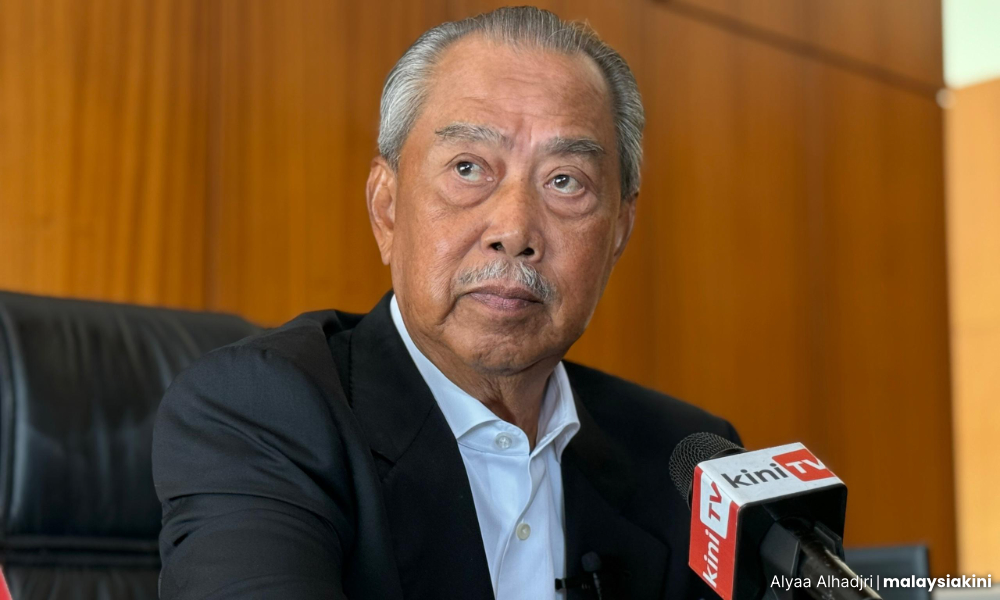
So what I’m trying to say, moving forward, as what we have shown when we were in government, is not what you think.
Will we (PN) be fair to all races? We were the only party at that time… (MCA president) Wee Ka Siong was my transport minister. It was the last day before I submitted my resignation. I called for a special cabinet meeting. I gave a chance to all members to speak, and one thing that I cannot forget until now is that Wee said, ‘Sir, this cabinet of yours that I am in now, even though only for a short while, is the only one that did not discuss race’.
We did not discuss (only) Malays, Chinese or Indians. During the Covid-19 pandemic, we were not just treating the Malays so that Malays would survive and let the rest die, no! We provided vaccines for everyone, we put food on the table for everyone.
I must say that is what PN is all about. When you run as a government, you have responsibilities. You have the laws and Constitution.
If you want to change the law to suit what you think is right, you need to go to Parliament. In Parliament, it is not you alone. There are Malay, Chinese, and Indians who will debate. There are already safeguards, and the principal safeguard is the Constitution.
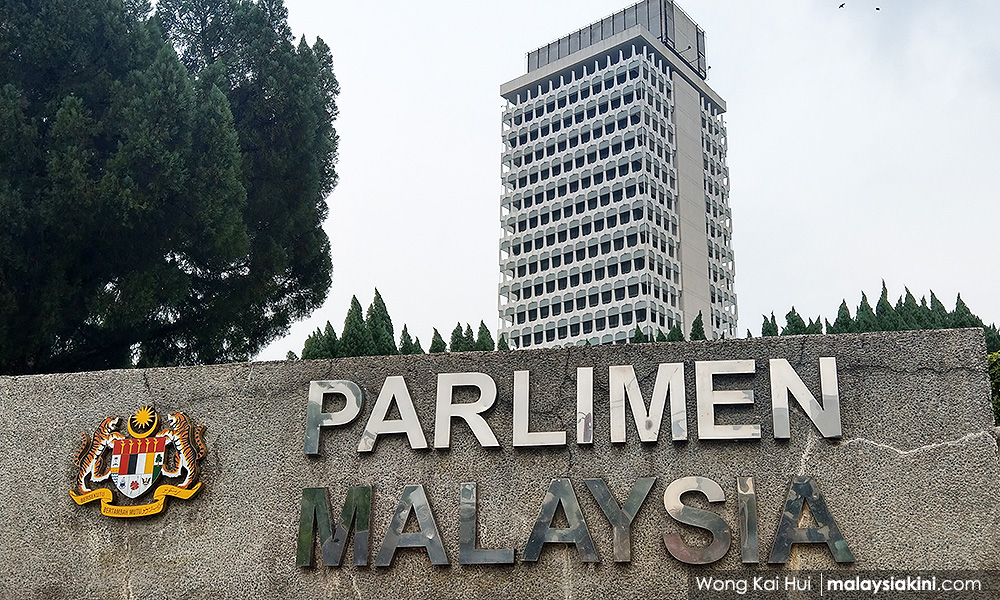
If you understand that, that is what PN stands for. We uphold the Constitution. We uphold the rights of every individual. Right to speak, freedom of the press, rights of Malays, and non-Malays, it's all there.
As an external observer, on PAS when in and out of government, when in government the party was excellent - one that is calm, and inclusive - but so many issues arise when they are not. Your thoughts?
That is normal. Anyone not in government, will not feel guided by certain policies of that particular government.
Let’s look at facts on the ground. The four northern states - Kedah, Perlis, Kelantan, and Terengganu - all led by PN. All menteris besar by PAS, but we’re also in government as deputies and state executive council members.
What is happening up there? I would say, for many years I have been with them, I did not see anything injurious to Indians, for example. If you (an Indian) stay in Kelantan… I have another good friend of mine, coincidentally, he’s the only Indian in that area in Terengganu, they are very happy. They don't feel sidelined, or mistreated. This is the reality.
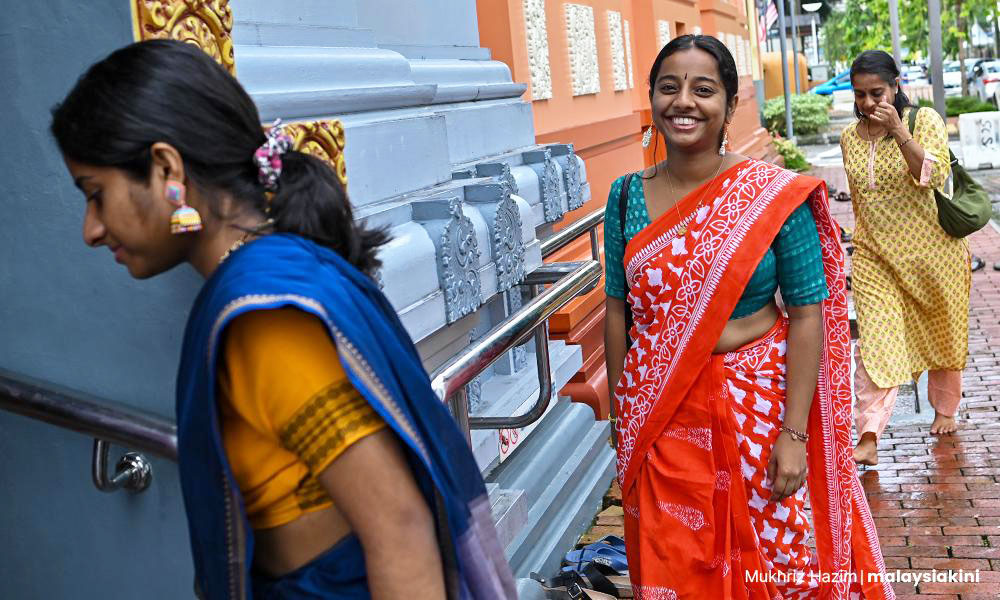
So what has been projected by individuals who do not represent the party cannot be a reference point for what PN stands for. Even for the federal level, it was a PN-led government, not a PAS government.
In a way, it is a process of having a better understanding of what Malaysia is about. As much as we profess a very strong religious background, that does not mean we should compromise (what Malaysia is about) at the expense of the rest. I stand for that.
In the last government, you were prime minister, Bersatu and you were seen as the balancing force. Since then, to the lay observer, Bersatu has been sidelined. You as well, as PAS seem to have dominated the narrative. Your thoughts?
Not quite correct. Where are we being sidelined? Firstly, who is leading the coalition? They nominated me then, I'm not talking about the future. ‘You should be the poster boy’. So I took that position until now.
READ MORE: 'Poster boy' Muhyiddin says PN supreme council will decide PM candidate
Secondly, of course, in many matters, we have opportunities for example in Parliament. We have MPs from Bersatu and PAS… We make sure everybody has a fair share of voice. Literally, we will arrange to take turns - ‘Bersatu, PAS, Bersatu, PAS’… It's much improved than before, so voices from both sides are heard.
The appointment of the opposition leader. I must tell you, we sat down when the Parliament session was just beginning… I was very magnanimous, it has to be from PAS!
But what did PAS say? 'No no, you Tan Sri!' So I said, ‘Okay’ if that’s the case, I would not want to be the opposition leader so I appointed Hamzah (Zainudin). And that’s what it is until today. So what sideline? That is the reality.
Everybody’s free to speak about everything. But of course, it is about visibility. When you’re in the opposition sometimes you must make sure of what needs to be said or done to a certain extent.
Were there issues that PAS spoke up about but Bersatu was silent on? We both spoke the same thing! Cost of living and others. We have portfolios that function like shadow cabinets.
So like I said, visibility for example, in the media… in that sense, we understand, so we need to manage our social media. I’m not lamenting but we don't have (control of) newspapers, radios, television (channels) because we’re not the government.
What does that mean? We recognise there are certain areas we need to strengthen. Social media is certainly one of them, and that is being built up now.
I can’t say we have achieved it, but at least we know our shortcomings and what needs to be done.
Reporting by Jimadie Shah Othman, Alyaa Alhadjri and RK Anand.
/file/publisher-c1a3f893382d2b2f8a9aa22a654d9c97/2022/01/ac6d70104f058d5a3ad41309f1780701.jpg)
/file/publisher-c1a3f893382d2b2f8a9aa22a654d9c97/2024/11/8da2332084c93d1e8180bd8493636066.jpg)
/file/publisher-c1a3f893382d2b2f8a9aa22a654d9c97/2024/09/41877f20ee3a6b97e9af7b0cb3e52a43.jpg)
/file/publisher-c1a3f893382d2b2f8a9aa22a654d9c97/2024/09/72486ff8c8ce87c12cb0ef533a0a8155.jpg)
/file/publisher-c1a3f893382d2b2f8a9aa22a654d9c97/2024/10/bce0cb134b32cd4fc8fb6192e9c1b62c.jpg)
/file/publisher-c1a3f893382d2b2f8a9aa22a654d9c97/2023/07/d6345092835b106b1c60060621487fc4.jpg)


"'potong kaki, potong tangan, potong kepala (cut off feet, hands and head)? That has been their (PAS) forte in terms of (engagements) with Malay Muslims." You said it Moo, not me.
"'potong kaki, potong tangan, potong kepala (cut off feet, hands and head)? That has been their (PAS's) forte in terms of engagements with Malay Muslims". You said it Moo...not me. The march of folly and triumph of ignorrance.
"'potong kaki, potong tangan, potong kepala (cut off feet, hands and head)? ...That has been their (PAS's) forte in terms of (engagements) with Malay Muslims." You said it Moo, not me. Th march of folly and triumph of stupidity. Ketuanan boleh!
Are you sure you want to delete this comment?
This action cannot be undone.