


/file/publisher-c1a3f893382d2b2f8a9aa22a654d9c97/2024/11/d924190d055f2b052d0ba70c40579c37.jpg)

'Poster boy' Muhyiddin says PN supreme council will decide PM candidate
INTERVIEW | After more than five decades in politics, Bersatu president Muhyiddin Yassin has risen to power both at the state and federal levels.
The nine-term Pagoh MP, first elected in 1978, led Johor as the state’s menteri besar and helmed various federal ministries until the political upheavals after 2018’s 14th general election which saw him appointed as Malaysia’s eighth prime minister.
INTERVIEW | After more than five decades in politics, Bersatu president Muhyiddin Yassin has risen to power both at the state and federal levels.
The nine-term Pagoh MP, first elected in 1978, led Johor as the state’s menteri besar and helmed various federal ministries until the political upheavals after 2018’s 14th general election which saw him appointed as Malaysia’s eighth prime minister.
Perikatan Nasional, with Bersatu, PAS and Gerakan as component parties, was formally registered on Aug 7, 2020, five months into Muhyiddin’s 17-month tenure as prime minister, which ended with his resignation after losing parliamentary support.
Muhyiddin was named as PN’s “poster boy” in the subsequent Sabah state election and GE15, but a recent verbal spat between Bersatu, PAS, and Gerakan leaders had raised new questions on whether he would once again be the coalition’s prime minister candidate.
In an interview with Malaysiakini, Muhyiddin said individual leaders are free to voice their opinions but a final decision, which he is prepared to accept, will be made only in PN’s supreme council monthly meeting.
“We don’t want to debate here. I think it is not fair to debate a ‘yes or no’ by talking to me. Let them (PN supreme council) debate and discuss.
“I can be out of the meeting room and say ‘you (all) discuss’,” said Muhyiddin when met at his personal office on the 30th floor of a government-linked building in Kuala Lumpur.
The PN supreme council comprises the presidents, deputy presidents, vice-presidents, and secretaries-general of component parties, which since April 2022, saw the addition of the Malaysian Indian People’s Party (MIPP).
Who’s PM-designate?
Last Friday, PAS spiritual adviser Hashim Jasin said he believes PAS is more suitable than Bersatu to lead PN, as the party with 41 MPs holds the most numbers of seats as well as a stronger network of grassroots machinery nationwide.
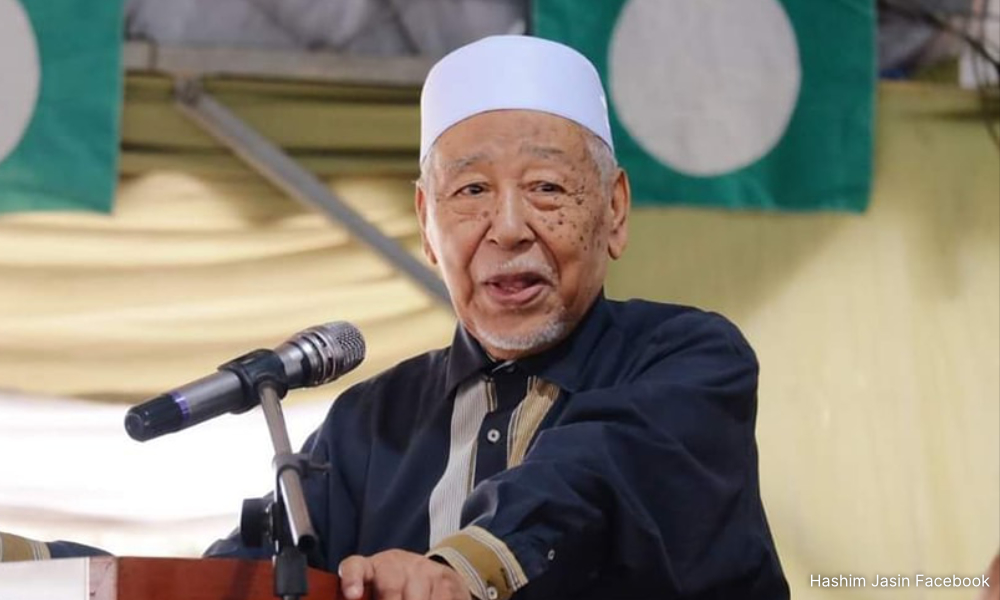
The senior cleric was responding to Bersatu vice-president Ahmad Faizal Azumu, who reaffirmed Muhyiddin’s “poster boy” status and that others in PN “should stop dreaming” about the prime minister’s position.
Subsequently, Gerakan president Dominic Lau said he would raise the party’s objection to Hashim’s remarks in the next supreme council meeting, arguing that the political landscape is such that even “a coalition needs to form coalitions” in order to form the government.
“It is okay, he (Lau) has said it outside, and he can say it again (in the meeting),” said Muhyiddin.
“We have no quarrels, but by right there should have been a little more control.
“They (Gerakan) can bring it up, and we can discuss. I am open. If anyone says someone else is a better candidate, and everyone agrees, okay. I have no problem,” said Muhyiddin, who expressed surprise over the attention given to PN’s prime minister candidate.
“Maybe that is a certain degree of acknowledgment that we have that leadership. That’s why people are interested to find out.
“But it is okay, the principle is simple. All this decision is not by me. It is a decision of the supreme council,” he said.
Don’t underestimate PAS
However, Muhyiddin said it would be unfair for him to comment on whether PAS could command the same amount of support accorded to him if a leader from the Islamist party is named as PN’s prime minister candidate.
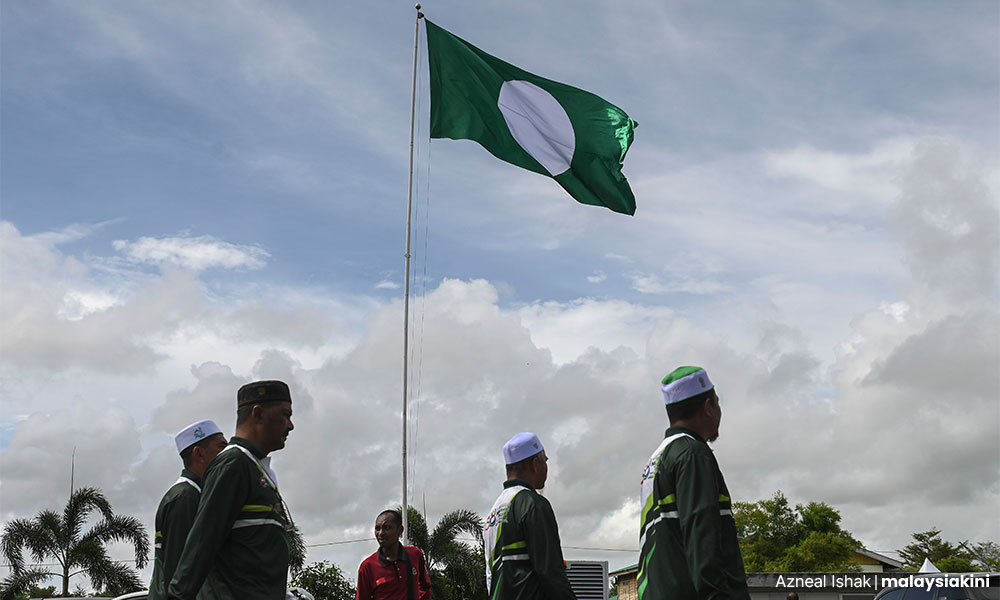
“I think PAS leaders too are forward-thinking people. Don’t underestimate their intelligence in terms of politics.
“They have been there for many years, they have run governments. They have been with me before. So don’t underestimate them,” he stressed.
“When someone (from PAS) says something like that (PM candidate) there is a certain basis.
“But at the end of the day, it is the leaders in PN who make the decision for the good of the parties in PN,” he stressed.
Many things to consider
Elaborating, Muhyiddin said the PN supreme council’s deliberations should account for internal and external considerations, with voters’ acceptance being an important deciding factor.
“For example, if they (PN supreme council) want to name someone, they have to evaluate whether the person is accepted, not only by us (in PN) but also, do the people accept?
“Ultimately, it is not the parties that vote us in (to government) but it’s the people. And if you (people) don’t trust the person who wants to lead, do you think we (PN) can win?” he questioned.
“We have to be very pragmatic, (the decision) has to be based on a proper understanding of the rakyat’s thoughts and wants, aside from capabilities, abilities, knowledge, management of the economy and others,” said Muhyiddin.
He was quick to add that he was not saying “I have all those things”.
“I will not make a decision that has anything to do with me and I am present in the meeting. I will sit outside.
“Let them discuss and I will accept whatever decision. Because I know they can decide.”
/file/publisher-c1a3f893382d2b2f8a9aa22a654d9c97/2024/09/41877f20ee3a6b97e9af7b0cb3e52a43.jpg)
/file/publisher-c1a3f893382d2b2f8a9aa22a654d9c97/2024/09/72486ff8c8ce87c12cb0ef533a0a8155.jpg)
/file/publisher-c1a3f893382d2b2f8a9aa22a654d9c97/2024/10/bce0cb134b32cd4fc8fb6192e9c1b62c.jpg)
/file/publisher-c1a3f893382d2b2f8a9aa22a654d9c97/2024/11/3402592eeea2dd2cd9eade8d8e889f37.jpg)
/file/publisher-c1a3f893382d2b2f8a9aa22a654d9c97/2023/07/d6345092835b106b1c60060621487fc4.jpg)


Are you sure you want to delete this comment?
This action cannot be undone.