


/file/publisher-c1a3f893382d2b2f8a9aa22a654d9c97/2020/10/0b58ceb8a0736b50e49b15b5446f4a00.jpg)

Book ban proposal reinforces thesis of Kuru’s book, says publisher
It explained that the 2022 book “Perikatan Ulama-Negara: Punca Autoritarianisme dan Kemunduran Dunia Muslim” (The Ulama-State Alliance: A Cause of Authoritarianism and Underdevelopment in the Muslim World) presents an examination of how Islamic authorities censor and suppress views, even those long recognised as legitimate differences.
The publisher also criticised the lack of dialogue in the lead-up to...
Summary
Pertubuhan Lestari Hikmah Malaysia criticises the proposal to ban Ahmet T Kuru’s book, arguing that it reinforces the book’s thesis on religious authorities suppressing dissenting views.
The publisher denies claims the book contradicts Islamic teachings, highlighting a lack of evidence and absence of dialogue in the decision-making process.
The organisation calls the move unconstitutional, urging authorities to uphold freedom of expression and fair inquiry.
The proposal by religious authorities to ban one of the books by the scholar Ahmet T Kuru reinforces the book’s central thesis, said the book’s publisher Pertubuhan Lestari Hikmah Malaysia.
It explained that the 2022 book “Perikatan Ulama-Negara: Punca Autoritarianisme dan Kemunduran Dunia Muslim” (The Ulama-State Alliance: A Cause of Authoritarianism and Underdevelopment in the Muslim World) presents an examination of how Islamic authorities censor and suppress views, even those long recognised as legitimate differences.
The publisher also criticised the lack of dialogue in the lead-up to recommending the ban, and the lack of evidence to substantiate claims that the book goes against the teaching of beliefs of Ahli Sunnah Wal Jamaah (AI-Asya’irah AI- Maturidiyyah) and Islamic morality.
“This approach is inconsistent with the Islamic principles of tabayyun (verification) and tatsabbut (careful investigation), which stress the importance of fair and thorough inquiry before passing judgment on others - especially when the matter pertains to questions of faith and belief.
“To categorise a scholarly work as promoting beliefs contrary to Islamic creed without affording a proper process of deliberation is a serious accusation with significant implications for the credibility of all involved,” it said in a statement last night.
It also said the move is contrary to the freedom of expression under Article 10 of the Federal Constitution.
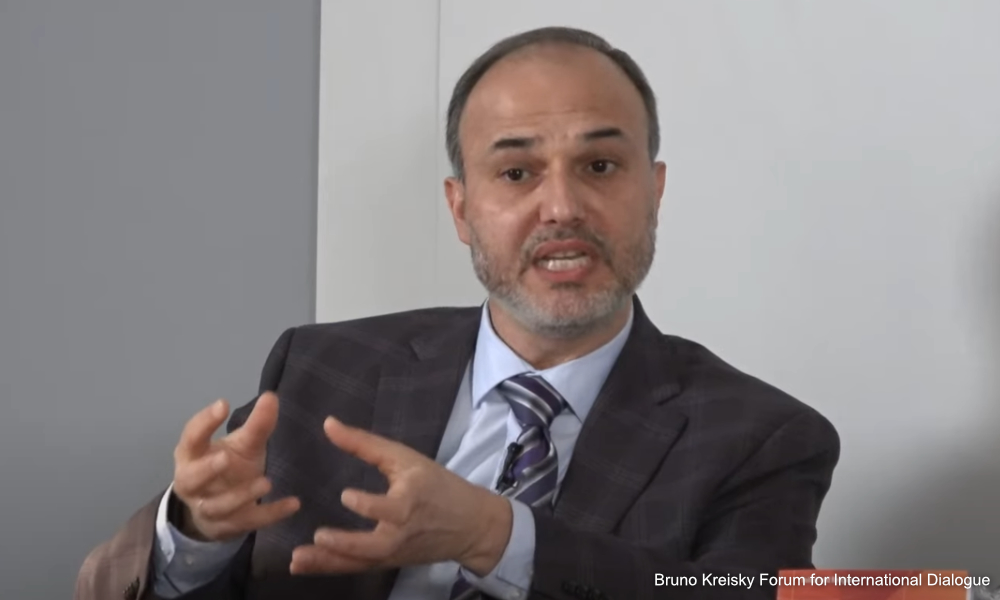
Another publication being targeted for a potential ban is the 2024 book “Islam, Autoritarianisme dan Kemunduran Bangsa”, which is a Malay translation published by the Islamic Renaissance Front based on Kuru’s 2019 book “Islam, Authoritarianism, and Underdevelopment: A Global and Historical Comparison”.
The two books are among 12 publications that the Muzakarah Committee of the National Council for Islamic Religious Affairs recommended to be banned by the Home Ministry.
The committee’s chairperson Nooh Gadot said in a statement yesterday that the 12 books could confuse Muslims as they contain teachings and ideologies that are contrary to the beliefs of Ahli Sunnah Wal Jamaah (AI-Asya’irah AI- Maturidiyyah) as well as syariah laws and morals.
However, Lestari Hikmah denies this.
“We maintain that no such content exists in the publication,” it said.
Hikmah’s Lestari’s rebuttal is published in full below:
We are called to respond to the Media Release issued by the Chairman of the Muzakarah Committee, National Council for Islamic Religious Affairs Malaysia (MKI) dated 11 March 2025 (corresponding to 10 Ramadan 1446 Hijrah), which listed twelve (12) books alleged to contain elements contrary to the Aqidah of Ahl al-Sunnah wa al-Jama‘ah (Al-Ash‘ariyya and Al-Maturidiyya), Islamic law, and akhlaq — including one of our publications titled “The Ulama-State Alliance: A Cause of Authoritarianism and Underdevelopment in the Muslim World”, a translated essay originally written by Prof Dr Ahmet T Kuru, published in 2022.
According to the Media Release, MKI has recommended that the aforementioned books be subject to a Prohibition Order by the Ministry of Home Affairs. As of the date of the statement, the Ministry has yet to act on this recommendation.
While we fully acknowledge the duties and responsibilities of MKI in safeguarding Islamic affairs in Malaysia, we must express our view that this action by MKI, in fact, reinforces the central thesis of the book in question.
The publication presents a critical examination of religious administrative bodies that wield their institutional authority to censor and suppress views that fall outside the frameworks they have defined — even in matters that have long been recognised as legitimate differences among scholars (khilaf). Such rigid approaches have contributed to a form of authoritarianism that undermines individual rights and the diversity of perspectives within the Islamic intellectual tradition.
The book further posits that there exists a symbiotic alliance between certain religious elites and the state, wherein both parties mutually reinforce each other’s influence to preserve control over public discourse. This control, we argue, may potentially stifle democratic practices and the evolution of critical thought in Muslim societies.
We believe it is not an exaggeration to assert that MKI's recommendation for a blanket ban on these books reflects an authoritarian impulse. At no point were key stakeholders including the publisher, translator, or the original author invited for dialogue — or allowed to respond to the allegations before the recommendation was made.
Furthermore, the justifications provided for this recommendation were generic in nature and lacked any specific evidence from the text itself to substantiate the claim that the book is contrary to the aqidah of Ahl al-Sunnah wa al-Jama‘ah, Islamic law, or akhlaq, or that it misleads the Muslim public. We maintain that no such content exists in the publication.
This approach is inconsistent with the Islamic principles of tabayyun (verification) and tatsabbut (careful investigation), which stress the importance of fair and thorough inquiry before passing judgment on others — especially when the matter pertains to questions of faith and belief. To categorise a scholarly work as promoting beliefs contrary to Islamic creed without affording a proper process of deliberation is a serious accusation with significant implications for the credibility of all involved.
We further contend that this action by MKI contravenes Article 10 of the Federal Constitution, which guarantees the right to freedom of expression. Books are a legitimate medium for discourse, critique, and intellectual exploration. A prohibition order imposed without due diligence represents a direct infringement on this fundamental right.
We strongly oppose any move to ban these publications without a transparent, inclusive, and evidence-based engagement process. We urge the relevant authorities to uphold the principles of justice, intellectual freedom, and good governance in their handling of this matter.
/file/publisher-c1a3f893382d2b2f8a9aa22a654d9c97/2024/10/08fe83753f5164d5cba2a7b98b84683e.jpg)
/file/publisher-c1a3f893382d2b2f8a9aa22a654d9c97/2025/03/03a5a14ce56160f77d1973fd8a8f1aa2.jpg)


Report this comment
Are you sure you want to delete this comment?
This action cannot be undone.