


/file/publisher-c1a3f893382d2b2f8a9aa22a654d9c97/2022/07/32a15857d7adf64c5f7ab4ee1eb31199.jpg)

'Height of democracy,' T'ganu PKR leader moots contest for No 2 post
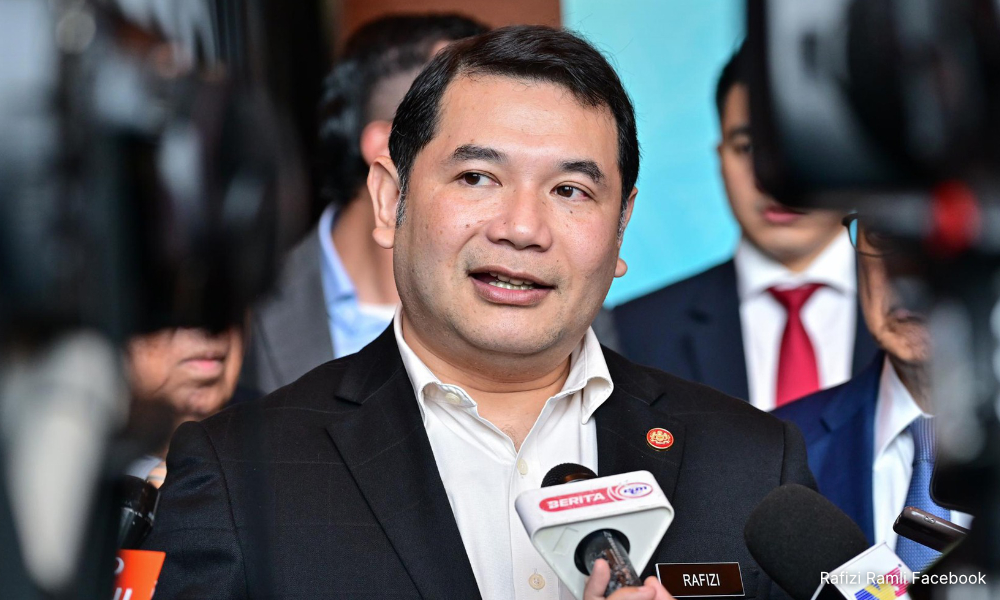
A senior Terengganu PKR leader has described outcomes of the party's division-level polls as a signal of grassroots demands to open a contest for the deputy president's post now held by Economy Minister Rafizi Ramli.
Amid concerns up for discussion by a PKR Central Leadership Committee meeting in Putrajaya today, Kuala Terengganu PKR chief Azan Ismail said results across over 200 PKR divisions nationwide show a desire for all top positions to be contested, with the exception of the president’s post held by Prime Minister Anwar Ibrahim.
Summary
A Terengganu PKR leader notes results across over 200 PKR divisions nationwide show a desire for all top positions to be contested, with the exception of the president’s post held by Prime Minister Anwar Ibrahim.
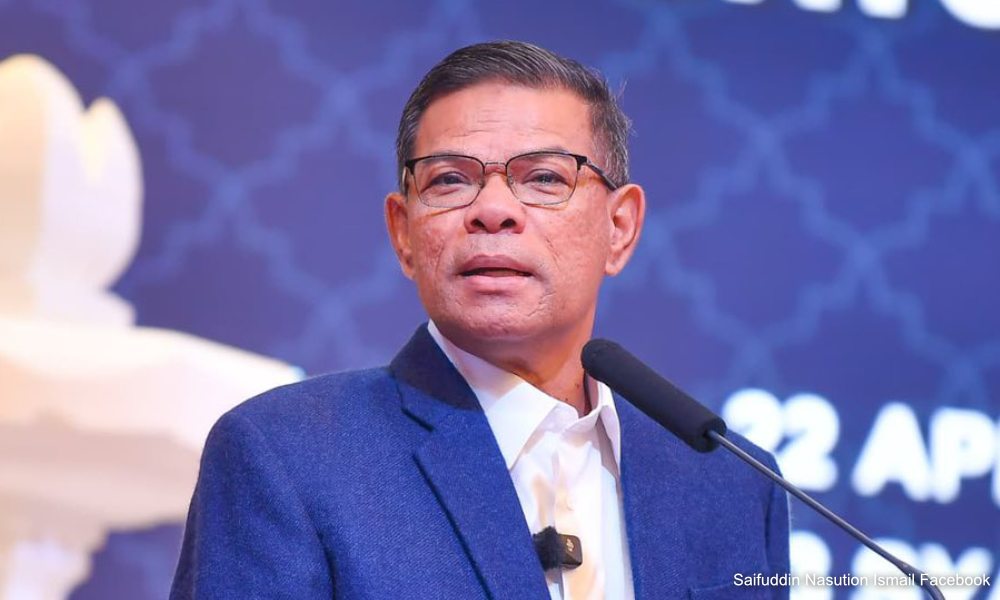
Kuala Terengganu PKR chief Azan Ismail supports a contest for the deputy president’s post between Rafizi Ramli and Saifuddin Nasution Ismail, believing it will strengthen the party.
A senior Terengganu PKR leader has described outcomes of the party's division-level polls as a signal of grassroots demands to open a contest for the deputy president's post now held by Economy Minister Rafizi Ramli.
Amid concerns up for discussion by a PKR Central Leadership Committee meeting in Putrajaya today, Kuala Terengganu PKR chief Azan Ismail said results across over 200 PKR divisions nationwide show a desire for all top positions to be contested, with the exception of the president’s post held by Prime Minister Anwar Ibrahim.
“To really celebrate democracy at the highest level, it should be enough that only the president’s post is left uncontested.
“We can see at the division level, there is a desire to open a contest for the deputy president’s post,” the PKR central committee member told Malaysiakini.
He justified that the exception to the contest for the president’s post held by Anwar is due to a possible perception of potential “abuse of government machinery” for campaigning purposes, as it would be unreasonable to expect the prime minister to halt his official functions throughout the period.
To date, no other contender has declared intentions to challenge Rafizi for PKR’s No 2 position.
Grassroots sentiments
Yesterday, Pakatan Harapan secretary-general Saifuddin Nasution Ismail urged all quarters to cease speculations based on the division-level results, on whether he would challenge Rafizi for the deputy presidency.
Saifuddin also revealed he recently held a closed-door meeting with Rafizi to discuss their respective roles in strengthening the party.
According to Azan, the division-level results could be viewed as a “reflection” of grassroots sentiments towards some of the party’s senior leaders, ahead of the central level election to be held on May 24.
“I feel it is best for the new division leaders to analyse (the results) and decide who will be the strongest (central) leaders capable of bringing PKR to the next level,” he said, stressing that the main goal should be to prepare the party for the next state and general elections.
Thriving democracy
A number of names who lost were seen as Rafizi’s allies in PKR, but others observed there were also defeats among those said to be from “other camps” in the party.
The results have prompted allegations of electoral irregularities, particularly involving the party’s electronic voting system.
Azan, however, described the entire process of the PKR division-level polls as the “height of democracy” with outcomes that reflected members’ current aspirations.
He also attributed the “variety” of results to the e-voting method, which gave members more time and freedom to choose their leaders.
“In the past, members had to queue to physically vote, and so their time would be limited to only a few minutes.
“With e-voting, they are given an entire day from morning until evening to vote using their own device. So the end result will not necessarily follow a ‘cai’,” he told Malaysiakini, using the term to describe a team of candidates led by a division chief contender.
“Members are not pushed or pressured by a time limit, so their choices will be based on their own preferences. The results may not always follow a pattern,” said the former Bandar assemblyperson.
Previously, Najib Bakar, an aide to Rafizi, claimed that the e-voting system may have been manipulated to produce results reportedly described as “body without a head” - when a division chief contender was defeated, but a majority of their team won.
Promise for healthy contest
In voicing support for Saifuddin to throw his hat into the deputy president's contest, Azan said he believed that discussions between the two leaders were focused on a “promise” for a healthy contest and a subsequent reconciliation of all members.
“I think the discussions were more so they can pledge to take care of their supporters and prevent a (permanent) divide. Once the election is over, there will be a call to unite,” he said.
He went on to describe both Rafizi and Saifuddin as experienced leaders with the foresight to act in the party’s best interest.
“If we open the opportunity for the two of them to contest, I believe we will emerge as a stronger party,” said Azan who also downplayed speculations of any “third contender” also eyeing the position.
In the upcoming PKR central election, the party has reinstated the delegate system, where some 30,000 delegates from 222 divisions nationwide will vote to elect 20 central leadership council members and six top posts: president, deputy president, and four vice-presidents.
/file/publisher-c1a3f893382d2b2f8a9aa22a654d9c97/2024/12/d1b9baf8aea70c5d73d98eee1319d47a.jpg)
/file/publisher-c1a3f893382d2b2f8a9aa22a654d9c97/2025/04/787d0f30867e04a87b7525ec8b555541.jpg)
/file/publisher-c1a3f893382d2b2f8a9aa22a654d9c97/2025/04/802344d445476c2525816fd4a9f818ee.jpg)
/file/publisher-c1a3f893382d2b2f8a9aa22a654d9c97/2025/01/d520d02fd4d4ff5ee16a411b6600bbce.jpg)
/file/publisher-c1a3f893382d2b2f8a9aa22a654d9c97/2025/04/4bf924384ffb91672af0f487ad78a098.jpg)
/file/publisher-c1a3f893382d2b2f8a9aa22a654d9c97/2023/10/83cc38dfde5d311c16a414a81b9052cc.jpg)
/file/publisher-c1a3f893382d2b2f8a9aa22a654d9c97/2022/11/3a74d8b39c63b2059bef3030f213b77e.jpg)


Are you sure you want to delete this comment?
This action cannot be undone.