


/file/publisher-c1a3f893382d2b2f8a9aa22a654d9c97/2025/03/e3baab37e0c113251ff8bc12ac41b515.jpg)

Saravanan: PM doesn't need cabinet nod to halt use of 'illegal temple' term
Prime Minister Anwar Ibrahim does not require the cabinet's nod to issue a directive preventing government agencies and departments from using the term "illegal temples," said MIC deputy president M Saravanan.
The Tapah MP said the cabinet's apparent snub towards the issue during its meeting yesterday is not a concern, as he has already escalated the matter to Anwar.
Summary
M Saravanan says cabinet not discussing his call to ban govt agencies from using the term "illegal temples" is a non-issue.
MIC deputy president says prime minister is able to make a decision on the matter without first informing the cabinet.
Prime Minister Anwar Ibrahim does not require the cabinet's nod to issue a directive preventing government agencies and departments from using the term "illegal temples," said MIC deputy president M Saravanan.
The Tapah MP said the cabinet's apparent snub towards the issue during its meeting yesterday is not a concern, as he has already escalated the matter to Anwar.
"I have already reached out to the prime minister personally, including by sending him a letter," Saravanan (above) told reporters last night at the sidelines of the Ayer Kuning by-election campaign.
"To me, there is no need (for the call) to be discussed at the cabinet. The prime minister can make a decision and instruct the chief secretary to the government to inform the relevant agencies."
Yesterday, government spokesperson Fahmi Fadzil said the cabinet meeting earlier had not touched on Saravanan's call urging against the use of the "illegal temples" label.
On Monday, Saravanan appealed for Anwar to issue the directive following a response from the Taiping Hospital management to a complaint regarding a place of worship located on its premises.
Strongly objecting to the language used in the title of the management's response to the complaint, Saravanan highlighted that many of these temples have existed for decades, long before the enactment of the National Land Code in 1965.
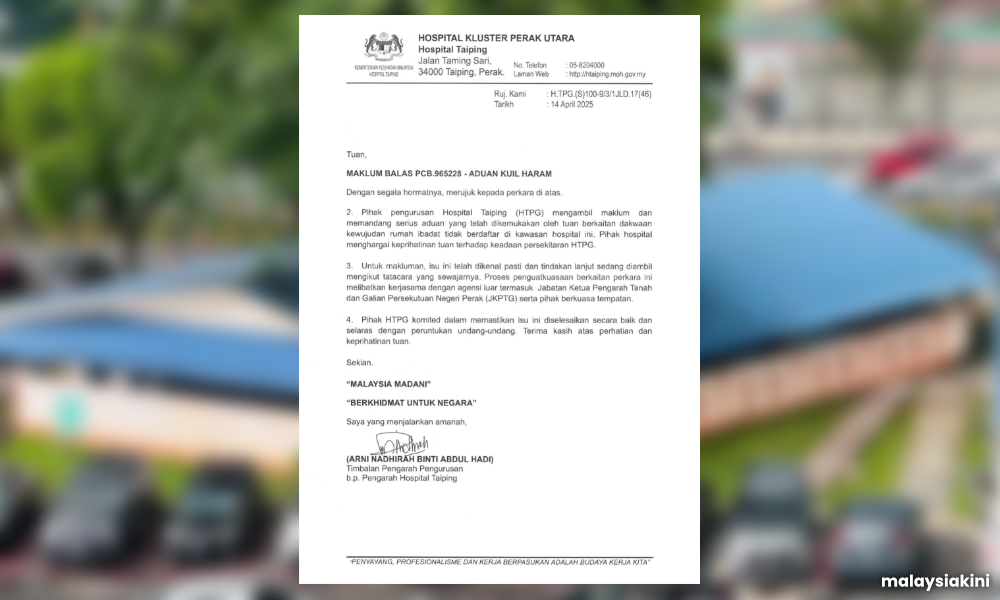
He also emphasised that branding such places of worship as “haram” is insensitive and disregards their historical and cultural significance.
The existence of these temples came under the spotlight following the controversial relocation of the 130-year-old Dewi Sri Pathrakaliamman Temple in Kuala Lumpur, which was moved to make way for a mosque.
The relocation sparked mixed reactions, with some netizens opting to take issue with the legal status of Hindu temples in Malaysia.
/file/publisher-c1a3f893382d2b2f8a9aa22a654d9c97/2025/04/a72c2a861a3282b5f28f017b94a4f23a.jpg)
/file/publisher-c1a3f893382d2b2f8a9aa22a654d9c97/2024/08/79bcb6f10d41af4dbfd5f22b171a6c82.jpg)
/file/publisher-c1a3f893382d2b2f8a9aa22a654d9c97/2022/08/75f19775d4e9551b942ebdf4d5b02c0c.jpg)
/file/publisher-c1a3f893382d2b2f8a9aa22a654d9c97/2025/04/848dc398e21908f6be4570cddc4ae50c.jpg)
/file/publisher-c1a3f893382d2b2f8a9aa22a654d9c97/2025/03/e3baab37e0c113251ff8bc12ac41b515.jpg)
/file/publisher-c1a3f893382d2b2f8a9aa22a654d9c97/2019/09/85a72a6793617c8c2a29107eb82f6e05.jpg)


Report this comment
Are you sure you want to delete this comment?
This action cannot be undone.