


/file/publisher-c1a3f893382d2b2f8a9aa22a654d9c97/2022/07/798c813ed6776b80b29aba778e8e506b.jpg)

'Escalating repression': Amnesty report slams M'sia's human rights record
Amnesty International has delivered a damning assessment of Malaysia’s human rights record, warning of deepening authoritarianism, entrenched impunity, and escalating repression in its "State of the World Human Rights" report for 2024.
Covering 150 countries, the report highlights the global criminalisation of dissent through censorship, repression, mass surveillance, and violence - and Malaysia, it said, is no exception.
Summary
Amnesty International says Malaysia is no exception to the disturbing global trend of deepening authoritarianism and escalating repression.
The report says despite electoral promises, the Madani government has not repealed draconian laws.
Amnesty International has delivered a damning assessment of Malaysia’s human rights record, warning of deepening authoritarianism, entrenched impunity, and escalating repression in its “State of the World Human Rights” report for 2024.
Covering 150 countries, the report highlights the global criminalisation of dissent through censorship, repression, mass surveillance, and violence - and Malaysia, it said, is no exception.
“Malaysia has been no exception to these disturbing global trends. While the reduction in the number of people on death row marked a long-overdue and important step forward, it was overshadowed by serious regressions elsewhere.
“In 2024, the government continued to suppress freedom of expression and peaceful assembly, while also backsliding on police accountability, and failing to uphold the rights of asylum-seekers, refugees and migrants,” read the report.

At the launch, Amnesty International Malaysia interim executive director Vilasini Vijandran said the Madani government’s actions in 2024 not only failed to dismantle existing restrictions on free speech but have instead intensified threats against fundamental freedoms.
Use of draconian laws persists
Despite electoral promises, the report said, the government has failed to repeal draconian laws such as the Sedition Act 1948, the Communications and Multimedia Act 1998 (CMA), and the Printing Presses and Publications Act 1984.
Amnesty said instead of reform, these laws were weaponised against artists, activists, and critics, who systematically faced harassment, arrest, and investigation merely for speaking out.
The report noted that human rights defender Mukmin Nantang was investigated for sedition after defending the Bajau Laut community, while artist Fahmi Reza was arrested for his satirical artwork targeting a political figure.
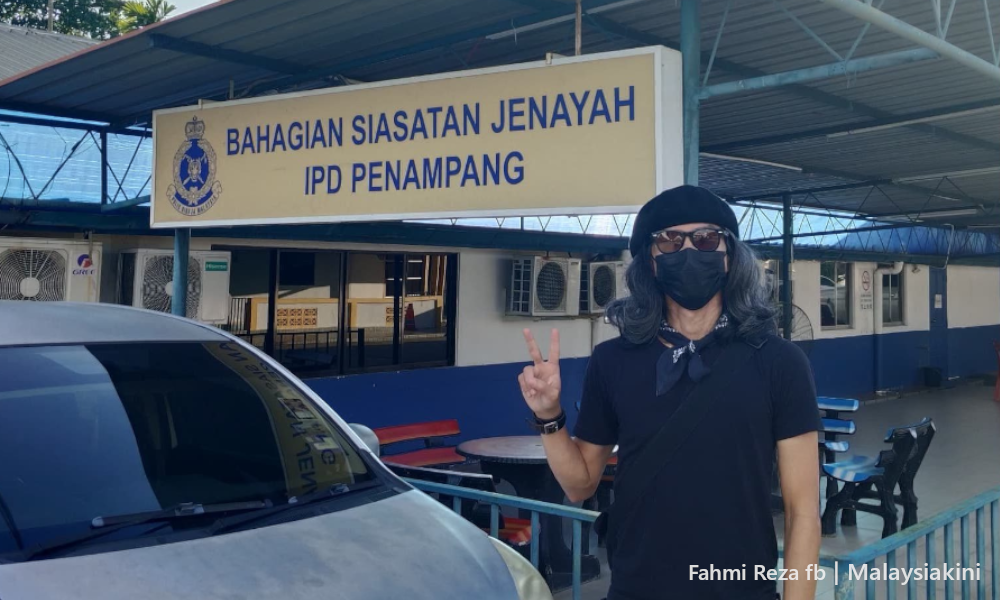
Rather than responding to long-standing concerns from civil society, the report said the government bulldozed through amendments to the CMA - expanding state powers to control social media content - and introduced arbitrary licensing requirements for social media platforms.
It added that the assault on free speech was further compounded by the hasty passage of the Online Safety Bill, a law ostensibly designed to tackle cyberbullying but which grants sweeping new powers to the government to police online discourse with little transparency or accountability.
“Art is not a threat. Advocacy is not a crime. Criticism is not sedition.
“People in Malaysia must be able to express themselves freely, be it through speech, writing, film, painting, or posting online without fear of censorship, harassment, or arrest,” Vilasini said.
Arresting peaceful protesters
The report also condemned Malaysia’s continuing crackdown on peaceful assembly, saying authorities deployed the Peaceful Assembly Act 2012 (PAA) and other punitive laws to criminalise protests - flouting both constitutional and international protections.
The report cited the arrest of stateless Bajau Laut students, including children, who protested for clean water access in Sabah as a “new low,” illustrating the government’s use of state power to silence the most vulnerable.
“The Malaysian authorities must realise that by doing this, they are not only suppressing protests but also sending a chilling message to young people that their voices are unwelcome,” said Vilasini.
While Prime Minister Anwar Ibrahim announced plans in February 2025 to amend the PAA - starting with the removal of Section 11, which requires protesters to obtain permission from venue owners - Amnesty said real reform remains in question.
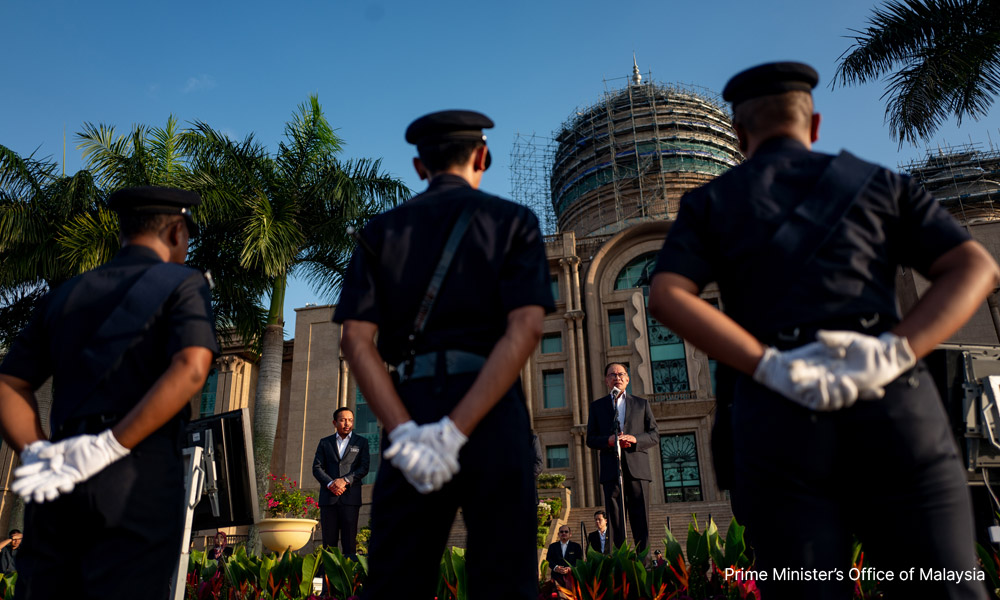
“We urge the government to engage civil society meaningfully in the amendment process to ensure that all revisions align with international human rights standards.
“The right to peaceful assembly must be fully protected - not selectively granted.
“In the meantime, no one should be arrested, investigated, charged, or imprisoned for exercising their constitutional right to protest,” Vilasini said.
Poor treatment of migrants, inmates
The report also paints a grim picture of Malaysia’s treatment of refugees, migrants, and detainees in 2024, denouncing indefinite detention, denial of legal safeguards, and systemic abuse in detention centres.
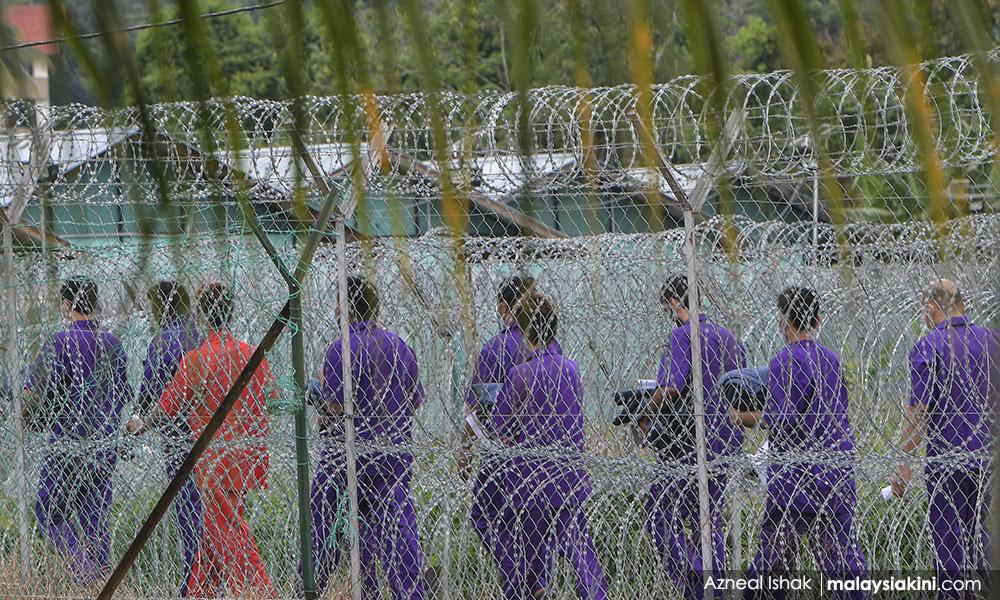
“From arbitrary detention to unchecked abuse, the government’s current approach not only dehumanises people in search of safety and a better life but entrenches a system of impunity,” Vilasini said.
The report stated that at least 24 custodial deaths were recorded from 2022 to mid-2024, yet the government’s promises of investigation have yielded no meaningful accountability.
Even where progress was claimed - such as a reduction in the death row population - the report said that the courts continue to sentence individuals to death, including for drug-related offences, in violation of international law and in contradiction to the government's reform rhetoric.
“True reform must address systemic injustice. Until the death penalty is abolished in full, the right to life remains under threat,” Vilasini added.
/file/publisher-c1a3f893382d2b2f8a9aa22a654d9c97/2020/04/ec68e8135f94fdfab861602a6258af89.jpg)
/file/publisher-c1a3f893382d2b2f8a9aa22a654d9c97/2025/04/771746c5abe260a08a8ab8a8230a18cb.jpg)
/file/publisher-c1a3f893382d2b2f8a9aa22a654d9c97/2024/05/8e4e6445f099c32211083071d3a97dae.jpg)
/file/publisher-c1a3f893382d2b2f8a9aa22a654d9c97/2025/02/a8b4eda8a6abcf24403c81f7ab6ec712.jpg)


Report this comment
Are you sure you want to delete this comment?
This action cannot be undone.