


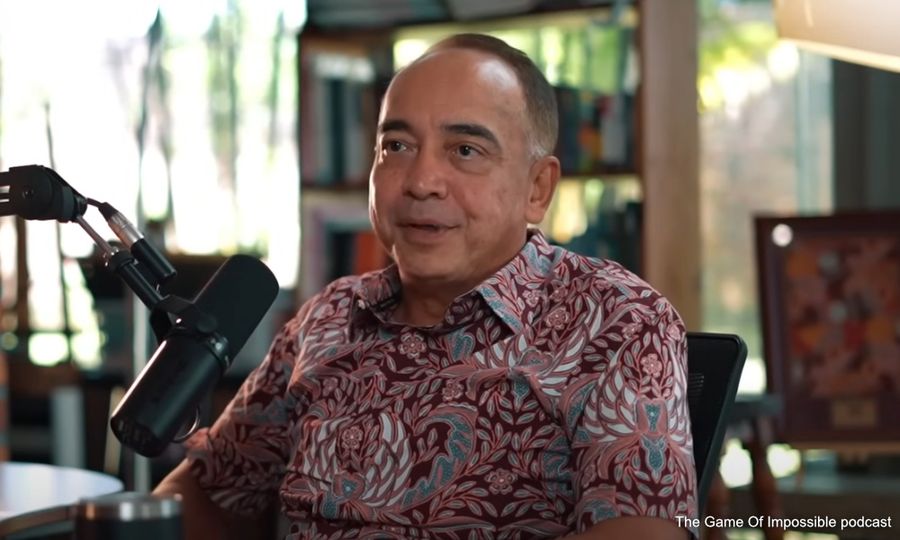

Nazir lauds Anwar, govt's handling of US tariffs
The Malaysian chapter of the Asean-Business Advisory Council (Asean-BAC) has complimented the government’s handling of the United States tariffs.
The group noted that Prime Minister Anwar Ibrahim and his administration and faced the matter calmly and in a balanced manner while protecting national interests.
Asean-BAC’s chairperson, Nazir Razak, also pointed out that the government has engaged Washington to determine what is rhetoric and reality on the US side.
“Malaysia has then gone back to strategise, which we are doing now, and maybe going back and negotiate.
“That’s absolutely the right way to handle the situation, which is in contrast with the (confrontational) handling of the situation by many other countries, which reacted too quickly, or were too aggressive,” he said in response to questions on the US asking Malaysia to reduce non-tariff barriers such as in halal certification at a press conference on Asean-BAC Malaysia’s 2025 initiatives.
On non-tariff barriers and whether Malaysia and other Southeast Asian governments had the political will to dismantle them, he said these barriers were an Asean-wide problem.
“There is a strong correlation between the reduction in tariffs and the rise of non-tariff barriers, and at last count, there’s something like 9,642 non-tariff barriers across Asean,” said Nazir.
“One of the difficulties facing Asean is that there’s no clear enforcement mechanism to bring this down.
“There’s a lot of frustration from the private sector with non-tariff barriers.
“As we negotiate with the US, perhaps it’s an opportunity for us to review those highlighted by businesses,” he said.
Nazir revealed that there is a mechanism called Asean Assist, whereby a company can go online and list down a non-tariff barrier employed by a country which should not be there.
Unfortunately, the take-up rate is very low because of the perception that nothing can be done about it, which is why non-tariff barriers are an area that Asean has to focus on, said Nazir.
- Bernama


Report this comment
Are you sure you want to delete this comment?
This action cannot be undone.