


/file/publisher-c1a3f893382d2b2f8a9aa22a654d9c97/2025/05/20eaf323eeb630eaafeed0a12640e506.jpg)

Manipulating ethnic politics risks national unity, says academic
While ethnic politics is a natural aspect of national politics, it can turn toxic when exploited by racial extremists who demand that the nation be ruled by a majority race, said retired academician Sharifah Munirah Alatas.
Noting that the rise of ethno-populism in Malaysia can be traced back to the country’s fight for its independence from colonial rule, Sharifah said the political strategy precedes the riots on May 13, 1969 - a pivotal event often seen as accelerating and entrenching the “Ketuanan Melayu” (Malay supremacy) ideology in national discourse.
Summary
Retired academician Sharifah Munirah Alatas says ethnic politics should not be blamed for potential divides among the rakyat.
Instead, she points the finger at racial extremists who misuse the ideology for their own gains.
She also says that while the rakyat is distrustful of politicians, fractures within society also come from certain Islamic religious interpretations
While ethnic politics is a natural aspect of national politics, it can turn toxic when exploited by racial extremists who demand that the nation be ruled by a majority race, said retired academician Sharifah Munirah Alatas.
Noting that the rise of ethno-populism in Malaysia can be traced back to the country’s fight for its independence from colonial rule, Sharifah said the political strategy precedes the riots on May 13, 1969 - a pivotal event often seen as accelerating and entrenching the “Ketuanan Melayu” (Malay supremacy) ideology in national discourse.
“If you look at it historically, the ethno-populist movement termed ‘Ketuananism’ predates (the May 13 incident) as it’s part of the whole anti-colonial Malay nationalist movement towards independence.
“After we got our independence, it continued. The system of politics framed around the different ethnicities in Malaysia is naturally there because we are a multi-ethnic country.
“The problem comes when you have supremacists and ethno-nationalists who insist that this country must be governed by the majority race,” Sharifah (above) said during the Malaysiakini podcast “Straight Talk” hosted by former envoy Dennis Ignatius.
The episode features former DAP MP and human rights activist Kua Kia Soong as well as blogger Syed Akbar Ali.
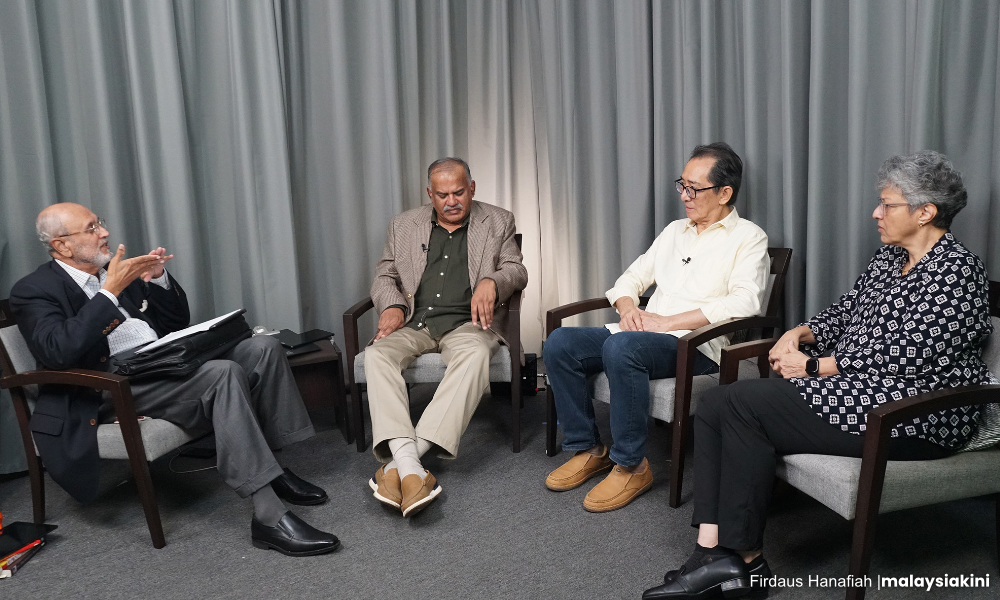
Sharifah, a former Universiti Kebangsaan Malaysia assistant professor of strategic studies and international relations, also disagreed with the notion that any multi-ethnic society is “bound to fail”, asserting that a “marriage” of all ethnicities can be implemented if there is sufficient political will in support.
In July 2023, former prime minister Dr Mahathir Mohamad asserted that the Federal Constitution emphasises the “Malayness” of Malaysia and that the nation is a “Malay” country, claiming that promoting a multi-ethnic Malaysia is unconstitutional.
The nonagenarian said this in response to calls for him to stop playing up racial sentiments.
‘Majority do not trust politicians’
Meanwhile, when asked by Ignatius if she agrees that the May 13 incident had shattered trust between ethnic communities, Sharifah Munirah disagreed, saying instead that a majority of Malaysians do not trust politics and politicians.
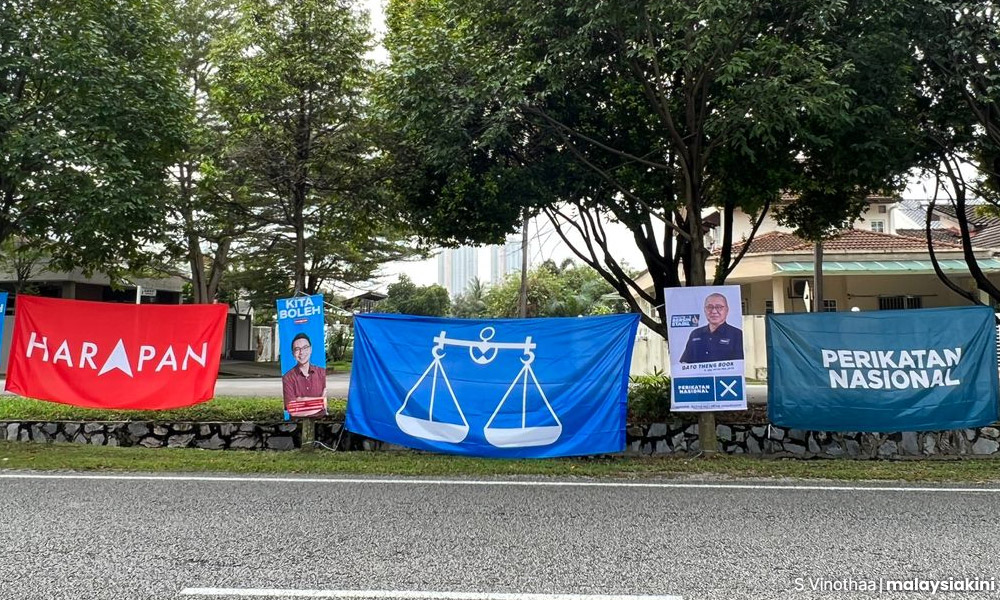
“Yes, (at the street level people are okay), but no matter which political party comes into power, we still have that mistrust (towards politicians),” she said.
However, she also said the repeated reinforcement of certain religious interpretations into Muslim Malaysians was a factor in dividing the rakyat.
“The trust issue, I would say, (has to do with how) we are not visiting each other’s homes anymore (or having) celebratory meals together because it’s a constant influence on the internet.
“They are constantly telling us that you have to check if the glasses are haram or halal, if you can eat with the utensils. These are the ridiculous issues that are being drummed into Muslim minds,” she added.
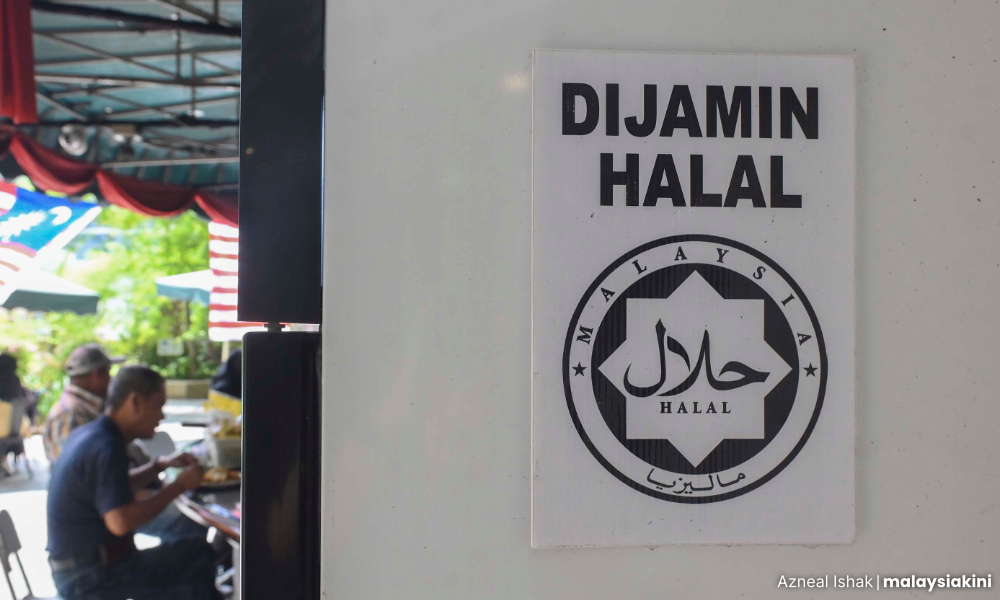
Highlighting that the matter goes back to how Islamic religious education is conveyed in schools, Sharifah Munirah asserted that the reason why the topic is perceived as being sensitive is due to how government leaders use it as a tool to control the masses.
“Whatever political administration is in power, they need to control this (religious education) narrative to remain in power. I would say that this issue of trust is a very complicated matter,” she said.
/file/publisher-c1a3f893382d2b2f8a9aa22a654d9c97/2025/05/5c22c0ab186d3b4e7b4f00067ed61803.png)
/file/publisher-c1a3f893382d2b2f8a9aa22a654d9c97/2020/08/8c88f2ebe784513f366f3551658eccfd.jpg)
/file/publisher-c1a3f893382d2b2f8a9aa22a654d9c97/2025/05/86a2d5147e89d036895f32bb500381e6.jpg)
/file/publisher-c1a3f893382d2b2f8a9aa22a654d9c97/2025/05/ff1532a451915435787c44ae7af95f6f.jpg)
/file/publisher-c1a3f893382d2b2f8a9aa22a654d9c97/2025/03/6251f40884836f8d070917137a4e1dcb.jpg)


Are you sure you want to delete this comment?
This action cannot be undone.