


/file/publisher-c1a3f893382d2b2f8a9aa22a654d9c97/2025/03/089a095b87a173f8ab22c161c3b3b687.jpg%3Ds500)

J-Kom DG: Fall of 'PM institution' would mean nation's collapse too
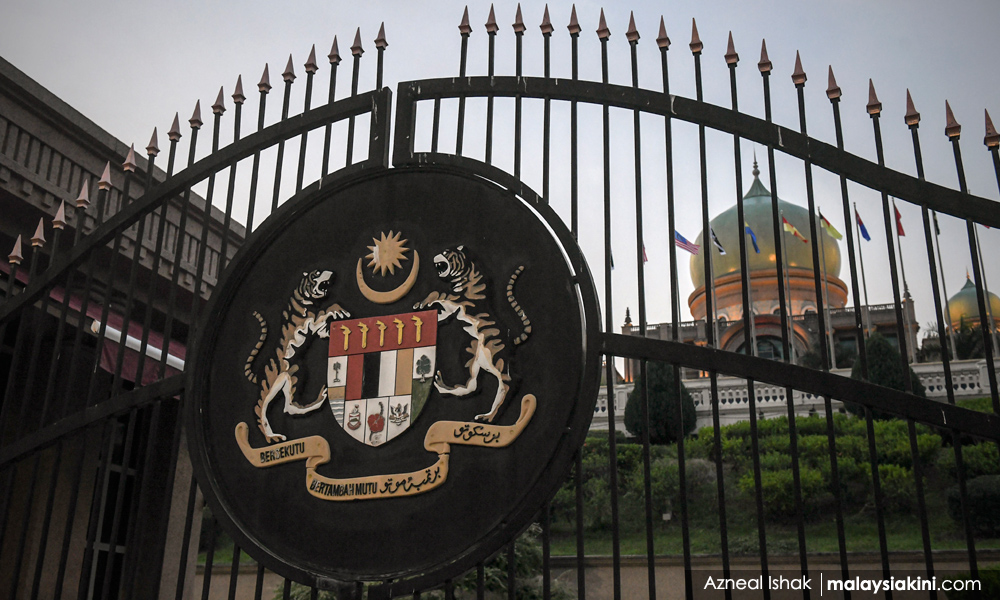
The prime minister's institution must be protected, as its collapse would bring down not just the office itself but the entire nation, Community Communications Department (J-Kom) director-general Ismail Yusop warned.
In his commentary in Sinar Harian today, Ismail said it is important for society to distinguish between legitimate legal proceedings guaranteed by law and actions that are merely aimed at undermining perception.
Ismail explained that safeguarding institutional dignity...
Summary
J-Kom DG warns that the collapse of the prime minister's institution would lead to national collapse, emphasising the need to distinguish between legitimate legal proceedings and politically motivated attacks.
Ismail suggests Malaysia should consider adopting stricter ethical codes and communication boundaries similar to those in the UK and Australia, arguing that whilst legal protections for institutional functions exist, reputation and public perception require careful balance.
The prime minister's institution must be protected, as its collapse would bring down not just the office itself but the entire nation, Community Communications Department (J-Kom) director-general Ismail Yusop warned.
In his commentary in Sinar Harian today, Ismail said it is important for society to distinguish between legitimate legal proceedings guaranteed by law and actions that are merely aimed at undermining perception.
Ismail explained that safeguarding institutional dignity does not mean protecting any individual from public scrutiny but ensuring that state institutions do not become "victims of destructive short-term political conflicts".
"A mature democracy depends on the country's ability to maintain institutional stability whilst continuing to guarantee citizens' rights to voice opinions and obtain justice without hindrance," he said.

Ismail added that in an increasingly complex and dynamic political climate, this balance deserves priority so that public trust in the governmental system continues to be preserved and strengthened.
"Anwar will not hold this position forever, but the prime minister's institution must be defended for the continuity of Malaysia as a sovereign and stable nation. Attack after attack on this institution does not merely weaken an individual; it shakes the foundations of the nation," he said, referring to Prime Minister Anwar Ibrahim.
"The people need to realise that if the prime minister's institution collapses, not only will the leader fall, but the country will also crumble," he added.
Ismail's comments came after Anwar denied that his court application to suspend legal proceedings against him was an attempt to secure personal immunity.
Anwar’s bid dismissed
On June 4, the High Court in Kuala Lumpur dismissed Anwar’s application to refer eight legal questions arising from the civil suit filed by his former aide Yusoff Rawther four years ago. The questions included whether he has immunity from the civil suit.
With this court decision, the sexual assault trial will proceed as scheduled on June 16.
Following the decision, Anwar insisted that his attempt was not about seeking personal immunity, but to ensure that high public office is protected from litigation that may be strategically timed.
READ MORE: High Court grounds of judgment rejecting Anwar's bid to pause lawsuit
"Whilst this case is still in the legal process, its impact on public perception of the nation's highest institution cannot be taken lightly. Some parties believe that this action, whilst legally valid, has the potential to undermine the dignity and credibility of the prime minister's institution, particularly when personal issues become part of a broader political narrative.
"In the context of modern democracy, the practice of checks and balances remains a fundamental principle that must be defended.
"Nevertheless, the dividing line between the principle of accountability and political exploitation needs to be clearly defined and reviewed from time to time," said Ismail.
Beyond legal protection
Ismail further said that while protection for institutional functions already exists, aspects related to reputation and perception still very much depend on the balance of political communication, leadership wisdom, and the level of public understanding of institutional roles.
"Several democratic countries, such as the United Kingdom and Australia, have introduced codes of ethics and stricter communication boundaries for their highest public officials-measures aimed at curbing politically motivated attacks that could weaken institutions' ability to carry out their mandates.
"Malaysia may also need to begin policy discussions towards establishing a similar model, with an approach that maintains freedom of speech whilst ensuring fair and transparent judicial processes," he added.
/file/publisher-c1a3f893382d2b2f8a9aa22a654d9c97/2024/10/7ff05b0a38da51e752ed4359a8b29498.jpg)
/file/publisher-c1a3f893382d2b2f8a9aa22a654d9c97/2024/01/c34fcaff3c94a398328eb64ea9503be0.jpg)
/file/publisher-c1a3f893382d2b2f8a9aa22a654d9c97/2025/05/23b188dbf54d3cb189ac64d8480e07c4.jpg)
/file/publisher-c1a3f893382d2b2f8a9aa22a654d9c97/2025/03/089a095b87a173f8ab22c161c3b3b687.jpg)


Are you sure you want to delete this comment?
This action cannot be undone.