


/file/publisher-c1a3f893382d2b2f8a9aa22a654d9c97/2025/06/822fe6b4753bde28260f6b5ca75364fb.jpg)

Affirmative action vs merit sparks debate on women in politics, media
The episode featured seven questions from the audience, including one that asked: “We can observe now most bosses in Malaysian media corporations are men. Where are the women?”
Presenter Johnny Dymond posed the question...
Summary
An episode of debate programme BBC World Questions was held in Petaling Jaya on affirmative action versus merit-based appointments to increase women’s participation in various sectors, including the media.
Panellists discussed the challenges women face in leadership roles due to societal norms, existing quotas, financial and cultural costs in politics, and the need for diverse representation.
Different views were presented on affirmative action, with some supporting it with caveats, some preferring merit-based systems, and others highlighting existing efforts and ongoing challenges in promoting women.
A heated debate on affirmative action versus merit-based appointments to increase women’s participation, including in the media, took centre stage at a BBC World Questions episode recorded live in Petaling Jaya last night.
The episode featured seven questions from the audience, including one that asked: “We can observe now most bosses in Malaysian media corporations are men. Where are the women?”
Presenter Johnny Dymond posed the question to four panellists - Domestic Trade and Costs of Living Deputy Minister Fuziah Salleh, University of Nottingham Malaysia academic Tricia Yeoh, Universiti Malaya Gender Studies programme head Vilashini Somiah, and Machang MP Wan Ahmad Fayhsal Wan Ahmad Kamal.
In response, Vilashini pointed out how societal norms continue to deny women opportunities to lead, despite an existing 30 percent quota for representation.
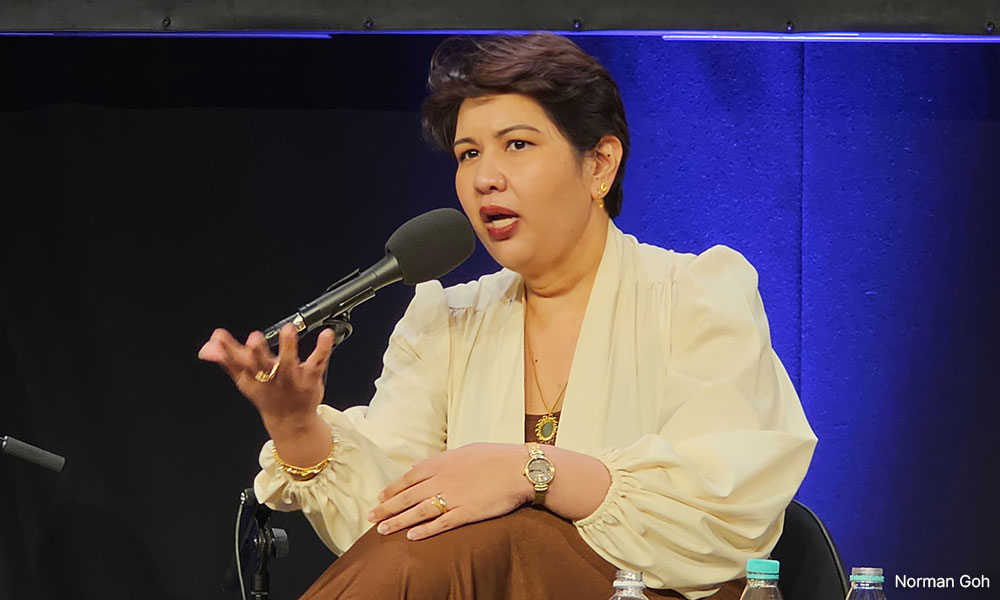
“It is a number I personally hate. The moment you put that number, it’s going to be a problem, because it also means to say my 100 percent is equivalent to your (men’s) 30 percent participation,” she stressed.
When asked by Dymond whether she supported affirmative action to boost women’s participation, Vilashini replied in the affirmative - but with caveats.
“Of course, I would like to see that,” she said. “I think if it is framed in a way where everybody understands that they don’t have to have the scarcity mindset, everybody would be for it.”
Drawing parallels between newsrooms and political parties, Vilashini argued that men in both spaces continue to deny women equal opportunities.
“And even if women are ‘radicalised’ to enter those spaces as well, it now just becomes an issue of very difficult radical women trying to break into these spaces,” she said.
However, she also cautioned that affirmative action alone does not address the larger challenge of ensuring diverse representation across different cultural and social backgrounds.
Yeoh, who is also a former chief executive of the think tank Ideas, shared that her past leadership team of senior female colleagues was built entirely on merit.
“It didn’t happen through quotas or affirmative action,” she said.
“Although I’m not opposed to that, necessarily, but it’s just that the best in the think tank were women, and I’m so proud of that - and I hope that culture carries on,” she said.
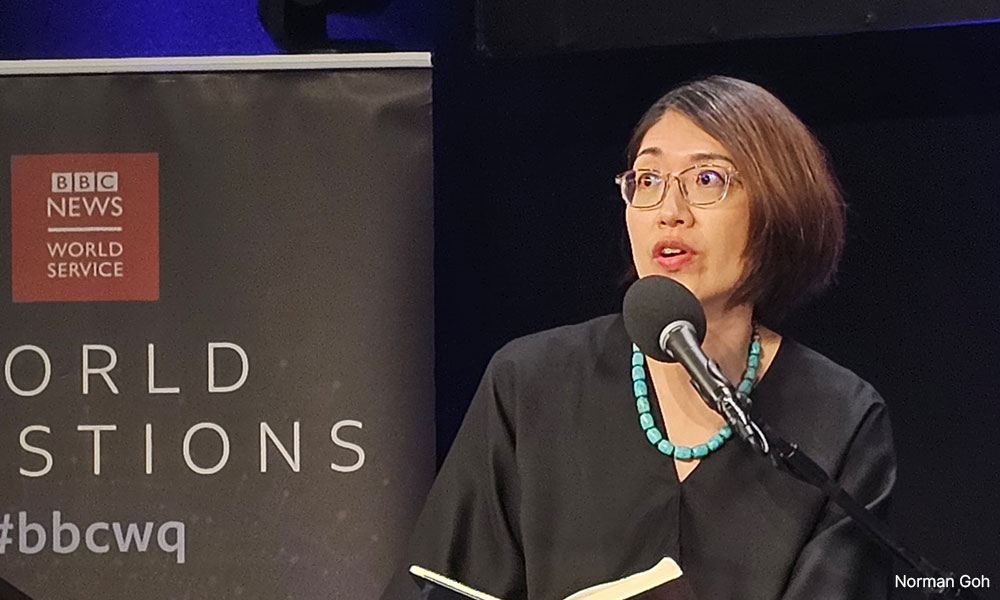
Yeoh further highlighted the high costs for women to participate in Malaysian politics - both financial and cultural - where societal expectations often prioritise raising a family above personal ambition.
She also noted that Malaysia ranks among the lowest in the region in terms of women returning to work after giving birth.
‘Progress in PKR’
Fuziah, a senator and former four-term MP, pointed to PKR’s efforts through affirmative action to promote greater female representation.
“For example, we amended the (party) constitution to make it mandatory for the divisions to submit a minimum number of women delegates and young people.
“At the recently concluded national congress, we achieved 42 percent of women delegates,” said the PKR secretary-general.
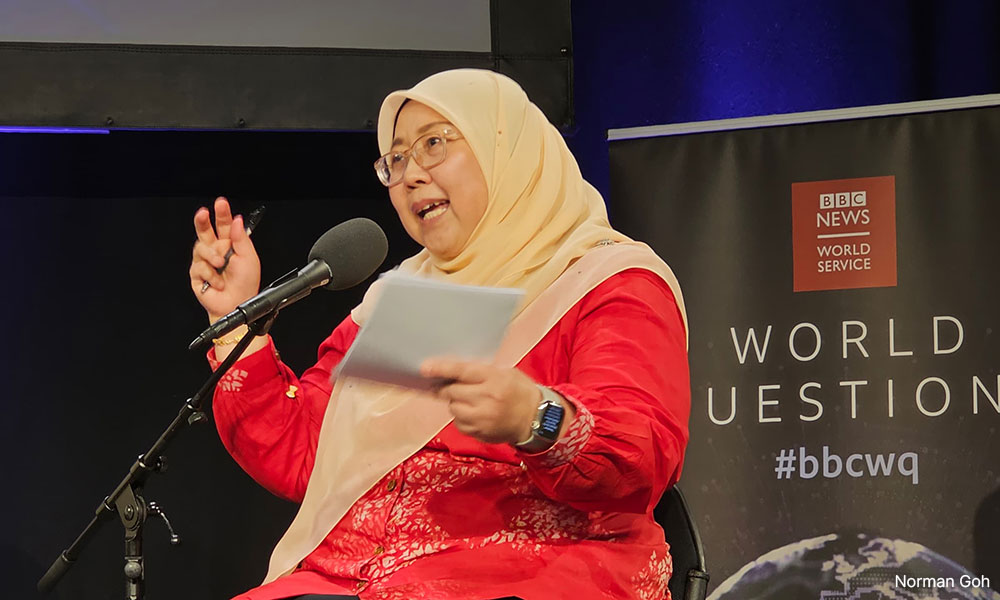
Still, Fuziah acknowledged that women in politics remain disadvantaged, even with supportive policies.
“You can have a policy that allows more women to be candidates, but usually they don’t get the good seats, and the parties’ lists will not put them on top.
“So those are the challenges, and there’s a lot of things left to do,” she added.
Wan Fayhsal, the sole male panellist, said Bersatu supports its women members and expressed broad backing for affirmative action, where needed, to increase women’s participation in all sectors.
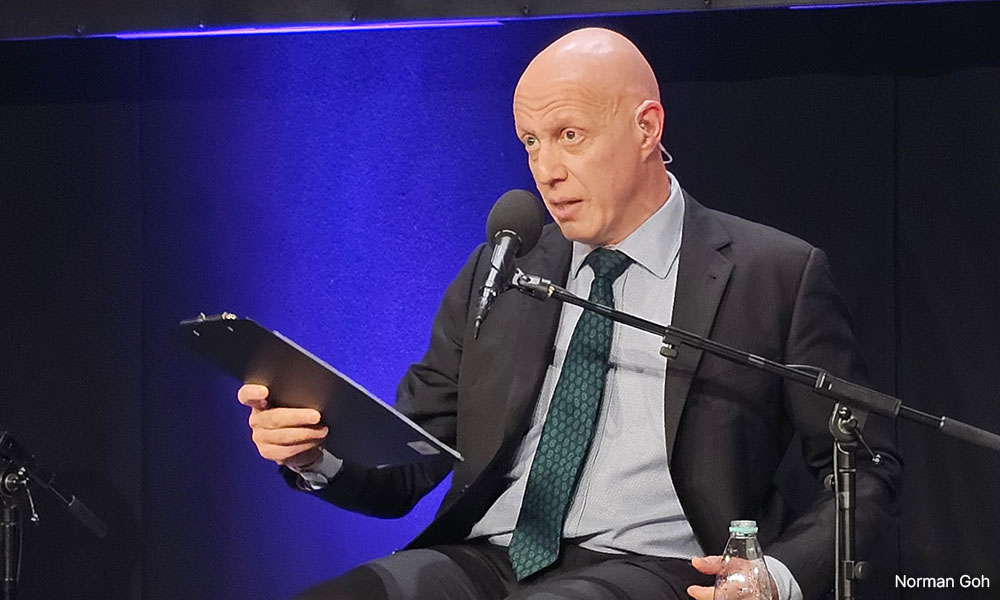
To wrap up the discussion, Dymond invited further views from the floor on the original question of affirmative action to boost women’s leadership in newsrooms.
Among the responses were two women editors who opposed such policies.
CodeBlue editor-in-chief Boo Su-Lyn argued that affirmative action in the media would not necessarily translate to better female representation in news coverage.
“We report on people in power. If those in power are men, that’s who gets quoted - regardless of whether the journalist is male or female,” she said.
Meanwhile, New Straits Times news editor Hazween Hassan said she believes affirmative action undermines a woman’s talents by offering an artificial “lifeline” to get ahead.
“So I’d rather merit all the way,” she stressed.
The full BBC World Questions episode - which also tackled issues such as the rising cost of living, national identity, and fundamental liberties - will be broadcast on the BBC World Service this Saturday, June 14.
/file/publisher-c1a3f893382d2b2f8a9aa22a654d9c97/2025/05/8e02c1c5d94639abbece56c7c729df41.jpg)
/file/publisher-c1a3f893382d2b2f8a9aa22a654d9c97/2025/05/ae1d83e52837fee188655e5a28cb706c.jpg)
/file/publisher-c1a3f893382d2b2f8a9aa22a654d9c97/2024/10/b58af38f66698ba44c1bbfb42ccd0d30.jpg)
/file/publisher-c1a3f893382d2b2f8a9aa22a654d9c97/2024/03/359684bb8ff18a88eaa4e5a3b397cd36.jpg)


Report this comment
Are you sure you want to delete this comment?
This action cannot be undone.