


/file/publisher-c1a3f893382d2b2f8a9aa22a654d9c97/2025/08/cf8b0c455edc965814182a38116bc092.jpg)

From rags to riches: Story of M'sia-born 'father of Pen Drive'
Dubbed the “father of Pen Drive”, Sekinchan-born Pua Khein Seng had never imagined during his childhood that his life's journey would take him down the lucrative technology path.
Born to a family of vegetable farmers in 1974, the eldest of three siblings grew up witnessing his father's daily struggle to make ends meet.
During some of the worst periods, the family could not even afford to put food on the table.
Summary
Pua Khein Seng shares how he overcame severe hardship in his early life to become a pioneering tech entrepreneur, co-founding Phison Electronics in 2000 and developing the world’s first single-chip USB flash drive controller.
Despite Phison’s global success, Pua remains grounded, emphasising employee welfare over profit and expressing a desire to eventually retire and return to farming.
He also urges the younger generation to work hard, be resilient, and take responsibility.
Dubbed the “father of Pen Drive”, Sekinchan-born Pua Khein Seng had never imagined during his childhood that his life's journey would take him down the lucrative technology path.
Born to a family of vegetable farmers in 1974, the eldest of three siblings grew up witnessing his father's daily struggle to make ends meet.
During some of the worst periods, the family could not even afford to put food on the table.
"Life was very difficult. I still remember when I was about 10 years old, my youngest brother was just born.
"I was schooling at SRJK (C) Yuk Chyun, it had morning and afternoon classes. Mine was a morning session. So after school, I went back about 1pm for lunch, but at home, there was nothing. No food. Because, no money.
"It was very challenging because the income from farming is not stable. There were times when the whole family would struggle (without food) for several days.
"There was one time when I resorted to going to my grandfather's house to ask him for a loan, which I then gave to my mother to buy some rice and food," Pua said during an interview with Malaysiakini.
Building a tech empire
In 2000, Pua founded Phison Electronics Corporation with four others. The company was responsible for developing the world's first single-chip USB flash drive controller and successfully launched the USB-based product called Pen Drive.
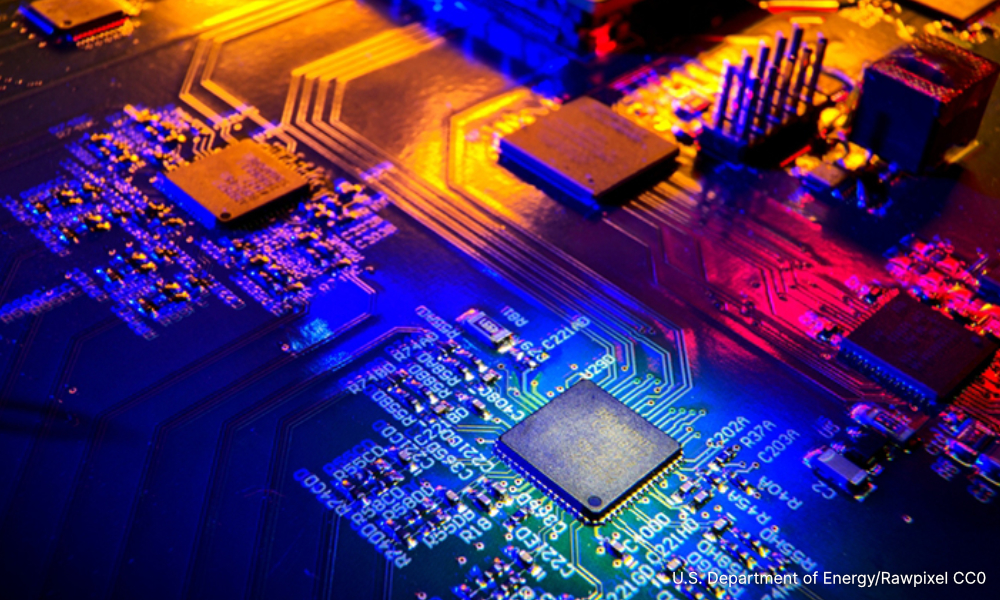
Today, the integrated circuit (IC) design venture headquartered in Taiwan is worth billions of dollars and employs over 4,000 people.
According to Pua, coming from a family of farmers, he initially planned to pursue his studies in the agricultural sector after graduating from Pin Hwa High School in Klang in 1992.
However, the idea was immediately rejected by his family, which brought him to consider studying chemistry.
"I consulted my chemistry teacher about going to Taiwan to study chemical engineering. But my teacher immediately told me, 'No, don't do it', because it would only take me to work in the factory, making oil and stuff.
"My teacher then urged me to further my studies in electronics. Which I did. So to be honest, when I first arrived in Taiwan, I did not know anything about electronics.
"So, I want to say that I am lucky," he said.
Pua, who has since married and has three children, spent four years studying for a Bachelor of Science in Electrical and Control Engineering at the National Chiao Tung University (NCTU) before pursuing a master’s degree in the same field.
Revolutionary breakthrough
During his student days, the entrepreneur gained hands-on technology development experience when he worked on a memory chip controller project at NCTU's laboratory under a professor's supervision.
Pua later worked for the academic's private venture briefly before starting Phison.
At its initial stage, he said Phison was struggling to survive as they only managed to raise less than US$1 million in capital to begin IC design activities.
"Luckily, in early 2001, a customer came to me to ask if we could (make IC design) for the USB drive. Today, USB drives are popular, but back then, it was very new.
"They asked whether Phison can develop these things or not? We spent three months making the world's first system on chip (SOC). The first SOC USB drive was delivered in April 2001.
"Then we got the first big order by August the same year from European Fujitsu-Siemens. At that time, it was among the top five notebook makers.
"With this order, Phison broke even. Then we grew from 2001 until now," he said.
During the interview, Pua also sought to set the record straight regarding Phison's Pen Drive invention.
Contrary to popular belief, he said Phison was not the inventor of the USB drive, the concept of which was published by IBM in 1997.
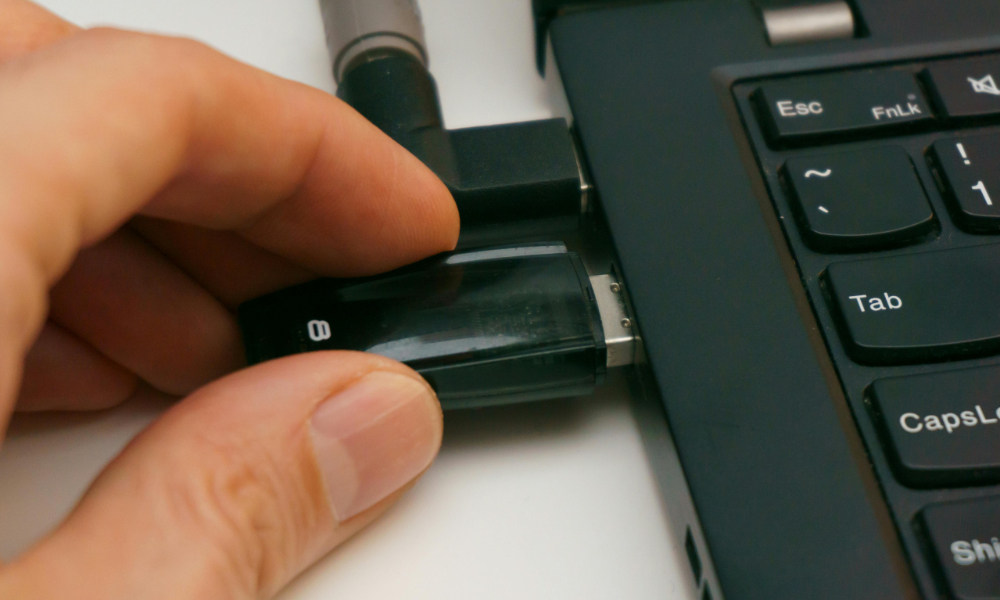
Instead, what the company delivered was the first USB drive that uses SOC, which was a revolutionary development of the technology.
Back in 2001, a 16-megabyte USB drive produced by other manufacturers could cost up to US$100 (RM423) in the market because the products were using multiple chips, he added.
"But with a single chip solution, it was easy to develop, integrate, and make the price better," Pua said, adding that the innovation had caused a major shortage of USB drives in the market due to a surge in consumer demand.
Beyond profit: Employee welfare
According to Pua, his continuous pursuit to bring Phison to greater heights is not all about making money.
He said the main goal is making sure Phison stays profitable, so it can keep improving the lives of its employees, especially because the costs of living in Taiwan are "unbelievably high".
"I am always concerned in Taiwan because when they graduate, the people need to buy a house, they need to get married, they need to have a family, right?
"But the house prices in Taiwan are unbelievably high. It's high. How can they buy their own house within three to five years?
"So, what I value most is... I need to make Phison very profitable so that we can pay more bonuses to employees, to make sure employees are happy to work in Phison, and they can make their lives better."
Future aspirations
While Pua said he enjoys working, the businessperson also shared his aspiration to one day be able to hand over business operations and retire so he can lead his "own life".
Having played basketball during his secondary school days, Pua later found solace in golf after entering the business world, though he eventually had to scale that back as the sport proved too time-consuming.
"I think I will go back to farming," he said when asked about his retirement plan.
Asked if he had any words of advice, especially for the younger generation, Pua said that to reach success, one must be resilient, no matter how tough the challenges they have to face.
"Work hard. Work smart. Be responsible. Then one day, I believe you will be successful."
/file/publisher-c1a3f893382d2b2f8a9aa22a654d9c97/2025/07/ffab57983d0988babed73ea7e48cc84e.jpg)
/file/publisher-c1a3f893382d2b2f8a9aa22a654d9c97/2025/08/cf8b0c455edc965814182a38116bc092.jpg)


Are you sure you want to delete this comment?
This action cannot be undone.