


/file/publisher-c1a3f893382d2b2f8a9aa22a654d9c97/2024/10/bc6bb7e6c575946df96112c826cb08b7.jpg)

MPs clash over procurement bill, warn of excessive minister power
Hassan Karim (Harapan-Pasir Gudang), while congratulating the government for tabling the long-awaited reform, said the bill still suffers from serious flaws that must be addressed.
Citing several provisions in his debate on the bill’s second reading, he expressed concern that the draft law grants...
Summary
Finance Minister Anwar Ibrahim tables the Government Procurement Bill 2025 for its second reading, sparking heated debate over provisions granting wide powers to the minister.
Government backbenchers Hassan Karim and Willie Mongin join opposition MPs Wan Ahmad Fayhsal and Mas Ermieyati in warning of conflicts of interest, corruption risks, and lack of parliamentary oversight.
Yeo Bee Yin defends the bill, highlighting the introduction of an independent procurement appeals tribunal with open proceedings and conflict-of-interest safeguards.
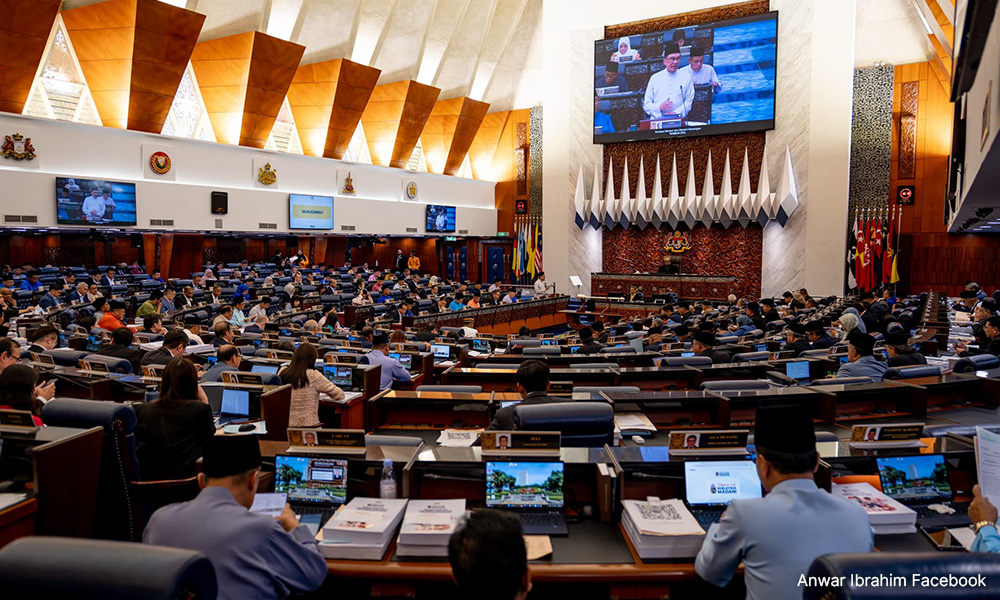
PARLIAMENT | Heated debates followed Finance Minister Anwar Ibrahim’s tabling of the Government Procurement Bill 2025 today, with at least one senior backbencher and an opposition MP warning against concentrating power in the hands of a minister.
Hassan Karim (Harapan-Pasir Gudang), while congratulating the government for tabling the long-awaited reform, said the bill still suffers from serious flaws that must be addressed.
Citing several provisions in his debate on the bill’s second reading, Hassan (above) expressed concern that the draft law grants overly broad powers to the finance minister.
“Section 10(1)(a) of the First Schedule says the minister can approve mega contracts without any ceiling. No ceiling. This is dangerous.
“...In Section 13(2) to (4), the minister is not bound by the procurement board’s recommendations. (The minister has) wide powers.
“Then Section 12(8) allows the minister alone to decide if the board reaches a deadlock.
“...And under Section 11(1) of the Second Schedule, the minister can influence appointments to the board,” he said in the Dewan Rakyat this evening.
Hassan warned that this puts the minister in a dual position as both regulator and participant in procurement decisions.
“This is a conflict of interest. These dual roles weaken (and) disrupt the basic safeguards against abuse,” he said.
‘Better late than unsafe’
The PKR lawmaker stressed that his criticism was not directed at any individual, but at the structural risks created by the bill in its current form.
“Standing here, I say: let us defer this bill. Better late than unsafe,” said Hassan.
“I love this government, but I love the country and people more,” he added.
Other backbenchers who echoed Hassan’s concerns included Willie Mongin (Harapan-Puncak Borneo), who expressed worry that the bill could further worsen abuse of the government’s procurement system.
Meanwhile, Yeo Bee Yin (Harapan-Puchong) said the bill represents progress compared to the status quo.
She noted that while concerns have been raised over the wide powers of the Finance Ministry, these powers already exist under current practices.
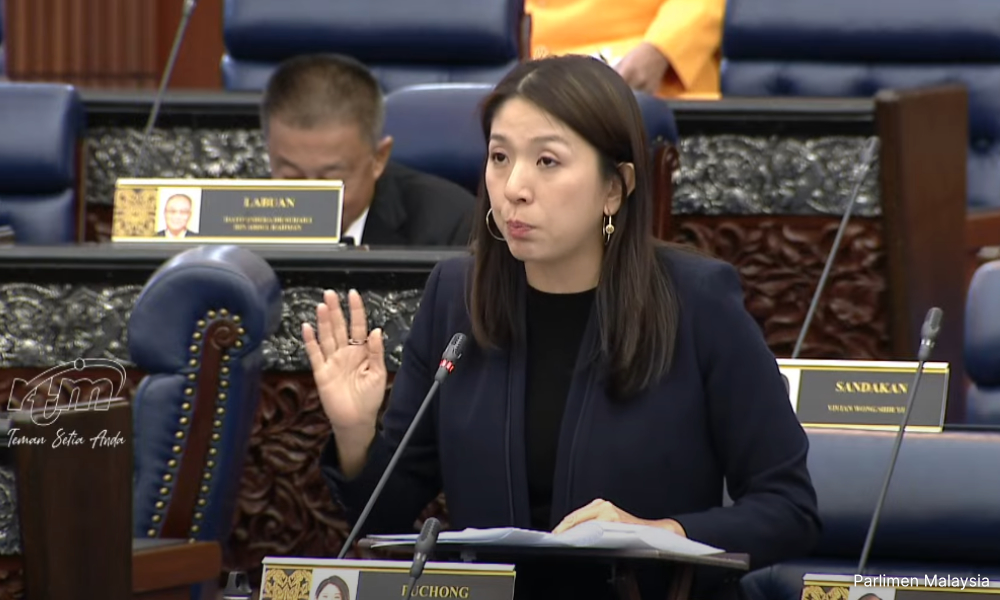
“What does this bill actually provide? A government procurement appeals tribunal,” she told the Dewan Rakyat.
Tribunal safeguards
Responding to criticism that tribunal members would be appointed by the finance minister, Yeo pointed out that Section 63(3)(f) of the bill disqualifies anyone with conflicts of interest from serving.
The DAP lawmaker further cited Section 63(5), which defines “interest” broadly to cover direct or indirect ties through family members, associates, or beneficial ownership.
She stressed that Section 79 of the bill also requires all tribunal proceedings to be open to the public.
“This means the tribunal is better than the status quo. Previously, the Finance Ministry had all the powers that MPs are worried about. But now there will be an independent tribunal with open proceedings.
“...In fact, this is more progressive than parliamentary select committees, which are still conducted behind closed doors,” said Yeo.
From the opposition, Wan Ahmad Fayhsal Wan Ahmad Kamal (PN-Machang) warned that the government procurement bill will only entrench opportunities for corruption.
He also accused the government of pushing through legislation that centralises excessive power in the hands of the finance minister.
“The reality is clear - this bill increases ministerial authority. It is not an improvement, but legalising the status quo,” he said.
‘No real oversight’
The Bersatu supreme council member also dismissed claims that the bill strengthens accountability, stressing that parliamentary oversight is absent from the text.
Besides that, Mas Ermieyati Samsudin (PN-Masjid Tanah) rebutted Yeo’s argument and insisted that the new law is worse than the current status quo.
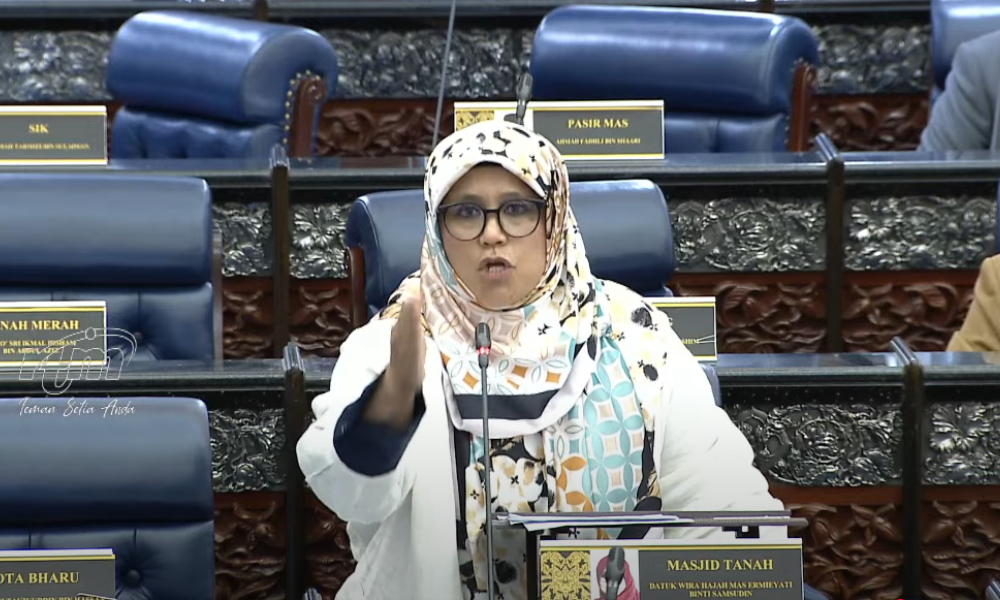
She cited her experience as the current Public Accounts Committee chairperson and argued that the provision to grant excessive powers will lead to more corruption cases.
“I love this country too,” said the Bersatu Women while supporting calls for the bill to be deferred and referred to a Parliamentary Special Select Committee.
However, the final debate descended into chaos as MPs on both sides slung insults at each other, focusing on the opposition’s time in power as well as the low number of parliamentary seats in Amanah’s possession.
After the debates, Communications Minister Fahmi Fadzil (Harapan-Lembah Pantai) moved to end the day’s proceedings before the Finance Ministry’s winding-up speech.
/file/publisher-c1a3f893382d2b2f8a9aa22a654d9c97/2025/08/f42b691b2c256fcdaf46e9fcabea3799.jpg)
/file/publisher-c1a3f893382d2b2f8a9aa22a654d9c97/2021/08/7c985bf627606be1cd2920a9b62da61d.jpg)
/file/publisher-c1a3f893382d2b2f8a9aa22a654d9c97/2024/05/d2eb01c3c986d9f446d97f3bf66fe752.jpg)


Report this comment
Are you sure you want to delete this comment?
This action cannot be undone.