


/file/publisher-c1a3f893382d2b2f8a9aa22a654d9c97/2025/10/72b2805491afff78ccf175a3539d3b9e.jpg)

Albert gives 98-page statement, lawyer slams MACC as 'part of problem'
Businessperson Albert Tei spent six hours at the MACC headquarters in Putrajaya yesterday, where he provided a 98-page statement to investigators.
Speaking to Malaysiakini, Tei said the questioning centred on bribery allegations involving Parti Solidariti Tanah Airku (Star) president Jeffrey Kitingan and five other senior Sabah politicians.
Summary
Businessperson Albert Tei’s questioning at MACC centres on bribery allegations involving Star president Jeffrey Kitingan and five other senior Sabah politicians.
Lawyer Mahajoth Singh notes “surprising and troubling” move by an MACC officer to ask him to leave the room during the statement-taking.
Businessperson Albert Tei spent six hours at the MACC headquarters in Putrajaya yesterday, where he provided a 98-page statement to investigators.
Speaking to Malaysiakini, Tei said the questioning centred on bribery allegations involving Parti Solidariti Tanah Airku (Star) president Jeffrey Kitingan and five other senior Sabah politicians.
The five were Kitingan’s deputies, Ellron Alfred Angin and Robert Tawik, PBS acting president Dr Joachim Gunsalam, his predecessor Maximus Ongkili, and deputy president Jahid Jahim.
In a subsequent statement, Tei’s lawyer, Mahajoth Singh, lambasted the MACC for its conduct, alleging threats, procedural inconsistencies, and failure to act on serious claims of intimidation.
He said an officer had instructed him to leave the room when he sought clarification about his client’s legal status, and also failed to address allegations that a high-ranking MACC officer had previously threatened his client against coming forward over the mining scandal.
“As in previous sessions, I was allowed to accompany my client into the interview room. Before the statement-taking commenced, I sought clarification from MACC officers as to whether my client was being questioned as a witness, suspect, or whistleblower.

“This clarification is fundamental, as it determines the rights and legal protections available to the person being examined.
“Instead of providing a clear response, one officer (not those in charge of the case) threatened to remove me from the room, and at one point asked me to leave.
“This was both surprising and troubling, considering that I had been present without issue during my client’s previous sessions with the MACC,” he added.
Irregular conduct
Mahajoth said he was eventually allowed to remain in the room after insisting on a formal written notice for his removal.
“Such conduct is highly irregular and inconsistent with basic principles of fairness and due process. The right to legal counsel cannot depend on arbitrary threats or the discretion of enforcement officers.
“The MACC’s inconsistent approach - allowing counsel on prior occasions, then threatening removal without justification - raises serious concerns about its procedural integrity and respect for the rule of law,” he added.
He also criticised the commission for failing to address key issues of public concern during the session.
“Despite public assurances by Deputy Minister in the Prime Minister’s Department (Law and Institutional Reform) M Kulasegaran that the government ‘will not compromise on issues involving threats or intimidation’, the MACC did not raise the serious allegation that a high-level officer within the commission had previously advised my client not to pursue his complaint.
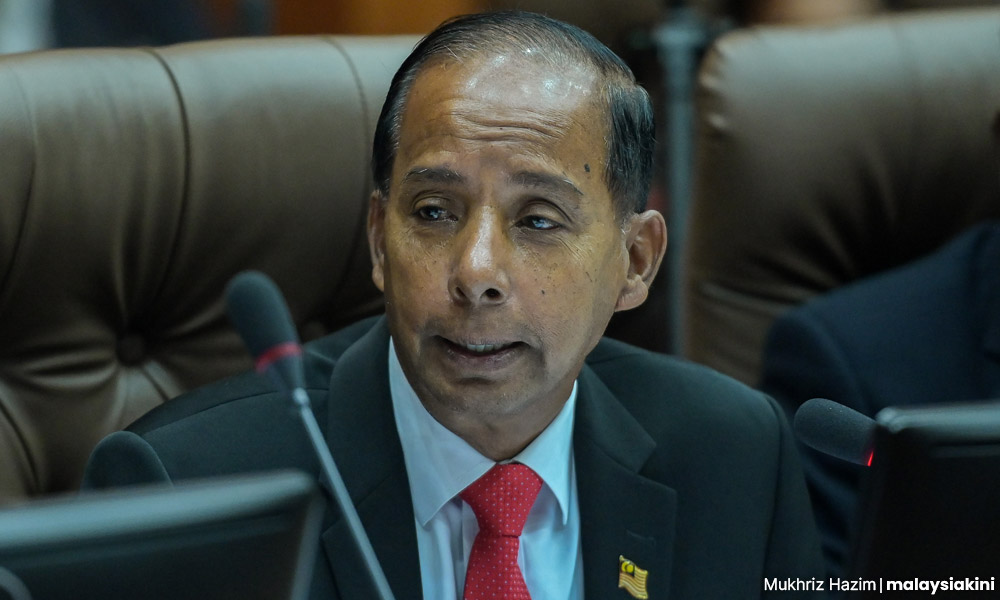
“The omission of such a significant issue undermines public confidence in both the minister’s assurances and the commission’s commitment to transparency and accountability,” he added.
Mahajoth said from the outset, his client has fully cooperated with investigators in exposing the Sabah mining scandal.
“He voluntarily came forward, submitting a comprehensive 300-page dossier to the MACC, directly linking several assemblypersons to acts of corruption. He has given statements, rendered full cooperation, and even faced charges in court.
“Yet despite his transparency and the overwhelming evidence presented, the MACC has failed to act decisively. Months have passed without meaningful progress or clarity on whether the remaining implicated assemblypersons will be charged.
“This selective inertia reflects a troubling reality; those with political ties appear to enjoy protection, while the whistleblower who dared to come forward is left to face the system alone,” he added.
He reminded the MACC that its duty is to fight corruption - not turn a blind eye to it.
“When those entrusted to uphold integrity choose inaction, they become part of the problem. Malaysians deserve an anti-corruption body that acts without fear or favour, not one that picks and chooses whom to protect,” he emphasised.
/file/publisher-c1a3f893382d2b2f8a9aa22a654d9c97/2025/07/81fec8cb47b8866662e80b761373bd90.jpg)
/file/publisher-c1a3f893382d2b2f8a9aa22a654d9c97/2025/05/8f52ba6e50a7cb003eeabe5c85ffa034.jpg)
/file/publisher-c1a3f893382d2b2f8a9aa22a654d9c97/2025/09/84e8ad6897180d5bfb26347edd1af173.jpg)
/file/publisher-c1a3f893382d2b2f8a9aa22a654d9c97/2024/12/cf9b61c5cb231a5092be1ec1715982ba.jpg)
/file/publisher-c1a3f893382d2b2f8a9aa22a654d9c97/2025/10/0ca0ae2eb851ba826be76f7afdd281b1.jpg)
/file/publisher-c1a3f893382d2b2f8a9aa22a654d9c97/2025/07/5217f30ebbfd6f71fb63dad5d15fc788.jpg)


Report this comment
Are you sure you want to delete this comment?
This action cannot be undone.