


/file/publisher-c1a3f893382d2b2f8a9aa22a654d9c97/2025/10/9bbbecc505202ba7787baf22c7fcd184.jpg)

'We don't need more heroes, just courage' - Sabah activists
MALAYSIANSKINI | When a convoy of two cars rolled quietly into small towns across Sabah in late September, few realised it was the start of a homegrown civic awakening.
Four women - armed with six placards, handwritten slogans, and sheer conviction - had set out to remind Sabahans of something many had forgotten: that democracy begins with courage.
MALAYSIANSKINI | When a convoy of two cars rolled quietly into small towns across Sabah in late September, few realised it was the start of a homegrown civic awakening.
Four women - armed with six placards, handwritten slogans, and sheer conviction - had set out to remind Sabahans of something many had forgotten: that democracy begins with courage.
At the heart of the “Vote Wisely” movement is Angie S Chin, a communications trainer turned reluctant activist who, tired of political noise and online manipulation, decided to take her message to the streets - literally.
“It started with frustration - and love,” Chin told Malaysiakini in an interview.
“Frustration, because Sabah has been treated like a stepchild in her own home. Love, because despite everything, I still believe Sabah can change.”
When the familiar wave of propaganda videos and doctored messages began flooding WhatsApp groups ahead of the 17th Sabah state election, Chin reached her breaking point.
‘Sabah deserves better’
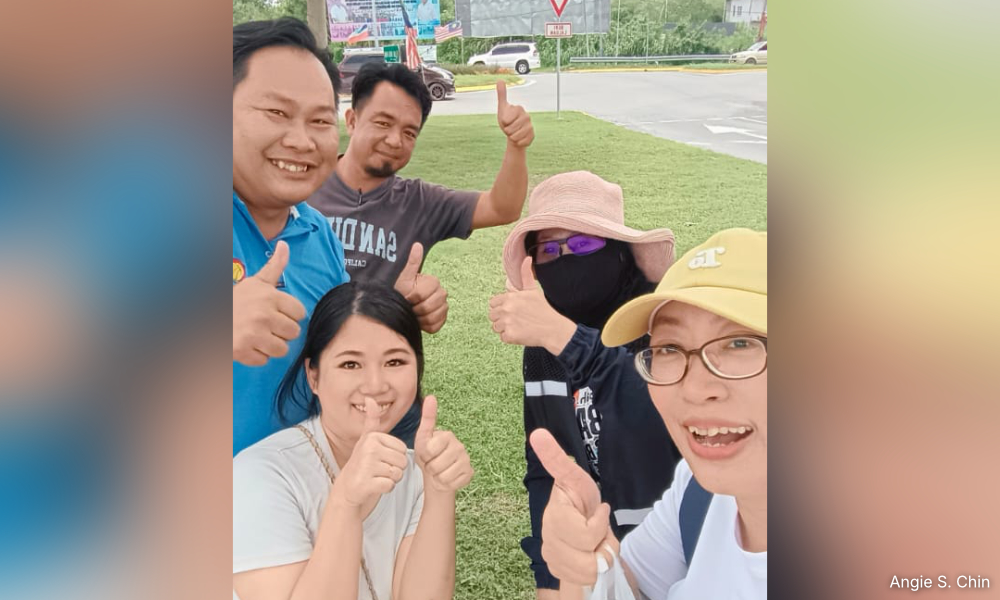
She called three friends - Willva Freddy (educator), Anna Matin (retiree) and Syafiqah Izzan (insurance).
Together they pooled their savings, drove a Myvi and rented a Bezza, and set off on a journey that would take them from Kinarut, Keningau, Tenom, Nabawan, Sook, Sipitang, to Kudat, Ranau, Tamparuli, Kiulu, to Kota Belud, and finally Tuaran, Telipok, and Kota Kinabalu.
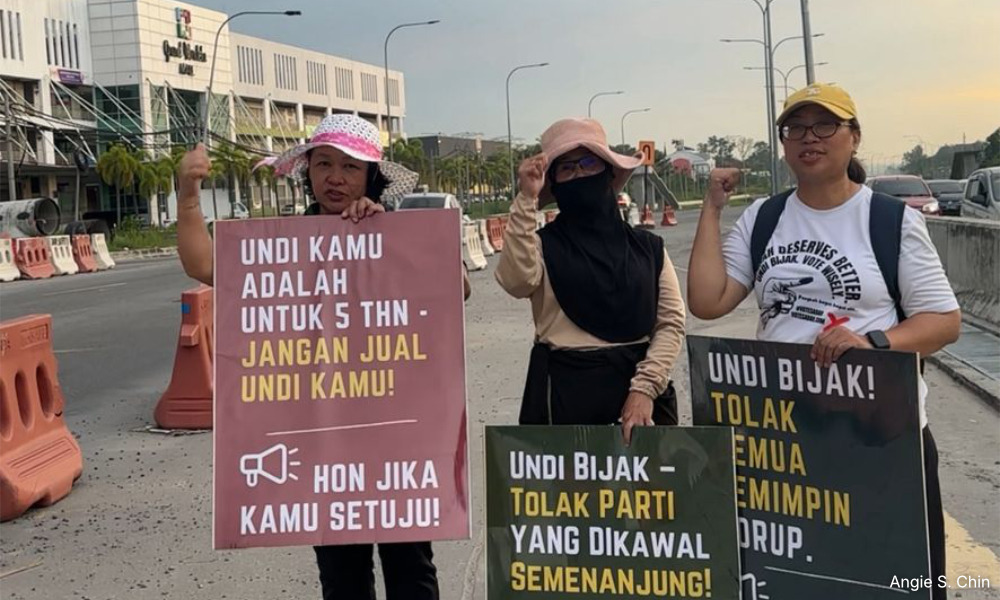
“No sponsors, no political party, just conviction,” she said. “Two cars, four women, six placards, and one message: Sabah Deserves Better.”
Wilna and Fiqah, whom Chin described as “the heartbeat” of the journey, were the group’s route planners and drivers.
“They mapped out our stops, took turns behind the wheel, and made sure we reached every district safely,” she said.
Anna, meanwhile, took charge of visual messaging - ensuring every placard reflected dignity and sincerity.
“There’s no mastermind here,” Chin said. “We’re all leaders in our own right - different strengths, one purpose.”
The team travelled through rain and winding rural roads, holding silent roadside vigils with placards bearing messages like Vote With Courage and Sabah Deserves Better. Some motorists honked in solidarity; others slowed down, unsure what they were witnessing.
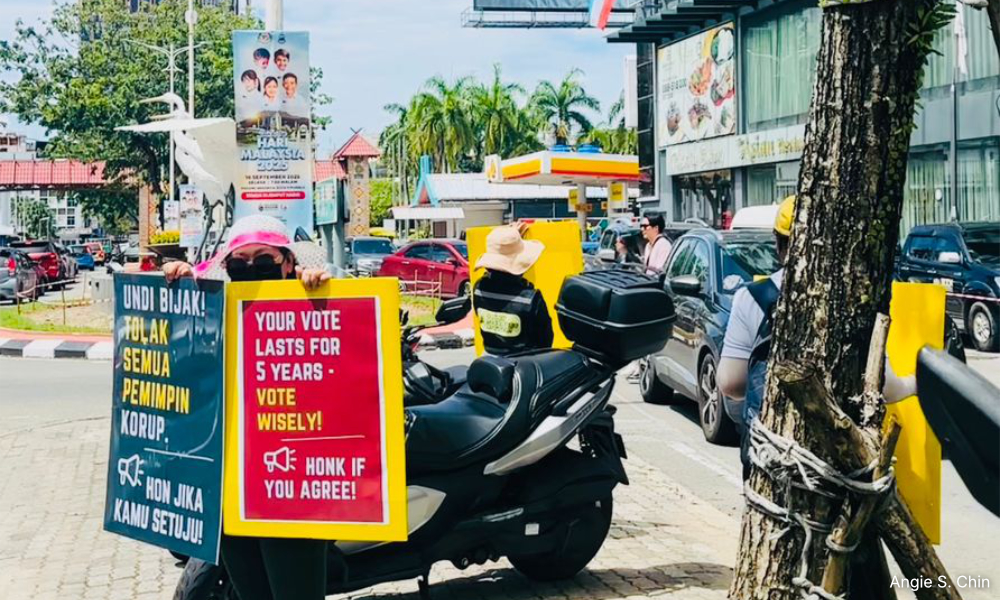
“In Ranau, a district enforcer demanded our ICs for ‘records’. We refused and spent hours explaining ourselves at the police station,” Angie recalled. “The officers treated us kindly, but it was a red flag - that people couldn’t tell silent solidarity from a protest.”
‘Silence has become too comfortable’
Asked what compelled her to take such public risks in a state where activism often comes at a cost, Chin said, “For too long, we’ve been told to wait - that someone else will fix it.
“But while we waited, our roads crumbled and our youth left.
“Silence is also a choice - and it’s the one that keeps Sabah exactly where it is,” she added.
Chin further insisted that the movement isn’t political. “I don’t care who benefits. I only care whether Sabah benefits,” she said.
“Vote Wisely isn’t about parties. It’s about principles - about voting with clarity, conscience, and courage.”
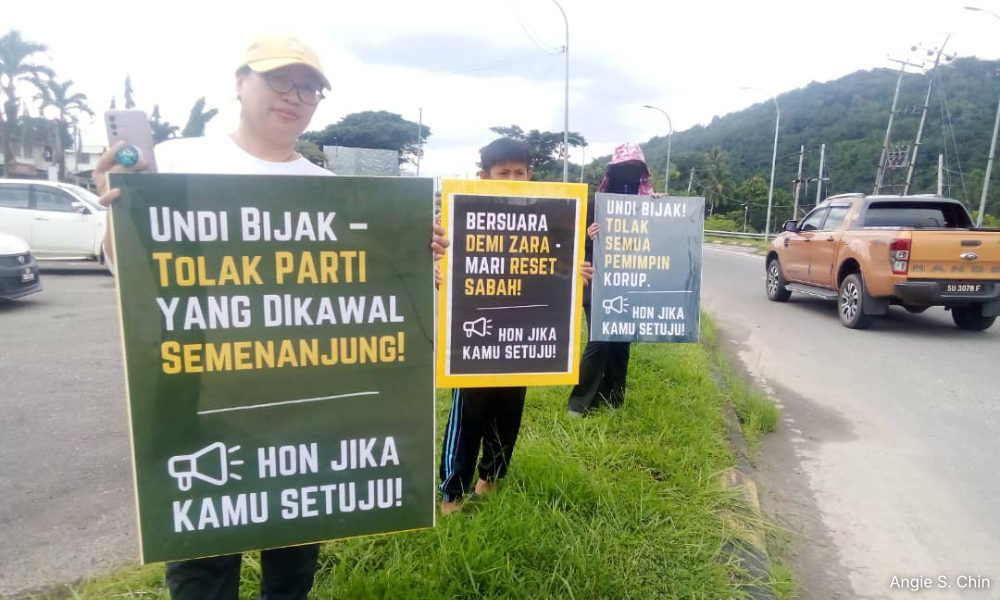
For 10 days, the team visited more than 10 districts, from coastal towns to highland communities. Along the way, they encountered both kindness and fear.
“People gave us drinks, waved, said ‘Teruskan, kami sokong’ (Go on, we support). But we also met those who called the local authorities on us,” she recalled.
“It showed how fragile our democracy still is - how easily civic awareness can be mistaken for a threat.”
Hope in spite of disillusionment
Yet the most powerful moments came from conversations with ordinary Sabahans. In Tamparuli, she said an elderly woman lamented how men dominated politics.
“Jarang bah orang politik di Sabah ni kasi peluang sama perempuan yang ada berkebolehan jadi pemimpin. Semua lelaki saja. Itu pemimpin-pemimpin lelaki juga yang kasi rosak Sabah!”
(Politicians in Sabah rarely give women the chance to lead. It’s always the men - and it’s those same men who ruined Sabah.)
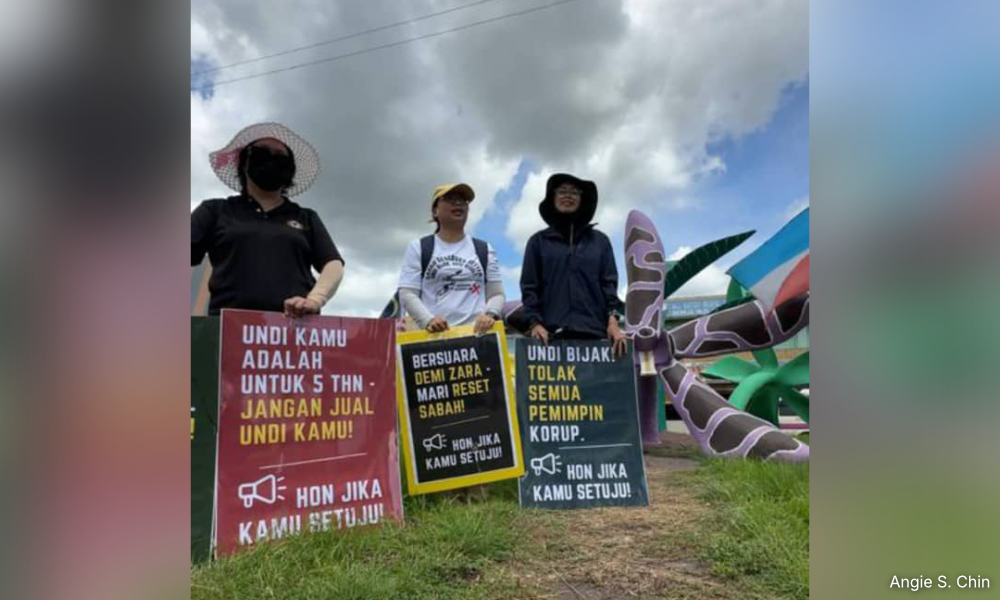
“That truth hit hard,” Angie said. “It reminded us that listening shouldn’t be rare. It should be the most basic form of respect.”
“We’ve waited too long for heroes who never came,” she stressed, hinting at a growing sentiment of political disillusionment.
“Every election, we’re told someone new will ‘save’ us. But again and again, we’re left disillusioned,” she said.
“So I’ve stopped waiting for heroes. What Sabah needs now are ordinary people with extraordinary courage.”
To her, real change begins with citizens - not slogans. “Heroes make promises. Ordinary, awakened people make progress.”
Through the conversations with voters, Chin revealed similar echoes of the same refrain, “Apa guna mau undi? Semua sama saja bah.” (What’s the point of voting? They’re all the same.)
“When people tell me nothing will change, I ask - then why are you still here, still caring?” she said. “That quiet love for home is a form of hope. And hope is where change begins.”
“Cynicism is a luxury we can’t afford anymore. Because when good people give up, the wrong ones win by default," she said.
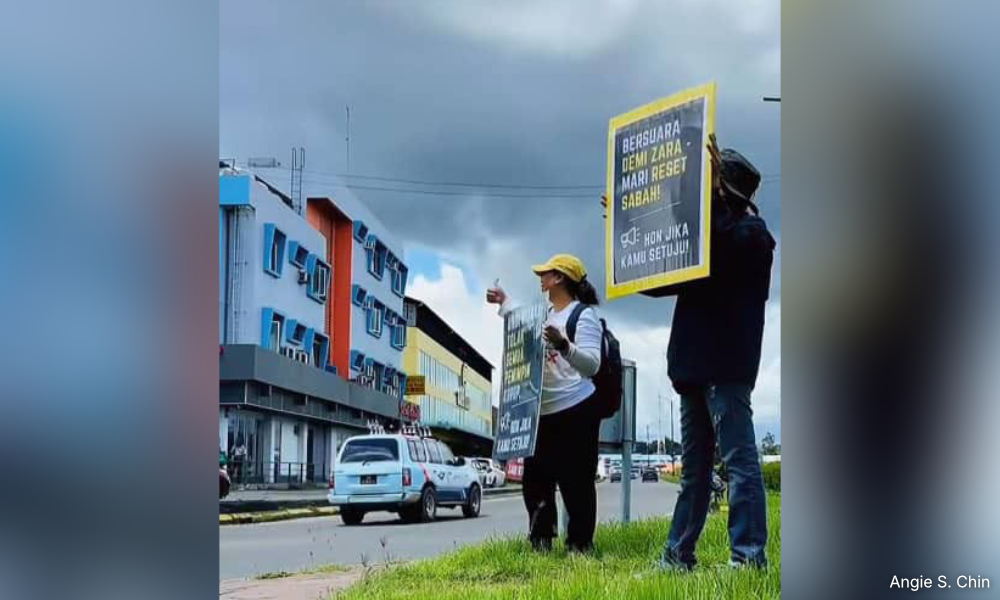
To Sabah’s politicians - old and new - Chin has a blunt message: “Stop insulting our intelligence. Don’t mistake our patience for ignorance.
“Sabahans don’t need slogans. We need roads that don’t collapse after one rain. We need clinics that have doctors. We need leaders who show up after the election, not just before.
“Sabah doesn’t need another hero with a slogan. We need leaders who treat service as a duty, not a career. If you want our respect, earn it. If you want our trust, guard it.”
Every vote says ‘I care’
Looking forward, Chin expressed hope to grow Vote Wisely into a grassroots civic platform focused on civic education and youth engagement.
“Democracy isn’t something we do once every five years. It’s something we live every day,” she said.
“If politicians won’t educate the people, then the people will educate themselves.”
Her dream is simple but radical: “A Sabah so aware, so united, that no one can ever deceive us again.”
To do that, Chin also reiterated a call for the EC to consider allowing Sabahans working and studying in the peninsula to cast their ballots by post, citing budget constraints that prevented some of them from returning to vote.
As polling day nears, Chin’s message to Sabahans is both a plea and a prayer.
“Your one vote may not change all of Sabah overnight - but it can change your kampung, your district, your future,” said Chin.
“Every cross on that ballot says: I care.
“Don’t sell your vote. Don’t let fear divide you. Vote with hope, not fear. Vote with truth, not convenience. Vote with courage, not comfort.”
Because for Chin and the women of Vote Wisely, the movement has never been about power - but about reclaiming dignity.
“This isn’t about politics anymore,” she said, “it’s about who we are - and the Sabah we choose to become.”
/file/publisher-c1a3f893382d2b2f8a9aa22a654d9c97/2024/12/e9f13a6e669ecb1ad31b34361334b151.jpg)
/file/publisher-c1a3f893382d2b2f8a9aa22a654d9c97/2021/02/0f9f146923415f0558623a34b1161b93.jpg)
/file/publisher-c1a3f893382d2b2f8a9aa22a654d9c97/2023/06/7ac0dcfe78395f57732d9a30b31a657a.jpg)
/file/publisher-c1a3f893382d2b2f8a9aa22a654d9c97/2021/11/ffae9fb3448f48deb0a91551c428fca3.jpg)
/file/publisher-c1a3f893382d2b2f8a9aa22a654d9c97/2025/09/c125487ae84ab4725bfb0b10bcec7342.jpg)
/file/publisher-c1a3f893382d2b2f8a9aa22a654d9c97/2024/12/a85883f3636970cf10b386ba518e76ed.png)


Report this comment
Are you sure you want to delete this comment?
This action cannot be undone.